Quick answer: To estimate the extra cost of charging an electric car at home in the United States, start with the additional kilowatt-hours recorded by your utility meter and the rates that apply when charging occurs. Do not multiply battery capacity by the electricity supply rate alone: many bills also have per-kWh delivery charges and taxes, while some plans change rates by time of day. Fixed monthly fees require separate treatment.
The U.S. Energy Information Administration (EIA) distinguishes an average delivered electricity price from the actual tariff applied to an individual customer. Its average price includes generation, transmission, distribution, taxes and fees, while an individual bill can split those amounts into separate lines. The U.S. Department of Energy likewise cautions that EV charging cost depends on the local tariff and when the vehicle is charged.
Find these five items on your electric bill
- Energy supply charge: a per-kWh amount for electricity supplied. On a bundled rate it may not appear as a separate line.
- Energy delivery charge: a per-kWh amount for transporting and distributing electricity. It may be itemized separately or built into a bundled rate.
- Time-of-use schedule: on-peak, off-peak and sometimes mid-peak prices, plus the hours and days that define them.
- Taxes and adjustable charges: check which components change when another kWh is used. Do not assume every surcharge is a fixed monthly amount.
- Monthly fixed charges: customer or meter fees that would generally be payable even without charging. They affect the average household electricity price but may not increase with each EV charging session.
Find the rate sheet or tariff on your utility’s official site and match it to the name of your service plan. In areas with separate energy suppliers and utilities, check both if the bill is split. The EIA explanation of average prices versus utility rates is a useful check on terminology.
Do the calculation with electricity measured at the wall, not only in the battery
Charging involves energy losses. If a vehicle stores 40 kWh and the assumed wall-to-battery efficiency is 90%, the metered energy is 40 ÷ 0.90 = 44.44 kWh. That 90% is a hypothetical example, not a guaranteed efficiency for any vehicle, charger or temperature. Some real-world charging energy also runs fans, heaters and electronics.
For an individualized estimate, use the utility meter, a dedicated home charger energy log or a suitable submeter to identify wall consumption. If an app shows only energy added to the battery, do not treat it as an exact utility reading. Our wall-kWh versus battery-kWh explainer discusses that distinction in more detail.
Worked example: $0.09 supply looks cheap, but the charge costs more
Consider a hypothetical U.S. residential tariff with $0.09/kWh for supply, $0.07/kWh for delivery and $0.01/kWh in other variable charges. The total assumed incremental rate is $0.17 per metered kWh. Using the 44.44-kWh example above gives 44.44 × $0.17 ≈ $7.56 of additional variable electricity cost.
Calculating only the advertised supply rate would produce 44.44 × $0.09 ≈ $4.00, omitting roughly $3.56 of the hypothetical variable delivery and other charges. Neither number includes any new fixed plan fee, equipment installation, charging-network subscription, minimum bill adjustment or demand charge if one applies. The illustration is not a current tariff for a named state or utility.
Should you divide your total monthly electric bill by kWh?
Sometimes, but know what that measures. Total bill ÷ monthly kWh is the average all-in bill price for that period. If a bill is $180 for 900 kWh, the average is $0.20/kWh. That is useful for comparing household bills, but not necessarily the marginal price of the next EV charging session, because fixed fees are included and the tariff could have time-varying or tiered components.
If the bill would still include a $15 monthly fixed charge without an EV, that charge is generally not an additional $15 for each charging event. Conversely, an EV-specific meter, plan change or new customer charge could add a real new fixed cost. Ask the utility what changes when you begin charging.
Time-of-use example: charging at 2 a.m. versus 6 p.m.
Suppose a plan has a hypothetical off-peak incremental price of $0.12/kWh and an on-peak price of $0.32/kWh, including the relevant variable charges. A 30-kWh metered session would cost $3.60 off-peak or $9.60 on-peak—a $6.00 difference. Your utility may use different hours, seasonal schedules, weekends or holidays; some customers have flat rather than time-of-use rates.
The Department of Energy’s home EV charging guide and utility-incentive directory discuss time-based rates and EV-specific options. A cheaper overnight rate may also mean more expensive household electricity at other times, so compare the whole-home bill under both tariffs before switching.
Where do demand charges fit?
Many ordinary residential customers do not have a separately itemized demand charge, but rate designs differ. A demand charge measures the highest or relevant average rate of electricity use in kilowatts (kW), not the total energy in kWh. Some business and fleet tariffs use them, and certain other tariffs can as well. The DOE explains how commercial and fleet demand charges can affect charging costs, particularly when multiple chargers run together. Do not automatically add a demand charge to a residential charging estimate unless the actual tariff includes one.
How to estimate a monthly EV charging bill accurately
- Record the EV’s approximate distance driven each month, for example 900 miles.
- Look up the vehicle’s relevant efficiency, for example an illustrative 30 kWh per 100 miles; it may vary with speed, temperature and terrain.
- Estimate energy used driving: 900 × 30 ÷ 100 = 270 kWh.
- Account for an illustrative 90% wall-to-battery efficiency: 270 ÷ 0.90 = 300 kWh metered.
- Apply the utility’s actual variable charge in each time period. If all 300 kWh were on a hypothetical $0.17/kWh flat incremental rate, the variable cost would be $51.00.
- Add only incremental fixed costs attributable to the EV plan or meter, if any. Compare with the actual post-charging bills and update the estimate.
All values in this worked calculation are examples, not measured U.S. averages or a particular model’s efficiency. Electricity used for battery preconditioning and parked vehicle functions may also need to be accounted for depending on what data source supplies the driving-energy figure.
What to request from your utility before installing a charger
Ask which residential tariff applies, whether it has an EV-only or whole-home time-of-use option, when prices change, whether a separate meter is required, and whether there are rebates or special conditions. Confirm whether a rate is currently open to new enrollment. For installation safety, use a qualified electrician and consult our hardwired versus plug-in Level 2 charger comparison. In shared garages, see our condo EV metering and cost-allocation guide.
Sources and methodology
The billing distinctions come from EIA: average retail electricity prices versus individual rates, DOE Alternative Fuels Data Center: home charging, DOE: utility rate terminology and AFDC: utility incentives. All tariff rates, vehicle-energy values and charging efficiencies in the examples are illustrative, not actual 2026 utility quotations.
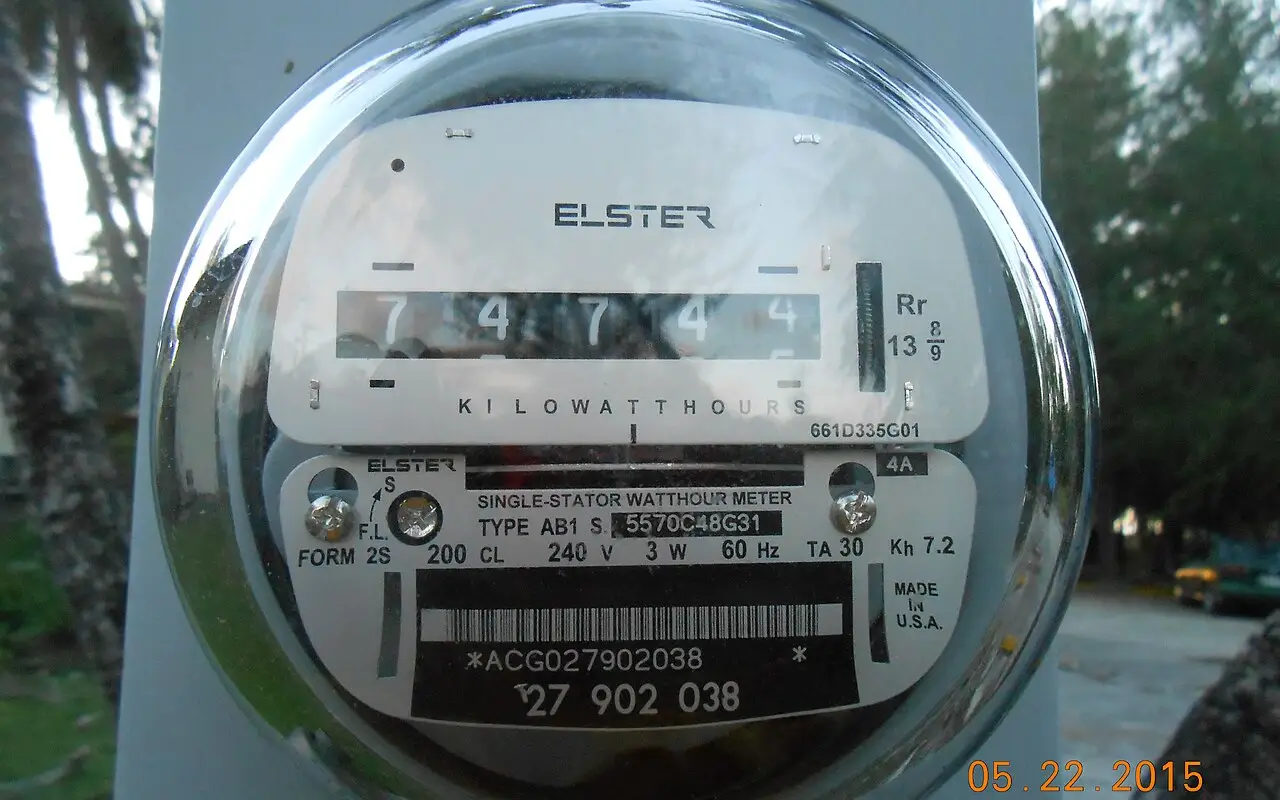
Cover image: an analog residential electricity meter by Editor abcdef / Wikimedia Commons, CC0 1.0. The image is illustrative; its dial reading is not used in the calculations.
Sık Sorulan Sorular
Does my electricity supply rate include the full cost of charging an EV?
Not necessarily. Separately itemized utility delivery charges and per-kWh taxes may apply in addition to the supply rate. Check the actual tariff and bill.
Should I use battery kWh or meter kWh to calculate charging cost?
Use the additional energy billed by the utility meter when possible. Wall consumption can exceed energy added to the battery because of charging losses and auxiliary loads.
Does charging after midnight always save money?
No. Off-peak hours and rates depend on the exact utility plan, and some customers have flat rates. Compare the full tariff before changing your schedule.
Are demand charges included in every residential EV bill?
No. Many residential plans do not itemize demand charges. Apply such a charge only when your own tariff specifies it.