Quick answer: To choose a water filter for lead reduction, do not stop at labels such as “carbon filter,” “purified water,” or even “NSF certified.” The U.S. Environmental Protection Agency (EPA) recommends checking that the exact model has an accredited third-party certification for NSF/ANSI 53 with a specific lead-reduction claim and NSF/ANSI 42 for particulate reduction, Class I. Verify the claims in the certification directory or the filter’s performance data sheet, and replace cartridges as directed.
Lead from plumbing can dissolve into drinking water or appear in particles released by pipes and fixtures. A good shopping decision starts with the contaminant, not the look or price of a pitcher, faucet-mounted or under-sink device. The EPA’s 2024 consumer certification guide explains how to identify a filter evaluated to reduce lead in drinking water.
Why “NSF certified” is not a complete claim
Standards are broad. A filter may meet a standard for one named performance claim and not another. Therefore, the relevant question is not just “Does it list NSF/ANSI 53?” but “Is this specific system and replacement cartridge certified under NSF/ANSI 53 for lead reduction?”
Similarly, the EPA’s consumer tool looks for a Class I particulate-reduction claim under NSF/ANSI 42. A label saying merely “NSF/ANSI 42” may address another claim such as taste or odor and should not be treated as proof of Class I particulate removal. Standards text, certifier marks and claims may appear on the packaging, performance data sheet or the certifier’s product listing.
What the two certifications do — and do not — mean
NSF/ANSI 53: look for the actual lead-reduction claim
The EPA guidance describes filters certified to reduce lead in test conditions to 5 parts per billion (ppb) or less. That figure refers to the certification framework described by the EPA; it is not a promise that every home will have 5 ppb or less regardless of maintenance, installation, source water or filter capacity. “Meets NSF/ANSI 53” without the contaminant-specific claim is insufficient evidence of lead reduction.
NSF/ANSI 42: look for Class I particulate reduction
Particulate reduction may matter because some lead can travel as particles. The EPA recommends the Class I claim alongside lead reduction. “NSF/ANSI 42” alone is not the same as a verified Class I claim.
NSF/ANSI 401 is not a substitute for the lead claim
A filter with a certification for certain emerging substances or other contaminants should not be assumed to remove lead. Check the exact performance claims. The EPA’s guide contains examples of standards and test-sheet wording so consumers can distinguish them rather than guessing.
Seven-step checklist before paying for a pitcher or under-sink filter
- Identify the water problem. If you suspect lead, ask your water utility about service lines and sampling, and consider a certified tap-water test. Lead has no reliable smell, taste or visible color.
- Read the precise brand and model numbers. Note both the housing/system and the required cartridge; similar-looking products can have different certifications.
- Find the accredited certifier’s mark. Use the EPA’s consumer tool to recognize the marks of certification bodies.
- Confirm NSF/ANSI 53 for lead reduction. Check the model’s certification listing or performance data sheet; look for the named contaminant.
- Confirm NSF/ANSI 42 Class I particulate reduction. Do not assume a chlorine taste-and-odor claim implies particle removal.
- Check capacity and cartridge rules. Record how many gallons or liters may be treated, any expiration date and the schedule for replacing the cartridge.
- Install and operate exactly as directed. Flush a new cartridge as required, use the specified feed-water temperature and flow, and avoid using an expired or incompatible replacement.
Do not trust a reseller’s generic “lead-free” banner if you cannot verify the exact filter model. A listed brand may sell both certified and uncertified versions.
Example: Two product boxes with similar marketing
Hypothetical Filter A says “great taste, carbon filtration, NSF/ANSI 42,” but makes no identified lead reduction claim. That information alone does not show it can address lead.
Hypothetical Filter B identifies a particular model and cartridge with NSF/ANSI 53 lead-reduction certification and NSF/ANSI 42 Class I particulate-reduction certification, both verifiable in a recognized certifier directory. The claims for Filter B are the relevant ones to investigate. This example is a consumer-reading exercise, not an endorsement or laboratory evaluation of real products.
Why your city’s annual water report cannot prove your own faucet is lead-free
Water-system testing and an annual Consumer Confidence Report (CCR) provide essential information about the utility and its sampled locations. But water can also encounter lead-containing plumbing and fittings within a particular building. The EPA warns that lead cannot be detected reliably by sight, taste or smell and identifies testing as the way to find out whether lead is present in your own drinking water. See our guide to finding and reading U.S. water quality reports for the first step, then arrange appropriate local testing if needed.
Will boiling the water remove lead?
No. The EPA explicitly states that boiling water does not remove lead. Use cold water for drinking and food preparation rather than drawing hot water from the tap, and follow official local drinking-water instructions. Heating water is not a replacement for a verified lead-reduction filter or removing the source of contamination.
Common mistakes after installing a certified filter
- Leaving the cartridge installed beyond the manufacturer’s recommended capacity or replacement interval.
- Buying an apparently compatible third-party cartridge without checking its independent lead-reduction certification.
- Using hot water in a filter intended for cold water only.
- Assuming a device removes microbes, PFAS, arsenic and every other contaminant merely because it has a lead-reduction claim.
- Forgetting that a filter may reduce exposure while lead-containing pipes or fixtures still need assessment and eventual replacement.
The EPA’s explanation of lead sources also discusses faucet aerators, cold water, flushing and service-line replacement. Local water systems may provide specific instructions depending on the plumbing situation.
Questions to ask a seller or manufacturer
“Which certification body evaluated this model?” “Is lead reduction explicitly listed under NSF/ANSI 53?” “Is Class I particulate reduction listed under NSF/ANSI 42?” “Which replacement cartridge maintains those claims?” “What are the maximum capacity, temperature requirements and initial flushing instructions?” A clear response should identify model-specific documents, not just slogans.
When to get help
If you receive a lead advisory, a concerning certified lab result or information that your property has lead plumbing, contact your water utility or local public-health department for the recommended next steps. Ask a licensed plumber about service lines. For children or pregnancy-related exposure concerns, seek professional healthcare guidance. This guide does not diagnose lead exposure or recommend treatment.
Official sources and image note
Primary evidence: EPA: Consumer Tool for Lead-Reducing Water Filters (June 2024); EPA: Basic Information about Lead in Drinking Water; EPA: Does Boiling Water Remove Lead?; EPA: Sources of Lead in Drinking Water.
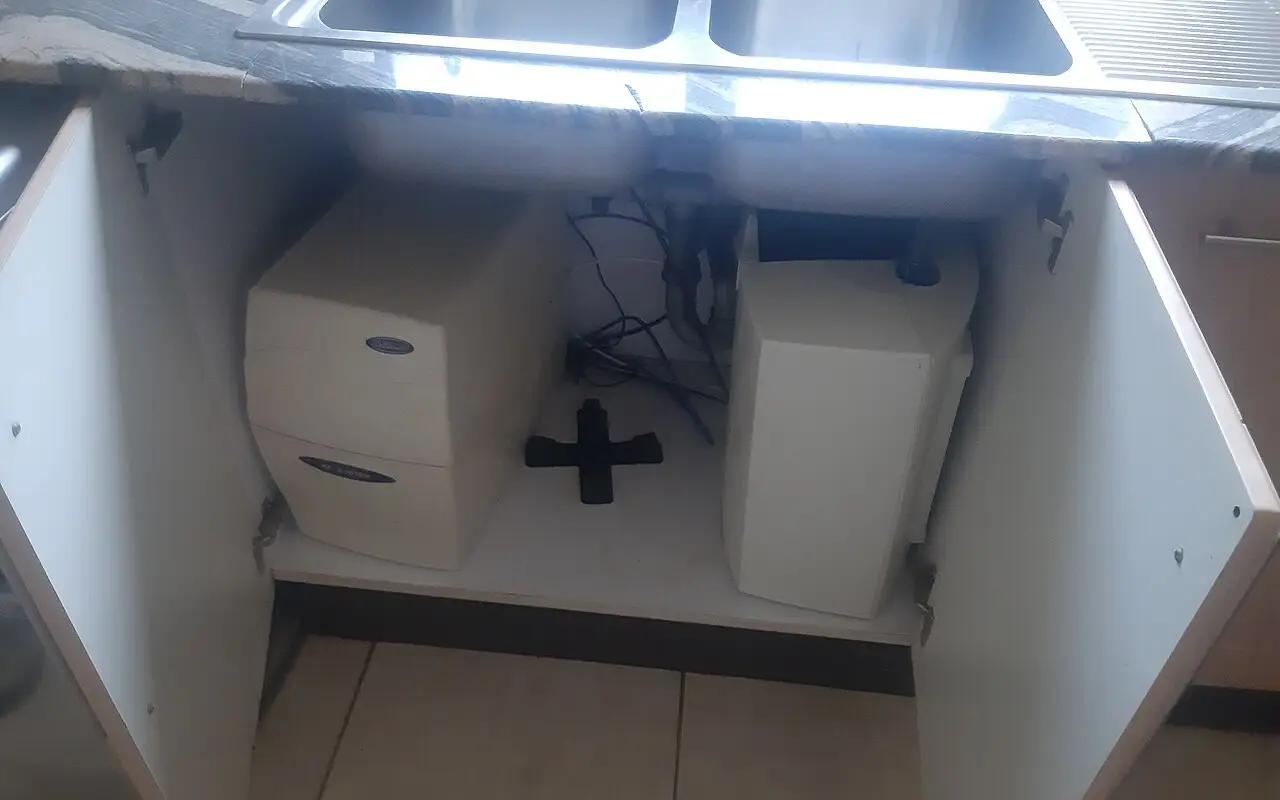
Cover: actual installed under-sink water filter photographed by Fanti Salms / Wikimedia Commons, CC BY-SA 4.0, unmodified. The photograph does not establish that the pictured model is certified for lead reduction.
Sık Sorulan Sorular
Does NSF/ANSI 53 certification always mean a filter removes lead?
No. Check the exact model and its performance listing to confirm lead reduction is a specifically certified claim under NSF/ANSI 53.
Why does EPA recommend NSF/ANSI 42 Class I as well?
The Class I particulate-reduction claim addresses fine particles, which may carry lead, in addition to the lead-reduction performance evaluated under NSF/ANSI 53.
Does boiling tap water remove lead?
No. EPA explicitly states that boiling drinking water does not remove lead.
Can a city's water quality report prove my own home's taps have no lead?
No. Utility system reports provide broader monitoring information, but lead may enter from particular service lines and internal plumbing. Home testing may still be needed.