Quick answer: If your tire pressure light comes on during cold weather, a fall in air temperature may have lowered tire pressure below the tire-pressure monitoring system (TPMS) warning threshold. Check all tires with a tire-pressure gauge when they are cold, then adjust them to the vehicle manufacturer’s recommended cold pressure on the driver-side door-jamb placard or in the owner’s manual. Do not ignore a warning just because it turns off later in the day.
This guide applies to electric cars, hybrids and gasoline vehicles in the United States. The National Highway Traffic Safety Administration (NHTSA) explains that cold mornings can activate a warning that goes away after the tires warm up; that behavior still warrants a pressure check.
Why does tire pressure drop when the weather gets cold?
As the temperature of the air in a tire falls, its pressure tends to decrease. As the tire warms during driving, the pressure rises. This is a normal physical response, but a tire that was already marginally low can fall below the TPMS warning threshold after a cold night. The system may stop warning after driving when the tires warm, even though the tire’s cold pressure remains below its recommended value.
A common mechanical rule of thumb is a change of approximately 1 psi per 10°F temperature change, although actual change varies with the tire and starting conditions. It is an estimate, not a substitute for measuring PSI with a gauge.
What does the TPMS warning symbol mean?
The common icon resembles a tire cross-section or horseshoe shape with an exclamation mark. Depending on the vehicle, the dashboard may also display one or more individual tire pressures. A steady low-pressure warning usually signals that the monitoring system thinks pressure is significantly low. However, on vehicles that use an indirect system, wheel-speed data rather than pressure sensors inside each tire help estimate when a tire has lost pressure.
A warning lamp that flashes for approximately 60–90 seconds and then remains lit may mean the TPMS has a fault and needs diagnosis. NHTSA describes this malfunction behavior for applicable modern vehicles. A system issue does not prove that the tires are properly inflated.
How to check and correct tire pressure: six steps
- Park safely on level ground. If you notice a visibly flat tire, sidewall bulge, rapid pressure loss or unstable handling, stop using the vehicle until the cause is assessed.
- Let the tires become cold. NHTSA defines cold for the recommended measurement as tires that have not been driven on for at least three hours. A warm tire gives a higher reading than a cold tire.
- Find the correct PSI. Check the manufacturer’s tire-information placard, commonly on the driver’s door frame, or the owner’s manual. Front and rear pressures may differ; vehicle loading requirements can also affect recommendations.
- Measure each tire with a reliable gauge. Remove the valve cap, place the gauge firmly on the valve stem and record the reading. Compare each reading with the relevant placard value. Do not rely only on what the tire looks like.
- Add air as needed. Use an appropriate compressor or inflation device and measure again. Avoid intentionally underinflating or overinflating. The maximum pressure marked on the tire sidewall is not the routine target.
- Recheck the warning. The light may clear after the vehicle updates its readings; some models require driving, recalibration or a model-specific procedure. Consult the owner’s manual. If the warning persists, have the tire or system checked.
Should you inflate a warm tire to the cold placard PSI?
The best approach is to measure and set pressure with cold tires. If you suspect serious underinflation while away from home, NHTSA advises addressing the problem instead of continuing on a severely underinflated tire. A temporary adjustment on warm tires can require a later recheck and correction when cold. Never deliberately release air from a warm tire simply to match a cold-pressure placard value; the pressure will fall again when the tire cools.
Example: tire pressure after a cold night
Hypothetical example: Suppose a car’s placard specifies 35 psi cold. A driver measured 34 psi on a mild morning, already below that recommendation. A substantial overnight temperature drop can make the cold reading lower still and trigger a TPMS warning. The correct response is to measure the cold pressure directly and use the actual pressure recommendation for that particular vehicle, not copy 35 psi into every car.
Electric vehicles are not exempt: correct inflation is important for handling, tire wear and energy efficiency. EV tires may require particular load ratings or tire specifications, so follow the manufacturer’s tire guidance. Tire pressure does not tell you whether an EV battery is healthy.
What if one tire keeps losing pressure?
If a tire repeatedly loses air after you refill it, possible causes include a puncture, leaking valve, damaged wheel or other leak. A competent tire professional can inspect the tire and determine whether repair or replacement is appropriate. A slow leak should not be dismissed as merely “winter pressure loss.”
If the light begins flashing rather than staying steady, check pressure manually and request TPMS service if indicated. Some vehicles need a calibration or relearn procedure after certain tire services, while others update automatically.
TPMS warning vs. low tread: two different safety problems
TPMS monitors or estimates inflation, not all tire-related risks. It cannot reliably diagnose a worn tire, sidewall damage or an unsafe tread depth. NHTSA recommends checking tires regularly with a gauge and inspecting for damage and wear. The federal agency notes that the legal minimum tread depth in many contexts is 2/32 inch, but tires may need replacement sooner for the intended conditions, especially snow or standing water.
Read NHTSA’s winter-driving safety tips before winter road trips. NHTSA also warns against using the pressure on the tire’s sidewall as the routine recommended vehicle pressure.
Cold-weather tire pressure checklist
- Check the vehicle placard for the correct front and rear PSI.
- Measure all road tires at least monthly and before a long trip.
- Measure with a reliable gauge after the vehicle sits for three hours.
- Address persistent warning lights, visible damage and repeated pressure loss promptly.
- Do not assume a warning light that turns off after driving means the cold tire pressure is correct.
- Follow the vehicle manual for any TPMS reset or recalibration procedure.
Related reading and official sources
For a broader seasonal checklist, see How to Prepare Your Car for Winter. Learn how to read your tire’s age in our DOT tire date-code guide and explore vehicle ownership guides.
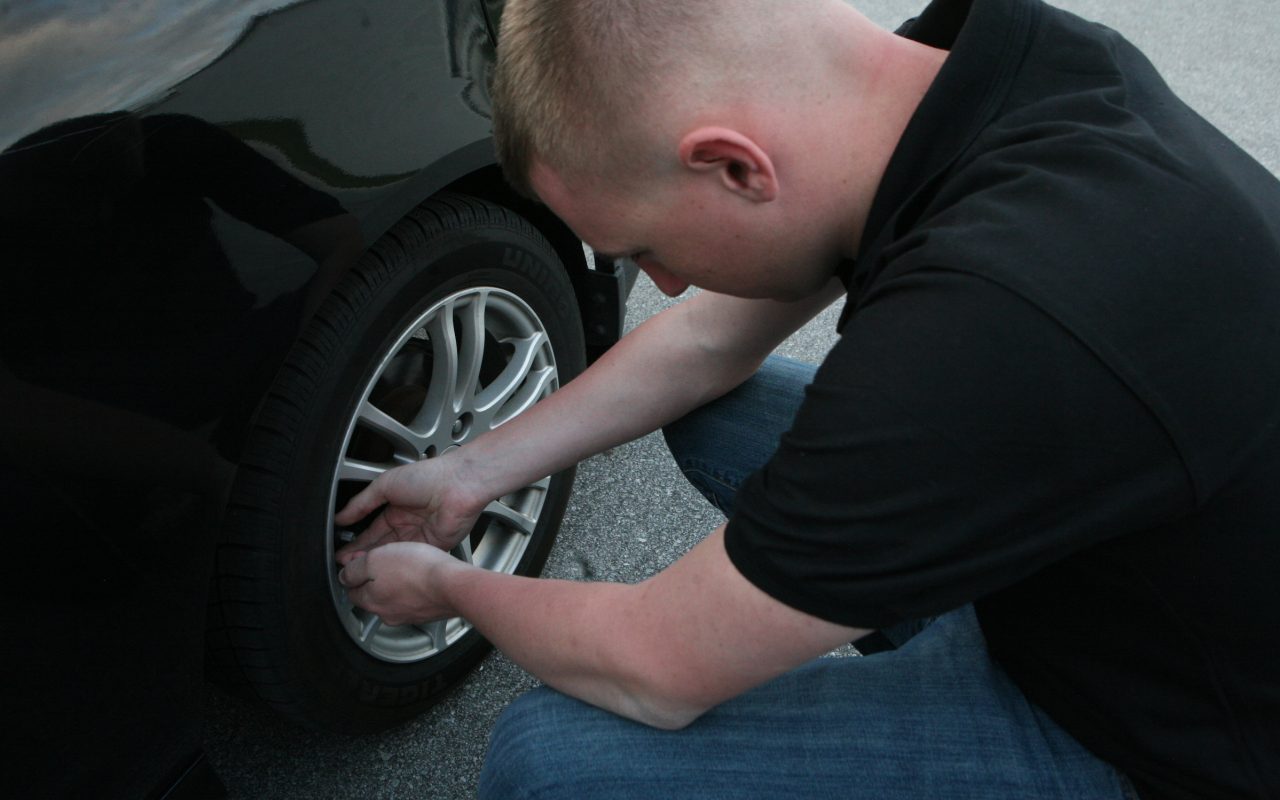
Primary sources: NHTSA TireWise — Tire Safety and TPMS and NHTSA — Winter Driving Tips. Photograph: U.S. Marine Corps, Pfc. Franklin E. Mercado / Wikimedia Commons, public domain. A Marine checks tire pressure at Camp Lejeune in March 2011; the archival photograph is illustrative and does not claim to show an electric car or the actual dashboard warning.
Sık Sorulan Sorular
Why does my tire pressure warning light come on only in the morning?
Cold overnight temperatures can lower pressure enough to cross the tire-pressure monitoring system threshold; the warning may disappear when tires warm, but that still requires a cold-pressure check.
Should I inflate my tires to the PSI printed on the tire sidewall?
No. The sidewall marking gives the tire's maximum cold inflation pressure. Use the vehicle manufacturer's recommended cold PSI on the driver's door placard or owner's manual for normal driving.
Can I keep driving if my tire pressure warning light is on?
Stop at a safe location and inspect the tires and pressure promptly. Do not continue if the tire looks flat, has visible damage or the car handles abnormally; seek safe assistance.
What if the TPMS light flashes and then stays on?
A flash for approximately 60–90 seconds followed by steady illumination can indicate a TPMS malfunction; check actual tire pressures with a gauge and have the monitoring system inspected.