Quick answer: To prepare a car for U.S. winter weather, start with tires, battery, visibility, lights, cooling system and an emergency kit. Check tires cold against the vehicle’s door-jamb pressure label, assess tread and suitability for snow, test the 12-volt battery, inspect windshield wipers and washer fluid, and make sure defrosters work. Stock essentials before an unexpected delay. The same planning applies to gasoline, hybrid and battery-electric vehicles, although their winter powertrains and charging needs differ.
Winter car preparation at a glance
| Item | What to check | Why it matters |
|---|---|---|
| Tires | Cold PSI, tread, age, damage and winter suitability | Traction and handling deteriorate on snow and ice. |
| 12V battery | Age, starting or accessory problems, charging system | Low temperatures reduce battery performance. |
| Windshield | Wipers, defroster, winter-rated washer fluid | Snow, ice and road spray can obstruct vision. |
| Cooling system | Correct coolant condition and specification; leaks | Insufficient antifreeze protection can damage engine components. |
| Lights | Headlights, turn signals, brake lights and hazards | Shorter daylight and snowfall reduce visibility. |
| Emergency kit | Warm clothes, water, food, supplies, phone power | Unexpected closure or breakdown may mean a long wait. |
The National Highway Traffic Safety Administration (NHTSA) provides the underlying federal winter travel guidance.
1. Check tires before temperatures drop
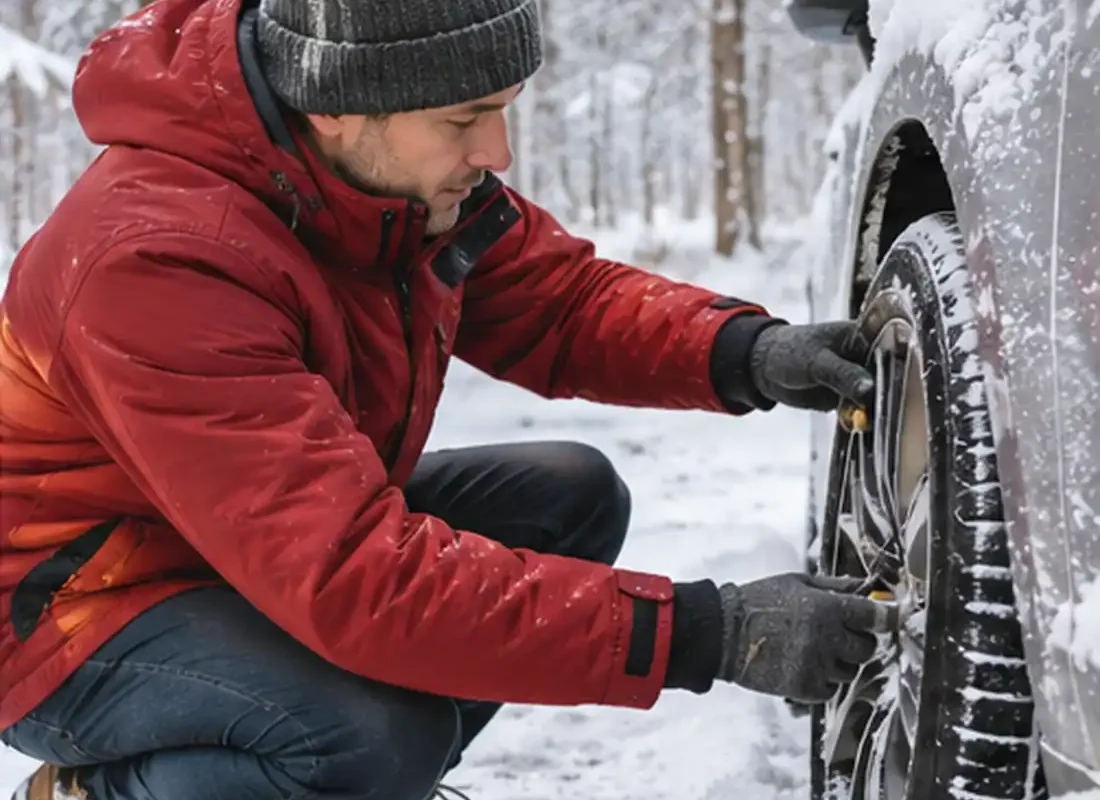
Cold weather can lower inflation pressure. For an accurate reading, check each tire when it has not been driven for at least three hours, according to NHTSA. Use the recommended PSI on the driver-door placard or vehicle owner’s manual, not the maximum pressure embossed on the tire. Front and rear recommended pressures may differ. Inspect sidewalls for cracks or bulges and tread for uneven or excessive wear. NHTSA lists a general legal/safety replacement indicator at 2/32 inch of tread, but deeper tread and dedicated winter tires may be needed for snow traction.
Our DOT tire date code guide explains how to check tire manufacturing age. For U.S. tire maintenance guidance, see the NHTSA TireWise resource.
2. Decide whether you need winter tires
All-season tires work in many conditions, but winter tires are generally better suited for deeper snow and severe cold. Your decision should reflect local climate, road clearing, topography and the manufacturer-approved tire size/load specification. Avoid assuming that all-wheel drive eliminates the need for adequate stopping traction: braking and cornering still rely on tire grip. Follow manufacturer guidance on mixing tires or snow chains; incorrect chains or sizes can damage the vehicle.
3. Get the 12-volt battery and electrical system checked
Cold weather can make a weak 12V battery more likely to fail. Ask a qualified technician to assess battery health and the charging system if you have slow cranking, repeated jump-starts, dim lights or old battery age. Gasoline and diesel vehicles rely on 12V power for starting; electric vehicles also have 12V electrical systems that support computers and vehicle readiness. Do not attempt high-voltage repairs on an EV. Our EV 12-volt battery recovery article explains model-specific cautions.
4. Check your antifreeze and coolant system
For combustion vehicles, follow the owner’s manual on coolant type, antifreeze concentration, testing interval and leak inspection. Never open a hot, pressurized cooling system. Some electric vehicles have dedicated battery thermal-management coolant loops with special service requirements; do not treat them as ordinary radiator fill points. A qualified shop should handle uncertain coolant leaks or cooling faults.
5. Restore clear winter visibility
Replace torn or streaking windshield wiper blades and use washer fluid rated for the expected freezing temperatures. Verify front and rear defrosters work, clean your windows, and remove snow and ice from glass, mirrors, headlights, taillights and the roof before driving. Do not use boiling water on an iced windshield, and never drive with a small hole scraped through otherwise obstructed glass. NHTSA specifically highlights wipers, defrosters and winter washer fluid as pre-trip checks.
6. Pack a winter emergency kit
One practical checklist from NHTSA winter travel guidance includes: a snow shovel, broom and ice scraper; sand or other traction aid; flashlight, jumper cables and warning markers; first-aid kit and necessary medicines; blankets, warm clothing, nonperishable food and bottled water; and a charged mobile phone with a car charger. Choose equipment you know how to use safely. Store items where they cannot become dangerous projectiles during a sudden stop.
7. What EV and hybrid drivers should do differently
Cold temperatures can reduce battery performance and usable driving range. Precondition the cabin and battery according to your vehicle manual, and when possible keep the car plugged in while preparing for departure. Charge planning is especially important on long trips and in areas with sparse charging coverage. Do not assume a particular EV model can run cabin heat indefinitely when stranded. For related information, read our EV battery storage guide and home backup power overview.
8. How to drive more safely on snow and ice
Slow down, allow extra stopping distance, avoid abrupt acceleration and steering, and give snowplows room. Monitor weather and local road closures before departure. If the drive is not essential during an ice storm, postponement may be the safest decision. The NHTSA severe-weather guide emphasizes planning and adjusting speed to conditions.
9. What if you become stranded in snow?
Choose your actions based on traffic and weather conditions, and contact emergency or roadside services. NHTSA recommends staying with the vehicle when appropriate, using markers to make it visible and avoiding overexertion. Prevent carbon monoxide poisoning by keeping the exhaust pipe clear if running a combustion engine intermittently for warmth; never idle inside a garage or other enclosed space. If you feel headache, dizziness, nausea or confusion around exhaust, seek fresh air and medical help; the CDC explains carbon monoxide risks. An EV has no combustion exhaust while operating electrically, but has different range and heating constraints.
A 10-minute pre-departure check
- Confirm the weather, road closures and destination conditions.
- Check tires and tire pressure when cold; look for new damage.
- Verify lights and defrosters, then fully clear snow from the vehicle.
- Top up appropriate winter washer fluid.
- Check the fuel level or battery charge and identify backup fuel/charging stops.
- Ensure winter clothing, food, water, first-aid supplies and phone power are aboard.
- Tell someone your route and expected arrival time if driving in remote conditions.
Frequently asked questions
How often should I check tire pressure in winter?
NHTSA recommends checking at least monthly, when the tires are cold, and also before major journeys.
Are all-season tires sufficient for every U.S. winter?
No. In deep snow, icy roads or persistently severe conditions, dedicated winter tires may offer better traction. Use the right type for your climate and vehicle.
Should I warm my car for a long time before driving?
Follow the owner’s manual. Prolonged idling is not a substitute for safe driving conditions, proper maintenance or winter-rated equipment. Never warm a combustion engine in an enclosed garage.
What is the most important winter emergency item?
A charged phone with a way to maintain power is vital for requesting help, but warmth, water, food, visibility markers and necessary medicines also matter.
Reviewed November 8, 2026. General U.S. driving safety information; individual vehicle owner manuals, tire specifications, state traffic rules and local emergency instructions take precedence. Featured image is an illustrative photorealistic scene.