Quick answer: Before paying for U.S. car insurance, verify the legal underwriting insurance company and the agent or broker separately. Match the insurer’s legal name on the quote to the NAIC Consumer Insurance Search, then confirm that company is authorized for the relevant coverage in your state using your state insurance department. A company name, NAIC number, attractive website or downloadable “insurance card” alone does not establish that the policy is genuine or active.
The National Association of Insurance Commissioners (NAIC) advises consumers to verify insurers and agents before buying coverage. Its official Consumer Insurance Search also warns that a recognizable insurance brand may have multiple separately named subsidiaries. A good check therefore goes beyond whether the company name sounds familiar.
Step 1: Find the exact legal name of the company underwriting your policy
Look at the quotation, proposed declarations page or written binder for the complete name of the insurance company issuing the coverage. This may differ from the brand displayed in an advertisement or the name of the agency selling the policy. A comparison website, broker and licensed insurer play different roles.
Ask a seller who supplies only a logo: “What is the full legal name and NAIC company number of the carrier that will issue this policy?” A trustworthy answer should let you cross-check the company against a regulator’s record. If several similarly named insurance subsidiaries exist, select the one shown on your actual paperwork rather than guessing.
Step 2: Search the insurer through the NAIC — then verify the state license
Start with the NAIC Consumer Insurance Search. Search the legal entity and compare its name and identification details to the proposed policy. The NAIC’s search-results guidance instructs users to check the correct subsidiary and to confirm state licensing with their state department of insurance.
An NAIC number identifies an insurer; it is not by itself proof of authority to issue your particular policy in your state. The next question is whether that legal entity is authorized for the type of insurance proposed where you live. An auto insurer in one state does not automatically have the same authority in all states. If the search yields no match, do not automatically assume fraud: legal names, insurance entity categories and database coverage can require help from the regulator.
Step 3: Use your state’s official insurer and producer lookup
Open your state insurance department’s own website, ideally by navigating from the NAIC’s state regulator directory rather than following a link in an unsolicited quote. Search the insurance company and the agent or agency independently. The NAIC says both should be licensed in the state for ordinary authorized insurance sales, subject to the applicable regulatory framework.
What the search can reveal: As one concrete example, the Maryland Insurance Administration’s Company and Producer Search describes fields including company name, NAIC number, active or inactive status and authorized lines of business, such as automobile insurance. Maryland’s producer lookup separately covers agents, brokers and agencies. This is Maryland’s process and data, not a claim that every state’s database uses identical labels.
Specialty arrangements, including insurance lawfully placed through surplus-lines channels, can follow a distinct state-specific regulatory framework. If the seller describes an unauthorized or surplus-lines policy, ask your regulator how to verify it rather than assuming an ordinary admitted-carrier lookup fully settles the question.
Step 4: Confirm the quote with a contact you found independently
A fraudster can put a real insurer’s name and NAIC number on a fake website or document. Use the phone number on the insurer’s own verified website or a regulator record, not the number or payment link included only in a suspicious message. Ask whether the insurer or its appointed producer can confirm the quote, the proposed effective date, the underwriter and how the premium should be paid.
Only use a secure payment method accepted by the actual licensed seller. Be especially cautious if someone insists you immediately transfer funds to a personal account or supplies a payment destination that the verified company cannot confirm. Ask for a receipt and policy documents issued through the insurer’s established process.
Step 5: Verify that coverage is actually in force
An insurance license does not prove that your policy was issued or remains active. After purchase, check the legal carrier, policy number, insured vehicle and drivers, the effective and expiration dates, stated coverages, deductibles and premium payment record. Contact the company through an independently verified channel if any field conflicts with what you were sold.
The NAIC’s insurance-fraud guidance warns that a dishonest intermediary may collect premiums without forwarding them to the carrier. A missing policy, delayed proof of coverage or unexplained cancellation therefore deserves prompt verification, not just another call to the original seller.
A hypothetical case: when the insurance brand and company don’t match
Suppose a customer receives a quote branded “Example Motors Insurance” but the declarations page names “Example Casualty Company A,” with a stated NAIC company number. These are invented names for an educational illustration. The customer should search the named underwriting company and the NAIC identifier, check whether that precise entity may write auto insurance in the relevant state, confirm the agent’s authorization and call the insurer using independently obtained contact details. A familiar brand can represent multiple legal entities; the insurer on the policy is the starting point.
Warning signs that call for verification, not instant conclusions
- Extreme pressure to pay immediately or claims of “guaranteed coverage” before the vehicle and driver’s information are reviewed.
- A price markedly lower than other quotes for genuinely comparable liability limits, deductibles, drivers and vehicles.
- An agent who cannot supply the legal insurer name, license details or written coverage terms.
- A payment address, bank account or phone number that cannot be confirmed through the insurer’s independent official channel.
- An insurance card that arrives but cannot be matched to a policy record at the actual insurer.
These are reasons to investigate, not proof of a crime. The NAIC advises consumers to stop, call and confirm before buying insurance. Suspicious marketing or suspected fraud may be reported to a state insurance department.
What license verification cannot tell you about policy quality
A valid license is a legal and regulatory check, not an endorsement of customer service, pricing, policy limits or future claims handling. Compare the actual contract wording, exclusions, deductibles and complaint information separately. An insurer’s financial strength and consumer complaint history can also be relevant but are not replaced by license status. See the NAIC’s guide to choosing an insurance agent for those additional considerations.
For EV-specific buying decisions, read our existing explainers on electric-car battery claims versus warranties, insurance checks before buying a used EV, and hail damage and comprehensive coverage. Those topics address different coverage questions and cannot be settled by licensing alone.
One-page verification checklist to save before paying
- Write down the exact legal insurer name and NAIC company number from the quote.
- Compare it with the official NAIC company record and identify the correct subsidiary.
- Check state-specific company authorization and agent/agency license using the state insurance department.
- Independently call the issuing insurer to confirm quote or producer details and the approved payment route.
- After payment, confirm the policy number, effective date, insured vehicle, coverage terms and active status.
Sources and editorial limits
This U.S.-focused guide uses NAIC consumer tools, NAIC search-result instructions, NAIC antifraud guidance, NAIC licensing advice for agents, and the Maryland Insurance Administration’s regulator search explanation. No example company or NAIC number is presented as a real insurance license. Licensing rules differ by state and insurance transaction; this article is consumer information, not legal or insurance advice.
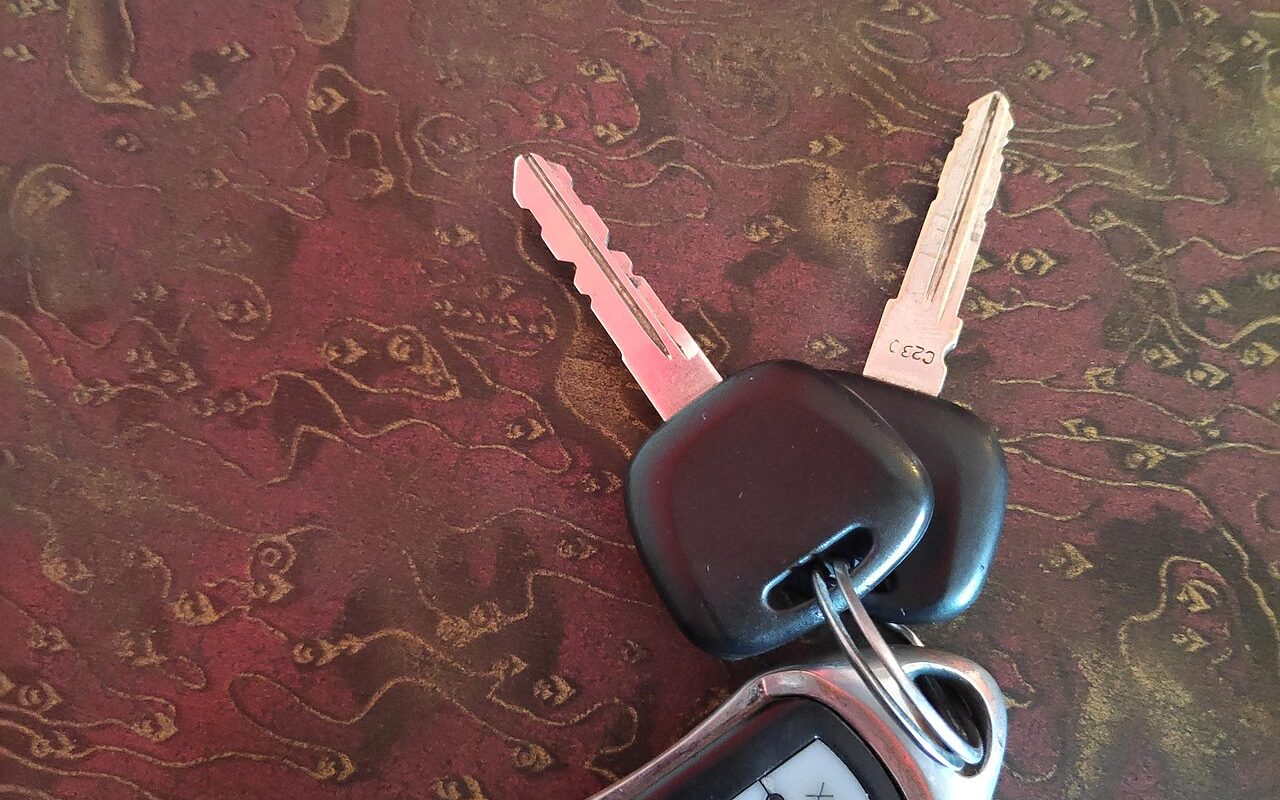
Illustrative photograph: car keys by Gaurav Dhwaj Khadka / Wikimedia Commons, CC BY-SA 4.0, unchanged. The keys are not evidence of a real insurance contract.
Sık Sorulan Sorular
Does an NAIC number prove an insurance company is legitimate?
No. It identifies a company; check the legal insurer's state authorization for the relevant coverage, independently confirm the seller and verify the actual policy.
How do I check if a car insurer is licensed in my state?
Find the legal issuing insurer name on the quote, search the NAIC Consumer Insurance Search, then check your own state insurance department's company licensing and authorized-lines lookup.
Can an insurance agency be real while my policy is fake?
Yes. NAIC consumer warnings describe premium diversion and bogus insurance documents. Confirm a policy's issuance and status using independently verified insurer contact details.
What if an insurer does not appear in the ordinary license search?
Do not assume fraud from an absent result alone. Check the legal name, subsidiaries and whether a different regulatory framework applies, and contact the state department of insurance.