Short answer: A home electric vehicle charger may be covered under U.S. homeowners insurance, but coverage is not automatic. A permanently installed wall unit may be treated differently from a portable charging cable. The location, ownership, type of damage, applicable policy section, exclusions and deductible all matter. Ask the insurer to confirm your actual policy terms in writing.
What homeowners insurance might cover
Homeowners policies generally distinguish the residence, other structures, personal property and personal liability. A wall-mounted EV charging unit wired into the house might be evaluated under building-related property coverage. A detachable cable or portable charger may instead be treated as personal property. An EVSE in a detached garage can raise different coverage questions.
These classifications are illustrative, not a guarantee. Some policies contain special property limitations, exclusions or endorsements. The National Association of Insurance Commissioners (NAIC) recommends reviewing individual coverage and asking questions before a loss.
EV charger insurance scenarios
| Situation | What to verify with the insurer |
|---|---|
| Fire damages permanently installed charger | Cause of fire, covered peril, installation issues, exclusion and building-property terms |
| Storm damages exterior charger | Wind/hail provisions, attachment, deductible and exclusions |
| Portable charging cable is stolen | Personal-property theft coverage, location limitations and deductible |
| Vehicle strikes charger or garage wall | At-fault party, liability, property and auto-policy coordination |
| Faulty wiring causes damage | Cause-of-loss investigation, workmanship exclusions and resulting damage |
| Visitor suffers an injury | Negligence allegations, personal liability terms and exclusions |
Does installing a Level 2 charger change your insurance?
Installation is a good reason to contact the insurer or agent. Share whether the unit is permanently wired or plug-in, its location, estimated replacement cost and whether it serves one household or a shared property. Ask whether the insurer requires notification, proof of permitted electrical work or an endorsement. No single nationwide rule applies to every company or policy.
If installation is planned, read our charger electrical safety guide and the charging extension-cord safety explainer. Electrical compliance and insurance coverage are separate issues.
Home insurance vs car insurance vs charger warranty
A vehicle’s traction battery belongs to the car, not simply the home electrical system. Collision, comprehensive insurance, a manufacturer defect warranty and homeowners property coverage serve different purposes and use different triggers. A manufacturer may provide warranty service for a defective charger, while an insurance policy may address some accidental, covered external events. Neither mechanism substitutes for the other.
Seven questions to send your insurer
- Is my permanently installed home EVSE covered, and under which policy section?
- Is a portable charger or loose charging cable included as personal property?
- Are fire, theft, lightning, wind and accidental impact covered?
- Do any limitations apply to a charger mounted outdoors or in a detached garage?
- Is an endorsement or increase in building/property limits advisable?
- Which deductible applies, including any separate wind or named-storm deductible?
- Are proof of professional installation, permits or specific equipment ratings required?
Retain purchase receipts, equipment model and serial number, installation invoices, permit records and photos. In the event of damage, avoid handling unsafe energized equipment; document the scene from a safe distance and follow the insurer’s claims process.
Sources and related reading
For foundational coverage explanations, see the NAIC homeowners insurance consumer guide and NAIC auto insurance guide. The U.S. Department of Energy provides home charging background. International readers should note that our UK home EV charger insurance explainer discusses a different insurance market.
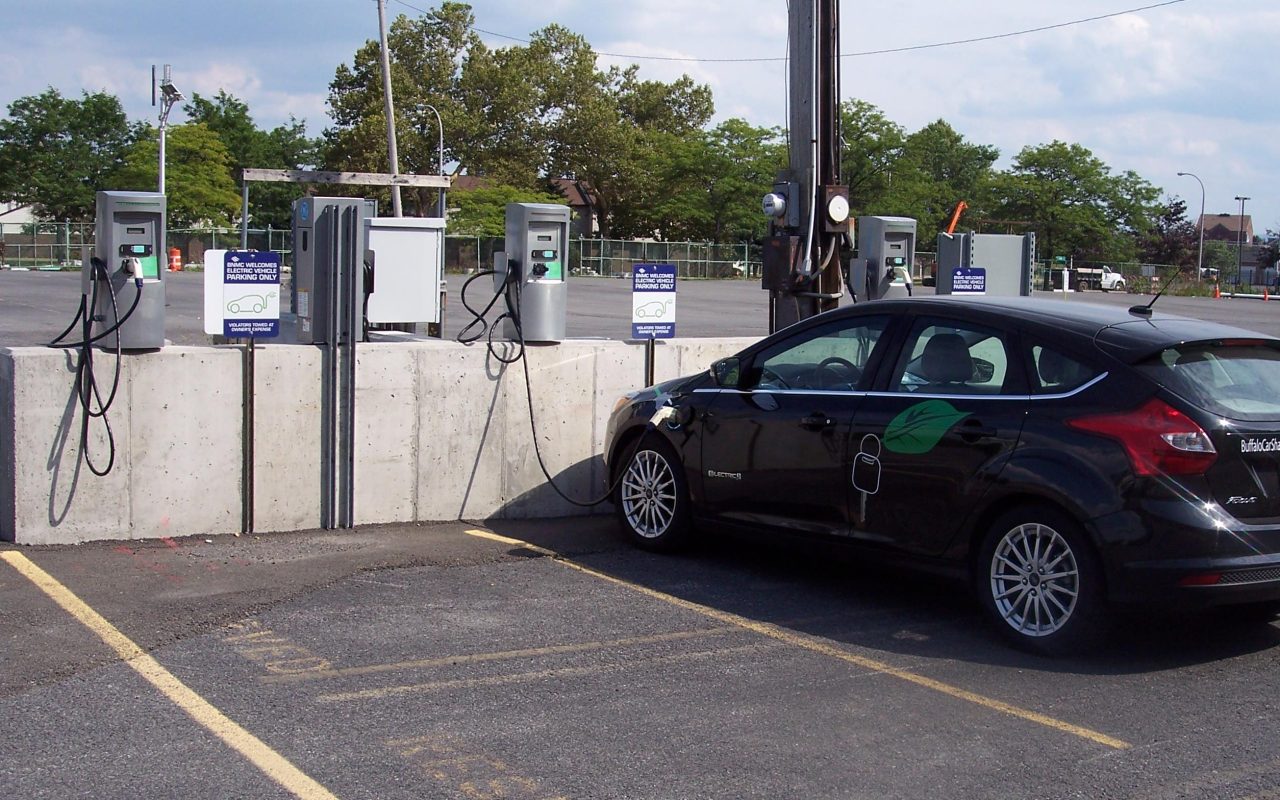
Photo: Ford Focus Electric at a public charging point in Buffalo, New York in 2013. Illustrates charging hardware, not a photographed insurance claim or home installation. Fortunate4now / Wikimedia Commons, CC0 1.0.
Editorial notice: This is general U.S. consumer information, not a policy interpretation or promise of insurance coverage. Read your declarations, policy and endorsements, and contact a licensed professional in your state.
Sık Sorulan Sorular
Is a stolen home EV charger covered by homeowners insurance?
Possibly. Coverage depends on whether the charger is considered covered dwelling equipment, another structure or personal property, and on the policy's theft provisions, exclusions, deductible and limits.
Does a homeowners policy cover an EV battery?
Do not assume so. The battery is part of the vehicle and usually raises auto policy or warranty questions rather than ordinary homeowners property coverage. Ask the insurer about the particular event.