

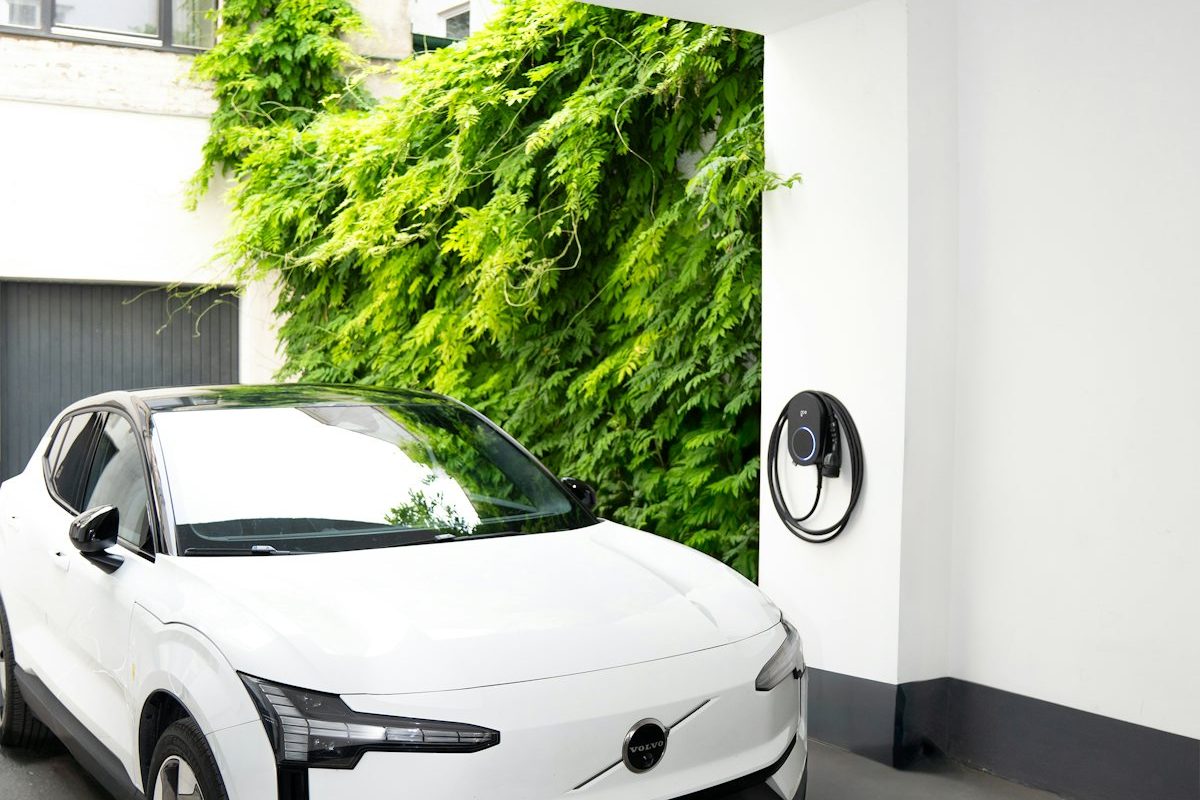
Quick answer (UK): A permanently installed, hard-wired home electric vehicle chargepoint will typically be considered under the buildings element of home insurance when damaged by an insured event. A loose, untethered charging cable may instead fall under fully comprehensive motor insurance as a vehicle accessory. Damage to the vehicle itself is normally assessed under motor insurance. These are general principles, not automatic guarantees: the policy wording, cause of loss, location and liability facts determine the actual claim.
This guide is for private EV home charging in the United Kingdom. It draws on the Association of British Insurers (ABI) February 2026 good-practice guide and current UK government installation guidance. The ABI document is intended to improve claims handling; it is not a substitute for policy terms or legal advice.
Home insurance or car insurance: who covers a charging incident?
The distinction starts with what was damaged and whether the charger is a fixed part of the property. The ABI sets out typical arrangements for claims involving domestic charging equipment, while acknowledging that home and motor cover can overlap.
| What happened? | Policy to check first | Important qualification |
|---|---|---|
| Hard-wired wallbox or attached tethered cable damaged | Buildings cover under home insurance | The wallbox must be treated as part of the property; a covered cause of loss is needed. Wear and tear, poor workmanship or design may be excluded. |
| Untethered cable or a non-fixed charging accessory damaged | Fully comprehensive motor insurance | The item must qualify as an insured vehicle accessory; policies may differ. |
| House or household contents damaged by a charging incident | Home buildings/contents insurance | The applicable covered peril, exclusions and limits matter. |
| EV itself damaged while charging | Motor insurance | Fully comprehensive cover usually matters; third-party, fire and theft may respond to qualifying fire losses. |
| Visitor injured or another person’s property damaged | Depends on whether liability arises from the vehicle’s use | Home and motor liability provisions can overlap or exclude certain situations; no automatic answer. |
The table follows the ABI’s published Cross-product Liability Principles for EV Home Charging (February 2026). The ABI expressly says that each claim should be considered case by case.
Is a wallbox part of the building or personal property?
A charger permanently attached to the home and connected into the electrical installation is materially different from a loose cable or portable unit carried with the vehicle. In the ABI’s typical scenario, damage to the fixed unit falls under home buildings cover, with the important caveat that causes such as wear and tear, faulty design or poor workmanship may be excluded.
Contact your insurer before installation or at policy renewal to ask how the chargepoint is classified. If it is fixed to a detached garage or other outbuilding, confirm that the relevant structure and wiring are insured. Also ask whether the unit’s replacement value is included within existing sums insured or needs to be disclosed separately. Do not assume every home policy uses identical definitions.
Will home insurance pay for a charger fault or fire?
A covered fire affecting the house and installed chargepoint can lead to a buildings or contents claim. But a charger that simply stops working because of an internal defect, poor installation or ordinary wear may fall outside accidental-property-damage insurance and instead require a claim under a product warranty or against a responsible installer or supplier. Whether liability arises and who is legally responsible are separate questions.
For homeowners comparing installation options, the UK Office for Zero Emission Vehicles’ 2026 specifications describe electrical and installation standards applicable to funded chargepoint schemes. A compliant installation, backed by the appropriate certificate and invoice, helps document the equipment and installation work, even though compliance does not create a blanket insurance guarantee.
What if the car catches fire or is damaged while plugged in?
According to the ABI principles, damage to the car itself generally belongs under motor insurance, rather than home insurance. A fully comprehensive policy is usually relevant; fire damage may also fall under qualifying third-party, fire and theft cover. Insurers may need to examine the vehicle, charger, wiring and source of the incident to identify the cause of loss.
If there is smoke, fire or an electrical hazard, do not attempt to disconnect or move equipment where doing so is unsafe. Contact emergency services, follow their instructions and notify the insurers when safe. Preserve the scene and evidence only where that does not create risk.
What happens if a guest trips over the cable?
Third-party liability is more complicated than damage to a fixed charger. The ABI distinguishes between accidents arising from the use of the vehicle and those not arising from it. For example, a trip over equipment left in an unsafe place when not connected to a car may engage home liability cover, while incidents directly linked to vehicle use require consideration of the motor policy and relevant law.
The ABI specifically notes limits on the operation of road-traffic legislation at private properties. Because the facts and policy definitions can change the answer, do not state that “home insurance always covers driveway accidents” or that “motor insurance always pays while charging.” Notify the relevant insurer and ask which liability terms apply to the actual event.
Before installing a home EV charger: UK insurance checklist
- Inform your home insurer. Ask whether the hard-wired unit, its connected cable and associated electrical works are included, and whether any increase to buildings cover is necessary.
- Check the vehicle policy. Ask whether untethered cables and portable accessories are named or covered, and what happens if the car is damaged at home during charging.
- Use a competent installer. UK government guidance addresses installer competence, electrical standards and, for applicable schemes, documentation and certification.
- Keep documents. Save the installation invoice, electrical certificate, product model, serial number, photographs and manufacturer warranty.
- Check ownership arrangements. If you rent, live in a flat, lease the charger or share parking, clarify who owns and insures the equipment and who has permission to install it.
- Review cable routes. Keep the installation safe for pedestrians and do not assume that an improvised extension lead is appropriate.
- Ask about exclusions. Specifically raise electrical breakdown, power-surge damage, water ingress, faulty workmanship and liability at private premises.
The UK government maintains an EV chargepoint installer information page and guidance on registration with the local distribution network operator. Installation and registration responsibilities vary with the property and work proposed; check the current rules with your installer.
If a charging incident occurs: how to make a clear claim
- First address any immediate personal or electrical danger.
- Photograph the charger, car, surrounding property and visible damage when it is safe to do so.
- Record the incident date, time, location, whether the cable was connected and the sequence of events.
- Contact your home and/or motor insurer promptly, explaining the involvement of the EV charging equipment.
- Provide the installation record, equipment details, repair report and any relevant witness information.
- Ask the insurer to identify the applicable cover and explain any referral to another insurer.
- Keep written records of the decision, excess, settlement and next steps.
For related background, see our UK smart EV charger rules guide and EV maintenance checklist. Regulatory compliance, equipment maintenance and insurance protection are related but distinct issues.
Bottom line
For a fixed domestic wallbox, home buildings insurance is usually the first policy to check; for an EV and loose charging accessories, motor insurance may be more relevant. For injuries and third-party property damage, liability turns on the particular facts and wording. The practical safeguard is to tell insurers what equipment you have, keep installation records and obtain written answers before a loss happens.
Sources and verification: Association of British Insurers, Cross-product Liability Principles for EV Home Charging (February 2026); GOV.UK, EV chargepoint specifications (updated July 7, 2026); GOV.UK, EV charger installers; GOV.UK, registering energy devices. Reviewed November 7, 2026. General information, not legal advice.
Sık Sorulan Sorular
Is a hard-wired home EV charger covered by UK buildings insurance?
Typically yes for insured events, according to February 2026 ABI good-practice principles, because a hard-wired charger is fixed to the property. Wear and tear, faulty workmanship, exclusions and the actual policy wording matter.
Does a car insurance policy cover an untethered EV charging cable?
It may be treated as a vehicle accessory under fully comprehensive motor insurance, depending on the insurer's wording and exclusions. Confirm it with the insurer before a claim.
Which insurer handles a fire or accident involving charging at home?
Home insurance generally handles covered damage to buildings or contents; motor insurance usually handles covered damage to the EV. Third-party liability can depend on whether the incident arises from the use of the vehicle and on legal and policy terms.

1 comment