Quick answer: If a home electric-vehicle charger keeps tripping its circuit breaker or showing a GFCI/ground-fault warning, stop repeatedly trying to charge until the cause is identified. Possible problems include a damaged cable, moisture, an unsafe ground path, an overloaded or incorrectly configured circuit, or interactions between protective devices. A breaker opening at the electrical panel is not the same event as an EV charging station displaying a ground-fault code. Follow the equipment manual and ask a licensed electrician or manufacturer-authorized technician to investigate persistent faults.
Scope: primarily North American 120/240-V home charging equipment. Protective-device rules differ across jurisdictions. Never defeat or remove required ground-fault protection to keep a charger running.
Why does an EV charger keep tripping the breaker?
EV charging can draw substantial current for several hours. A circuit breaker is designed to interrupt power when its operating conditions are exceeded; a GFCI instead responds to current imbalance that could indicate a hazardous leakage path. Some modern charging stations contain their own charge circuit interrupting device (CCID). Those protective functions do different jobs even if the user sees a similar symptom: charging stops.
Potential underlying causes include a wiring or grounding problem, a poorly connected terminal, a faulty charger or vehicle charge inlet, water intrusion, an incorrect charging-current setting, and a circuit that is not appropriately sized for the installation. It is not possible to diagnose which one applies just from the statement “my EV charger keeps tripping.”
Breaker trip vs GFCI trip vs charger fault: what is the difference?
| Symptom | What it may indicate | First safe response |
|---|---|---|
| Panel circuit breaker opens | Overcurrent, a short circuit, or ground-fault function where fitted | Stop charging; record when it happened; arrange electrician inspection if repeated |
| Charger indicates ground fault | Current leakage or an unsafe current path detected by EVSE protection | Follow official fault-code guidance; do not bypass protection |
| Ground assurance / earth fault | Ground path issue or excessive resistance | Stop; have a qualified electrician check the installation |
| High-temperature indicator | Hot terminals, plug, handle, cable or charging equipment | Stop charging and inspect only visible, de-energized external parts |
| Vehicle overcurrent warning | Vehicle requests more current than the equipment allows, or another fault | Use manufacturer support; have settings checked by qualified personnel |
The warning indicator is useful evidence, but it does not prove a specific component is defective. Take a photograph of the error display or write down the number of LED flashes if it can be done safely.
Tesla Wall Connector: what do the red blinking lights mean?
Tesla’s Gen 3/Universal Wall Connector fault-code guide differentiates the following alerts:
- One red blink: Ground-fault circuit interruption caused by an unsafe current path. Tesla instructs users to check for visible damage or water ingress and have an electrician inspect the circuit where appropriate.
- Two red blinks: Ground-assurance fault, or high ground resistance. The grounding arrangement requires attention from a qualified electrician.
- Three red blinks: High temperature detected. Charging may be limited or disabled; wiring, terminal connections, the handle and cable may need professional inspection.
- Seven red blinks: Vehicle overcurrent. Tesla advises checking the vehicle charge-current setting and contacting support if the fault persists.
These descriptions apply to the particular Tesla product documentation, not every Tesla charger generation. Never open the charging unit to investigate terminals unless you are an appropriately qualified professional with the equipment safely isolated.
ChargePoint Home Flex: does a separate GFCI breaker cause nuisance trips?
ChargePoint’s Home Flex installation FAQ notes that its equipment already provides integrated charging-circuit interruption and that an additional GFCI breaker can, in some circumstances, produce nuisance trips. However, whether a GFCI breaker or receptacle is required depends on local electrical codes, the installation type, applicable editions of standards and the authority having jurisdiction.
Do not replace a required GFCI breaker with an ordinary breaker on the strength of a web article. Ask a licensed electrician familiar with EV supply equipment and local rules to determine a compliant solution. A protective device may also be responding to a genuine fault, not nuisance operation.
The ChargePoint troubleshooting instructions provide manufacturer-specific steps for a fault LED, including connector checks and approved resetting procedures. If warnings return, seek professional help rather than repeating resets indefinitely.
Is the charger drawing too many amps?
Incorrect commissioning can lead to a mismatch between charger output and available circuit capacity. ChargePoint states that Home Flex output needs to match the circuit installed by the electrician. As a simple power illustration, 240 volts × 32 amps = approximately 7.7 kilowatts; 240 volts × 48 amps = approximately 11.5 kilowatts. Those are arithmetic examples, not instructions to increase an existing circuit’s current limit.
Continuous loads can require special branch-circuit sizing under applicable electrical standards. The exact permitted charging current should be set according to the equipment’s installation guide, the circuit, the breaker and the local code. Our EV charger load-balancing guide covers a separate issue: how sites share available power among one or more chargers.
Can rain or a wet charge port trigger ground-fault protection?
Outdoor charging equipment is designed for its approved environmental conditions, but damaged seals, connectors, wiring or equipment can allow harmful moisture ingress. Tesla’s ground-fault troubleshooting guidance specifically includes inspecting the handle, cable, charging port and wall connector for damage or signs of water ingress.
If components are wet or damaged, do not attempt to dry the inside of live equipment or repair a cable. Keep clear of exposed conductors and contact a qualified technician. Review our EV cable release safety guide for a different fault involving connector locks.
Seven safe checks before requesting service
- Stop attempting to charge if the fault repeats. One reset permitted by a manufacturer is not a license to repeatedly energize a suspect circuit.
- Check the specific error indicator from a safe position. Record charger model, firmware where available, blink code and time of occurrence.
- Look for visible external damage. Do not handle exposed wires or inspect internal terminals. Burning odour, sparks, smoke, melting or excessive warmth demand immediate professional attention.
- Identify which device is tripping. Is it the panel breaker, a GFCI receptacle or a warning on the charging station itself?
- Confirm the correct equipment and settings. Ask the installer to verify the charger was commissioned for the available circuit rather than changing it yourself.
- Contact the charger manufacturer. Provide the exact fault description and photos, following the official service process.
- Book an electrician if the problem continues. A professional can check protective-device coordination, wiring, circuit loading, grounding and damaged components.
What should you never do to stop a breaker from tripping?
Do not bypass a GFCI or grounding connection; replace a breaker with a higher-rated model without verifying the entire branch circuit; use extension reels or power strips to move the load; open energized equipment; or continue using a cable with heat damage. Those actions can worsen shock or fire risks. See our extension-cord safety article and charging-plug overheating guide.
When does the car need service instead of the home charger?
Some warning messages originate from the vehicle’s onboard charger or charge port rather than the home’s electrical installation. A vehicle that consistently reports the same fault at multiple known-good, compatible charging locations may require vehicle service. This is only a diagnostic clue, not proof: incompatible settings, adapters and other factors can also interfere with charging. Let the charging-equipment maker and automaker coordinate investigation when necessary.
Official troubleshooting references
Consult Tesla Wall Connector fault codes, ChargePoint Home Flex troubleshooting, ChargePoint fault-code reference, and the ChargePoint Home Flex installation FAQ. Always use the instructions for your particular market and product revision.
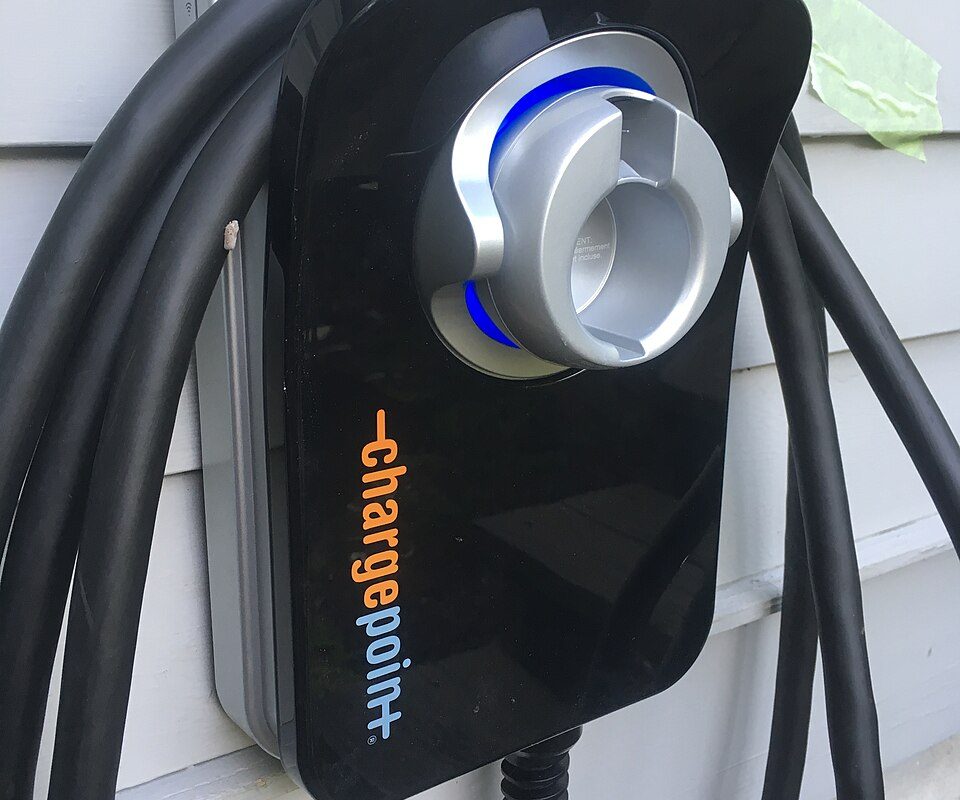
Featured photo: a residential ChargePoint home charger, by Ken Fields / Wikimedia Commons, CC BY-SA 2.0. Image resized for publication; the photograph does not depict a diagnosed electrical fault.
Sık Sorulan Sorular
Why does my EV charger trip the circuit breaker every night?
An incorrectly configured charging load, wiring or grounding problem, equipment fault or a protective-device issue are possible. Persistent trips need professional investigation.
Can two GFCI devices interfere with EV charging?
ChargePoint notes that some GFCI-breaker and Home Flex configurations can nuisance-trip, but required local protections must never be bypassed.
What does one blinking red light on Tesla Wall Connector mean?
For the cited Tesla Gen 3 Wall Connector guide, one red blink indicates ground-fault circuit interruption due to an unsafe current path.
Is it safe to keep resetting a tripping EV charger?
No. If a breaker or ground-fault warning repeats, stop charging and arrange professional diagnosis rather than repeatedly resetting protective devices.