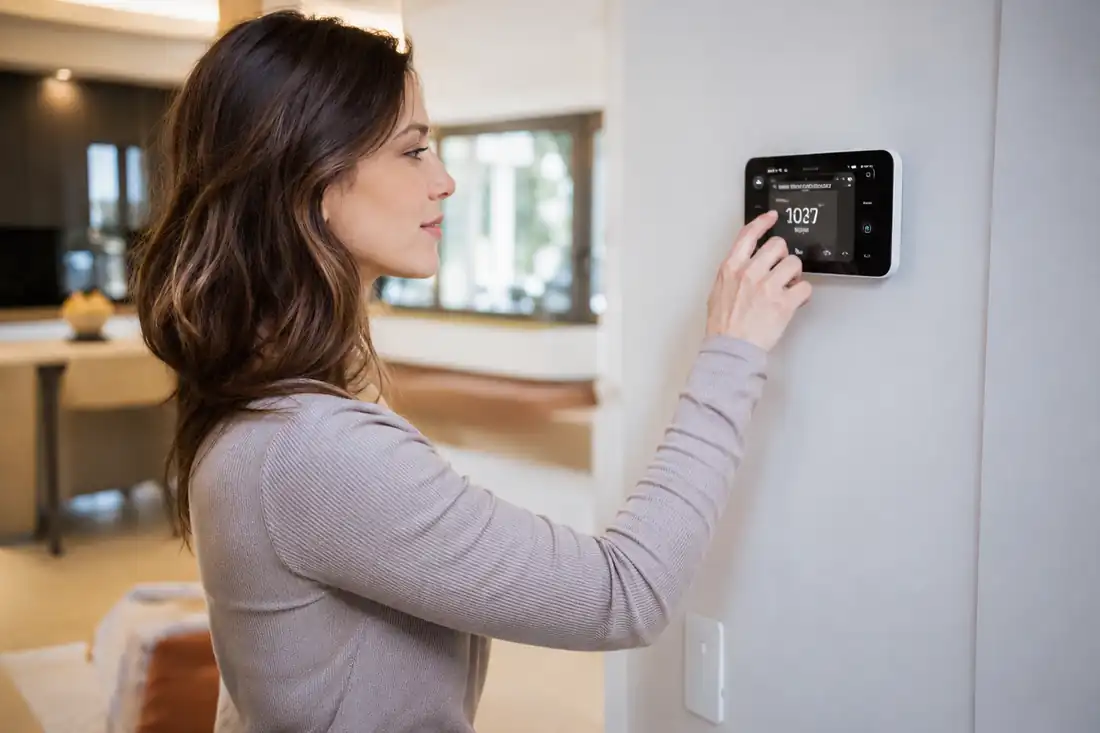
Quick answer: The best winter thermostat setting in a U.S. home is the lowest indoor temperature that remains safe and comfortable for everyone living there. Many homeowners use 68°F (20°C) as a starting point during waking hours, but 68°F is not a federal requirement or an ideal temperature for every household. A setting of 70°F or 72°F may be more appropriate for some people and buildings. Your heating system, insulation, medical needs and outdoor conditions all matter.
68°F vs. 72°F: which thermostat setting uses less energy?
For the same home and heating system in cold weather, a lower indoor set point generally slows heat loss through the building envelope, reducing the heating energy required. A 68°F setting therefore tends to use less heating energy than 72°F, all else equal. But a four-degree difference does not correspond to the same fixed dollar savings for every home. Local temperatures, air leaks, utility prices and equipment efficiency determine the actual bill.
The U.S. Department of Energy explicitly states that Americans should set thermostats to the temperatures they choose. Its efficiency guidance should be read as optional energy-saving advice rather than a universal health or comfort standard.
Example winter thermostat schedules
| Household situation | Reasonable starting approach | Important qualification |
|---|---|---|
| People at home during the day | Set the lowest comfortable steady temperature, perhaps near 68–72°F. | Adjust for older adults, infants, medical needs and personal comfort. |
| Empty home for several daytime hours | Consider a scheduled, moderate setback. | Don’t allow unsafe indoor temperatures or risk frozen plumbing. |
| Overnight while sleeping | Some households can tolerate a lower setting. | Household health needs and system type come first. |
| Home heated by a heat pump | Follow the manufacturer’s thermostat strategy. | Deep recovery may trigger auxiliary resistance heat and reduce savings. |
These are decision examples, not prescribed temperatures. Temperatures must remain adequate for occupant safety and pipe protection.
How much can lowering the thermostat actually save?
The DOE Energy Saver guide describes potential savings of up to around 10% per year on heating and cooling when a household reduces its usual heating set point by about 7–10°F for eight hours per day in suitable circumstances. This is a broad estimate, not a guaranteed reduction or a promise for homes with heat pumps. For example, if hypothetical annual heating-and-cooling energy charges were $1,200, a 10% reduction would be $120—only if the full assumed savings actually occurred. It would not be a 10% reduction in every fixed fee on your electricity bill.
When is a nightly thermostat setback a bad idea?
Some heat pumps use electric resistance auxiliary heat for rapid temperature recovery. An aggressive overnight setback can activate that more energy-intensive backup heating. The DOE recommends heat-pump-specific thermostat controls that recover gradually and avoid unnecessary auxiliary resistance operation. If your system uses a heat pump, consult the installer and manufacturer guidance before applying a large setback. Also take precautions against frozen pipes during cold spells and extended absences.
Programmable vs. smart thermostat: what is the difference?
A traditional programmable thermostat follows schedules set by the user. An ENERGY STAR certified smart thermostat may use occupancy, learning features or remote control to avoid needless heating when a home is empty. Neither device can guarantee the same dollar savings in every house, and compatibility matters. ENERGY STAR describes how to compare compatible smart thermostats. Check your HVAC type, wiring, stages and any utility rebate rules before purchasing.
A practical five-step winter heating plan
- Choose a comfortable baseline. Pick a temperature that works for everyone at home rather than copying a neighbor’s setting.
- Read the equipment manual. Identify whether you have a furnace, baseboard electric heat, a boiler or an air-source heat pump.
- Test one small schedule change. For a suitable non-heat-pump system, try modest reductions during predictable sleeping or away periods.
- Protect the house. Maintain enough heat for plumbing and check insurance requirements if leaving the home unattended in freezing weather.
- Compare usage over time. Track energy consumption in kWh or therms and account for weather differences; one bill alone can mislead.
Thermostat savings vs. portable space heaters
Turning down a central thermostat and warming an occupied room with a portable heater can sometimes change total energy use, but it is not automatically cheaper. A resistance heater may draw 1,500 watts when fully operating, and more than one heater can increase consumption. See our 1,500W space heater cost calculator guide before assuming a particular setup will cut your bill. Never sacrifice portable heater clearance and electrical safety to save money.
Related winter home questions
Cold snaps can also cause power failures. Our fridge and freezer food-safety guide explains emergency time limits. For backup power options, read how electric cars may power a home; not every car or charger supports this feature.
Frequently asked questions
Is 68 degrees the best temperature for every home in winter?
No. It is a commonly discussed energy-saving starting point, not a mandatory or medically appropriate universal setting. Use a temperature that is safe and comfortable for your household.
Will lowering my thermostat four degrees save exactly 4%?
No. Heating energy use depends on many variables, and there is no universal one-degree-to-one-percent formula for every home.
Should I turn my heat off entirely while away?
Not when freezing temperatures could damage pipes or indoor conditions would become unsafe. Follow building and insurance requirements and maintain appropriate freeze protection.
Does a smart thermostat always save more than a programmable one?
No. Savings depend on real schedules, HVAC compatibility and how the equipment is operated. Some smart thermostats can automate energy-saving behavior more conveniently.
Editorial review: November 8, 2026. This U.S. guide provides general energy-use information, not a medical temperature recommendation or a guaranteed savings estimate. Featured photograph is an illustrative scene.