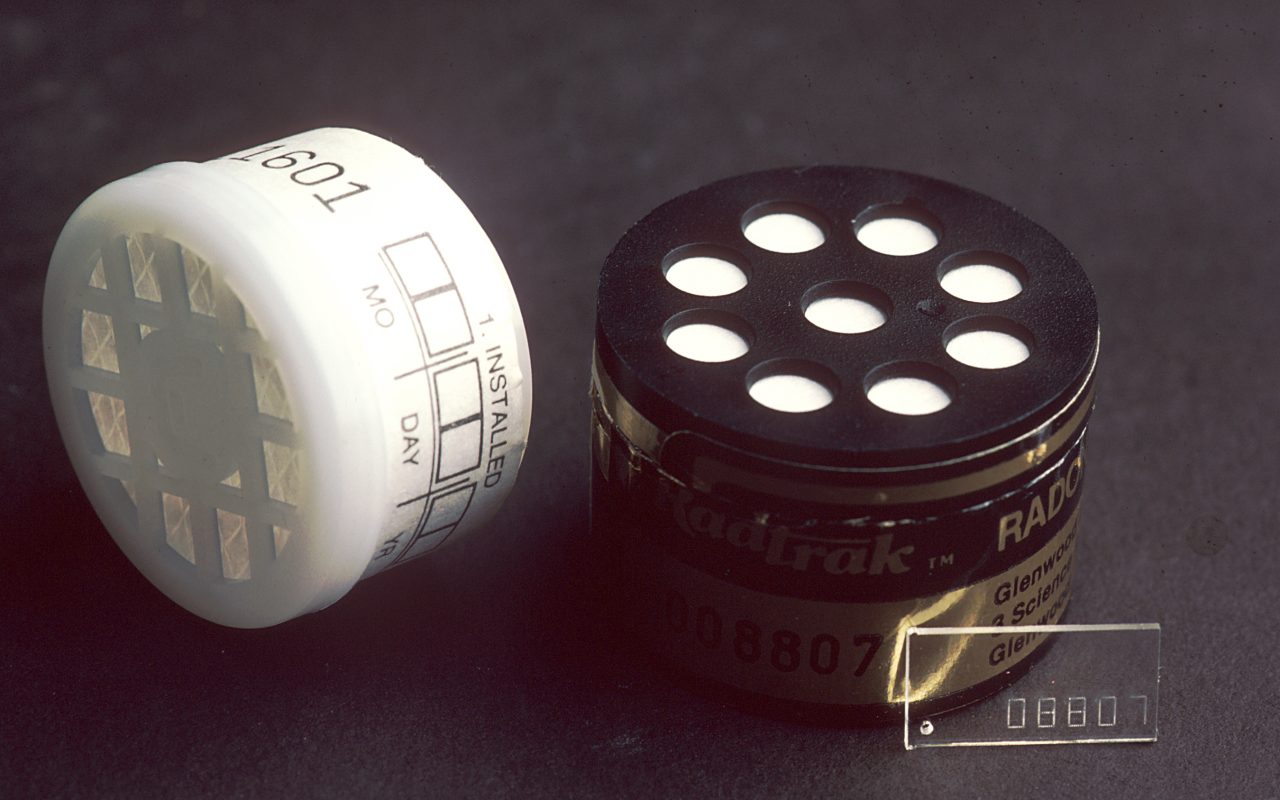
Quick answer: You can test your home for radon by placing a radon-specific test kit in the appropriate room for the time required by its instructions, or by hiring a qualified radon tester. A standard short-term test lasts 2–90 days; a long-term test lasts more than 90 days. Radon is an invisible radioactive gas, so testing is the only way to know how much is present in your home’s air. The U.S. Environmental Protection Agency (EPA) recommends fixing a home when the appropriate testing confirms a radon level of 4 picocuries per liter (pCi/L) or higher.
For U.S. homeowners and renters, this guide explains when to test, how to place a test device, how to interpret 2 versus 4 pCi/L, and what to do when a result is elevated. It follows guidance from the Centers for Disease Control and Prevention (CDC) and the EPA. Medical concerns should be discussed with a healthcare professional; the presence of radon gas is not itself a medical diagnosis.
What is radon and why should you test your home?
Radon is a naturally occurring radioactive gas released from rock and soil. It can enter houses through cracks in floors, openings around pipes, construction joints, sumps and other paths. It cannot be reliably detected by smelling or looking around a room. Radon can build up indoors, including in homes that appear well maintained.
Long-term exposure increases the risk of lung cancer, and smoking further increases the risk. The CDC identifies radon as the second leading cause of lung cancer in the United States after smoking. Radon exposure does not normally produce immediate symptoms that tell you whether a room has high levels. A store-bought carbon monoxide alarm, smoke alarm or general air-quality app is not a substitute for measuring radon.
Short-term vs. long-term radon testing
| Type of home radon test | Typical duration | What it can tell you |
|---|---|---|
| Short-term kit | 2–90 days, depending on device | Faster indication of current radon concentration and whether follow-up is warranted |
| Long-term kit | More than 90 days | A result more representative of changes across a longer period |
| Professional assessment | Depends on equipment and purpose | Measurements and interpretation by a trained provider, useful for transactions or more complex situations |
The CDC guidance says a short-term test is generally the quicker option, while a long-term test better represents a home’s average across changing conditions. Test availability, validity and measurement rules can vary by device and state; a certified professional may be required for some transactions.
Step by step: how to test your home for radon
- Choose a suitable kit or qualified tester. Check your state radon office for information about valid equipment, professional qualifications and any free or discounted testing programs. Use official agency resources rather than assuming any unverified device is accurate.
- Read the entire device instruction sheet. The required duration, packaging, preparation and placement depend on the type of kit. Follow the current instructions for your particular device.
- Select the lowest regularly occupied level. A basement used as a bedroom or office may be the appropriate level. In multiunit housing, follow guidance for the lowest occupied level in your own unit.
- Choose a stable location away from interference. Place the detector where normal airflow, exterior doors, drafts, strong heat and humidity are less likely to distort results. Follow the kit’s specified height and room-location directions. Bathrooms and kitchens are generally unsuitable for standard screening.
- Keep the test undisturbed. For applicable short-term devices, follow closed-building preparation and window instructions; note any unusual ventilation or major weather events that might invalidate a measurement under the testing protocol.
- Finish and analyze as directed. Some passive kits must be sealed promptly and sent to a designated laboratory. Electronic monitors may display readings directly but must still be used according to their instructions.
- Record the result and next step. Keep the report with the test dates, room location, measurement units and any instructions for confirmation or professional follow-up.
For current, state-specific instructions, use the CDC testing page and your state’s radon program. The EPA Radon FAQ can help you find information about test-kit sourcing and qualified providers.
What do 2 pCi/L and 4 pCi/L mean?
The unit pCi/L measures picocuries per liter of air. Other countries may use becquerels per cubic meter (Bq/m³): approximately 1 pCi/L = 37 Bq/m³. A reading describes the radon concentration during a testing period; it is not an individual person’s diagnosis or a prediction of cancer.
| Test result | General CDC/EPA guidance |
|---|---|
| Below 2 pCi/L | Below the EPA action level; retain the report and retest when conditions change or as advised by state/local guidance |
| 2 to less than 4 pCi/L | Consider follow-up testing and steps to lower the level; lower is better |
| 4 pCi/L or higher | Follow the appropriate confirmation procedure and arrange qualified professional mitigation if confirmed |
Important: 4 pCi/L is an action level, not a line between “safe” and “dangerous.” CDC states that no radon level is completely without risk. The agency’s June 2026 radon reduction guidance recommends professional reduction for homes at or above the action level and explains that lowering exposures below that can still reduce risk.
Example: how to interpret a radon reading
Hypothetical test A: A short-term kit reports 1.4 pCi/L. This is below the EPA’s 4 pCi/L action level, but it does not guarantee that future concentrations will be identical. Retest when occupancy, the building or ventilation conditions change.
Hypothetical test B: A short-term kit reports 3.1 pCi/L. The level is below the action threshold but within the range where the CDC advises considering reductions. A follow-up or longer test and a discussion with the state radon office may be appropriate.
Hypothetical test C: A short-term kit reports 6.0 pCi/L. Use the appropriate confirmation strategy; if the confirmed level meets or exceeds 4 pCi/L, have a qualified professional evaluate and reduce radon levels. Do not delay appropriate follow-up merely because the house seems normal or nobody has symptoms.
What happens if your home has high radon?
Qualified radon mitigation contractors use methods appropriate to a home’s construction, often involving a dedicated vent and fan system that draws radon-bearing soil gas away from the occupied living area. Selecting and installing the correct system requires an assessment of the building, and it is not equivalent to placing an air purifier or opening a window for a few hours.
CDC advises using a qualified professional to install a system for elevated concentrations. After mitigation, retest to confirm that concentrations have actually fallen, then follow the professional’s maintenance and follow-up monitoring instructions. The agency provides further information on reducing radon levels at home.
Should you test a rented apartment or newly bought house?
Yes, especially if you do not know whether the unit was previously tested. Radon can occur in a variety of buildings and geographic areas. In an apartment, discuss the proper test location and any building-level mitigation with the landlord or property manager. During a home transaction, request any recent radon measurements and consider a qualified inspector, particularly where state disclosure or testing requirements apply.
Radon zone maps are broad planning tools and do not diagnose your specific address. Even a low-risk zone cannot establish that an individual home is free of elevated radon. Refer to EPA’s Map of Radon Zones for contextual information, but test the home rather than relying on the area’s color alone.
When should you test your home again?
The CDC suggests testing when a home has never been tested, during the buying or selling process, before and after significant renovations and before someone begins spending more time in a basement or other lower level. It also recommends retesting after mitigation to confirm the result. For routine intervals, follow your state radon program and the testing professional’s advice; a past low reading is not a permanent guarantee.
Common mistakes to avoid
- Assuming radon has a noticeable odor, taste or immediate symptom.
- Using a smoke alarm, carbon monoxide detector or general air-quality monitor instead of a radon-specific device.
- Placing a kit in a kitchen, bathroom, unusually drafty window area or location contrary to its instructions.
- Comparing one short-term test to a yearly average as though the time periods were identical.
- Assuming a reading below 4 pCi/L eliminates all risk.
- Forgetting to retest after corrective work or substantial changes to the home.
Related environmental-health reading and official references
For more U.S. safety guidance, explore our Health articles, Home & Energy guides, and how to check drinking-water quality reports—a different type of environmental safety test.
Primary sources: CDC — Testing Your Home for Radon; CDC — Radon and Your Health; CDC — Reducing Radon Levels in Your Home (June 2026); EPA — Radon FAQ. Photograph: U.S. National Institutes of Health / Wikimedia Commons, public domain. The original photograph dates to May 1988 and depicts a genuine radon testing device; the appearance and instructions for modern kits may differ.
Sık Sorulan Sorular
How do you test for radon in a home?
Purchase a suitable short-term or long-term kit or hire a qualified tester. Follow the manufacturer's placement and exposure-time instructions, submit the kit to its designated lab if required, and review the result with EPA/CDC guidance.
What radon level is considered too high?
EPA recommends fixing homes when testing confirms radon at or above 4 pCi/L. People should consider risk-reduction options even when levels are between 2 and 4 pCi/L; no exposure level is completely risk free.
How long should a radon test stay in place?
Most short-term kits remain in place for 2–90 days, depending on the device; long-term testing usually runs more than 90 days.
Can a smoke detector or carbon monoxide alarm detect radon?
No. These alarms detect different hazards and are not substitutes for a radon test kit or appropriately designed radon monitor.
Should I test my home if there are no symptoms?
Yes. Radon itself has no smell or immediate warning symptoms. Testing, not symptoms, is the way to determine indoor radon concentration.