Are electric cars really better for the climate once battery manufacturing and electricity generation are counted? For a comparable medium-size car, the International Energy Agency (IEA) estimates that a battery-electric vehicle’s lifetime greenhouse-gas emissions are more than 55% lower than a gasoline car’s in its 2026 global analysis, under stated-policy assumptions. That is an average scenario result, not a fixed 55% saving for every car, country or trip.
This evidence-based guide explains what an EV life-cycle emissions comparison includes, why making the battery can increase upfront emissions, how charging electricity influences results and what the IEA’s 2026 figures do—and do not—prove.
What does “life-cycle emissions” mean for an electric car?
A life-cycle assessment (LCA) accounts for stages that are invisible at the tailpipe. For a battery-electric car, the relevant processes include extraction and processing of raw materials, battery and vehicle manufacturing, electricity generation and delivery, charging and driving, maintenance where covered, and eventually dismantling and material recovery.
A gasoline car also has manufacturing emissions, plus fuel extraction, refining and transport before the fuel is burned in the engine. A comparison limited to the vehicle’s tailpipe misses these stages. The U.S. Environmental Protection Agency (EPA) states that EVs typically have a smaller lifetime greenhouse-gas footprint than average gasoline cars even when manufacturing and electricity emissions are included.
What did the IEA find in its 2026 EV report?
The IEA’s Global EV Outlook 2026 includes a one-page analysis, “Do electric cars reduce emissions overall?”, showing global average life-cycle results for cars in 2025 under the Stated Policies Scenario. Its medium-size battery-electric-car example assumes about 35 km a day for 15 years—approximately 192,000 km of lifetime driving—and electricity emissions that evolve according to the stated-policy outlook.
| Comparison in the IEA 2026 analysis | IEA finding | How to interpret it |
|---|---|---|
| Medium-size battery EV vs comparable gasoline car | More than 55% lower life-cycle GHG emissions | Global scenario average under stated assumptions, not a universal vehicle rating |
| BEV vs non-plug-in hybrid | Around 50% lower life-cycle emissions | Depends on the compared vehicle and operating assumptions |
| Medium-size BEV’s additional manufacturing footprint | Typically offset after roughly two years of use | Scenario-based comparison, not a warranty or fixed “carbon payback” time |
| Comparable BEV SUV vs gasoline SUV | Roughly two-thirds lower life-cycle emissions on average | Size- and scenario-specific estimate; not applicable unchanged to every SUV |
Source: IEA Global EV Outlook 2026, “Cutting through the noise” life-cycle comparison. Published 2026. All reductions are estimated GHG emissions, expressed as CO₂-equivalent (CO₂-eq), not solely tailpipe CO₂.
Why can electric-car manufacturing emit more at the factory?
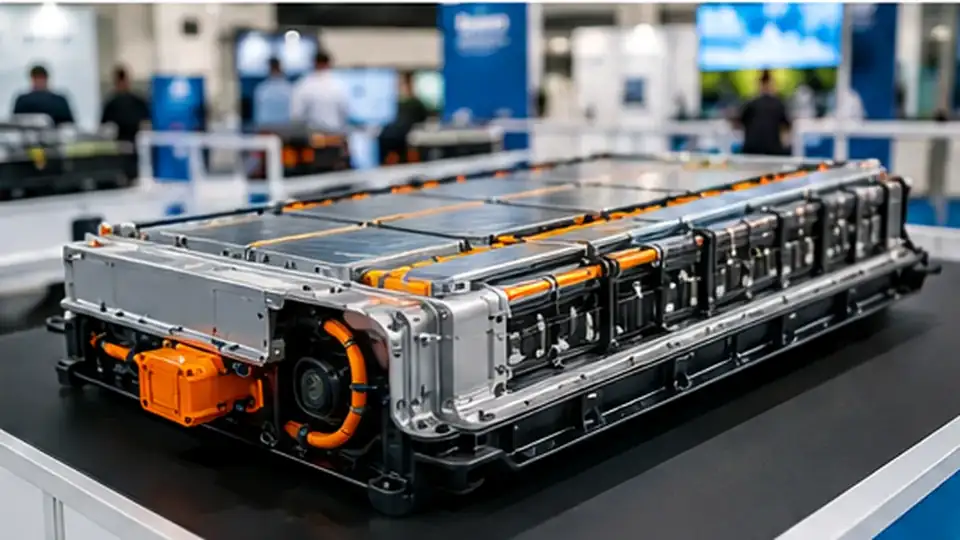
Battery cells, electrode materials and pack production use energy and materials. Depending on chemistry, supply chains, manufacturing electricity and pack size, these processes can make the upfront manufacturing footprint of a new BEV higher than that of a similar gasoline car. The EPA explicitly acknowledges this difference.
But manufacturing represents only part of lifetime emissions. As the car is driven, a gasoline vehicle continues emitting from fuel production and combustion, while an electric car’s use-phase footprint comes mainly from the electricity used to charge it. The gap between those cumulative use-phase footprints is the reason many life-cycle analyses find a BEV advantage over time.
This does not mean that installing a larger battery is always environmentally free: the actual pack and vehicle size matter. Recycling may help recover resources, but it must be included consistently rather than treated as a magic way to erase the whole manufacturing footprint. See our guide to EV battery recycling and second-life options.
Do electric cars still emit CO₂ if the electricity comes from fossil fuels?
Yes, charging electricity can have upstream emissions. A BEV has no exhaust emissions while driving, but the electricity that supplies its battery may come from coal, natural gas or other sources with associated GHG emissions. The EPA and IEA both make this distinction. The IEA’s 2026 analysis still finds an average lifetime advantage for comparable battery-electric cars even in several electricity systems with a high reliance on coal. The size of the advantage varies significantly by country.
How to estimate charging-electricity emissions per kilometre
For a simple illustrative use-phase calculation, multiply the amount of electricity supplied per distance by the assumed grid emissions intensity:
Charging-related electricity emissions (g CO₂/km) ≈ electricity taken from the grid (kWh/100 km) × grid emissions (g CO₂/kWh) ÷ 100.
If a vehicle takes 20 kWh from the electricity supply per 100 km, and the assumed emissions factor is 400 g CO₂/kWh, then the electricity-related figure is 80 g CO₂/km. At an illustrative grid intensity of 100 g CO₂/kWh, it would be 20 g CO₂/km.
Both emissions factors are hypothetical for arithmetic demonstration. These results are not country-specific 2026 values and are not complete life-cycle footprints. The method also omits vehicle/battery production, fuel supply for a gasoline comparator, some electricity-system boundaries and end-of-life assumptions. If your efficiency figure comes from battery energy rather than the electricity meter, add charging losses before using this simplified calculation.
Does a bigger battery automatically mean more climate damage?
Not automatically, but battery size and chemistry can materially affect manufacturing emissions. A larger pack may require more processed material and energy, while supporting a different vehicle’s range, efficiency and service life. A fair comparison should consider similar vehicle size, use, grid and lifetime mileage, rather than assuming any small-battery vehicle is always better or every large EV is always worse.
Vehicle efficiency also matters. An EV consuming 16 kWh/100 km on a comparable journey uses less electrical energy than one consuming 24 kWh/100 km under the same measurement boundaries. See our EV range-estimate and energy-consumption explainer for how driving conditions affect measured consumption.
Is the two-year “carbon payback” true for every EV?
No. The IEA’s roughly two-year figure concerns the estimated time when its modelled cumulative operational savings offset additional upfront battery-production emissions in its specified comparison. It is not a universal rule that an EV becomes “carbon neutral” after two years, nor does it mean all remaining lifetime emissions disappear. Vehicle utilisation, initial manufacturing footprint, the gasoline vehicle used for comparison and the electricity supply all alter the break-even point.
For a privately owned car driven very little, the additional manufacturing footprint may take longer to offset. High-mileage use can recover the emissions difference sooner when the electric operating footprint is lower. A credible carbon payback estimate must state mileage and the competing vehicles as well as electricity emissions.
What about plug-in hybrids and normal hybrids?
The IEA identifies a substantial difference between a battery-electric vehicle and a plug-in hybrid. A plug-in hybrid’s life-cycle footprint depends strongly on how often it is actually charged and driven electrically, rather than operating primarily on gasoline. A non-plug-in hybrid can reduce fuel use compared with a conventional gasoline car, but it still burns fuel during operation.
For a clear statistical distinction between BEV, PHEV and HEV, see our BEV vs PHEV vs HEV market-definition guide. Registration categories are not a substitute for real-world life-cycle emissions evidence.
Can charging with solar electricity reduce EV emissions?
Charging from low-carbon electricity can reduce the use-phase footprint under the appropriate accounting method. However, solar panels also have manufacturing and installation impacts, and the environmental benefit depends on what electricity is actually displaced, when the car charges and how the power system is modelled. Claims of “zero-carbon driving” should be qualified rather than treating renewable electricity as impact-free.
For household energy planning rather than a life-cycle assessment, consult our solar panels needed to charge an EV calculation guide.
Five checks before trusting an EV carbon-footprint chart
- Scope: Does it include vehicle and battery manufacturing, fuel production, electricity generation and end of life?
- Comparable vehicles: Are vehicle size, performance, trim and battery capacity fairly matched?
- Electricity assumptions: Does the study identify the country, charging energy and future electricity mix?
- Mileage and time: Is the lifetime 100,000 km, 200,000 km or a different number?
- Emissions metric: Are figures CO₂ alone, CO₂-eq GHGs, or a broader environmental score that includes other impacts?
The bottom line
Electric cars have a real manufacturing footprint and charging is not automatically emissions-free. Even so, the IEA’s 2026 comparative model finds a substantial average lifetime GHG advantage for comparable BEVs over gasoline cars, and the EPA reaches the same broad qualitative conclusion. The honest comparison names the car class, region, grid, lifetime mileage and system boundaries instead of applying one global percentage to every driver.
Reviewed 6 November 2026. The IEA numbers quoted here refer to the 2026 Global EV Outlook’s specified global scenario and 2025 vehicle cohort, not a new 2026 on-road test.
Sık Sorulan Sorular
Are electric cars better for the environment than gasoline cars after battery manufacturing?
Typically on greenhouse-gas emissions, yes, when vehicles are comparable and the full life cycle is assessed. The IEA's 2026 global model estimates a medium-size BEV emits more than 55% less over its lifetime, under stated assumptions.
How long does an EV take to offset the emissions from making its battery?
The IEA 2026 comparison estimates roughly two years to offset the additional upfront battery-production footprint in its model. Actual payback depends on mileage, vehicle comparison and electricity mix.
Do electric vehicles produce zero emissions?
They produce no tailpipe emissions while driving, but their battery and vehicle manufacturing and the electricity used for charging can generate greenhouse gases.
Are EV lifecycle emissions the same in all countries?
No. Electricity generation, manufacturing supply chains, typical mileage, vehicle specifications and modelling boundaries can make the result different.
Is charging an electric car with solar power completely carbon free?
Not as a full life-cycle claim. Low-carbon electricity can reduce use-phase emissions, while generation equipment and vehicles still have manufacturing and other life-cycle impacts.