Quick answer: Battery-electric cars have no exhaust-pipe emissions while driving, but they can still generate tire-wear particles and brake-wear particles. Regenerative braking can reduce reliance on friction brakes; it does not eliminate them. The European Union’s Euro 7 regulation explicitly covers these non-exhaust emissions, with different rules and implementation dates for vehicles and tires.
Understanding the difference matters when reading claims that an EV is either completely “emission-free” or necessarily produces more particulate pollution than a conventional car. Neither shortcut describes the whole issue.
What are non-exhaust emissions from electric cars?
Non-exhaust emissions are particles generated by activities other than combustion exhaust. For passenger vehicles, two important sources are:
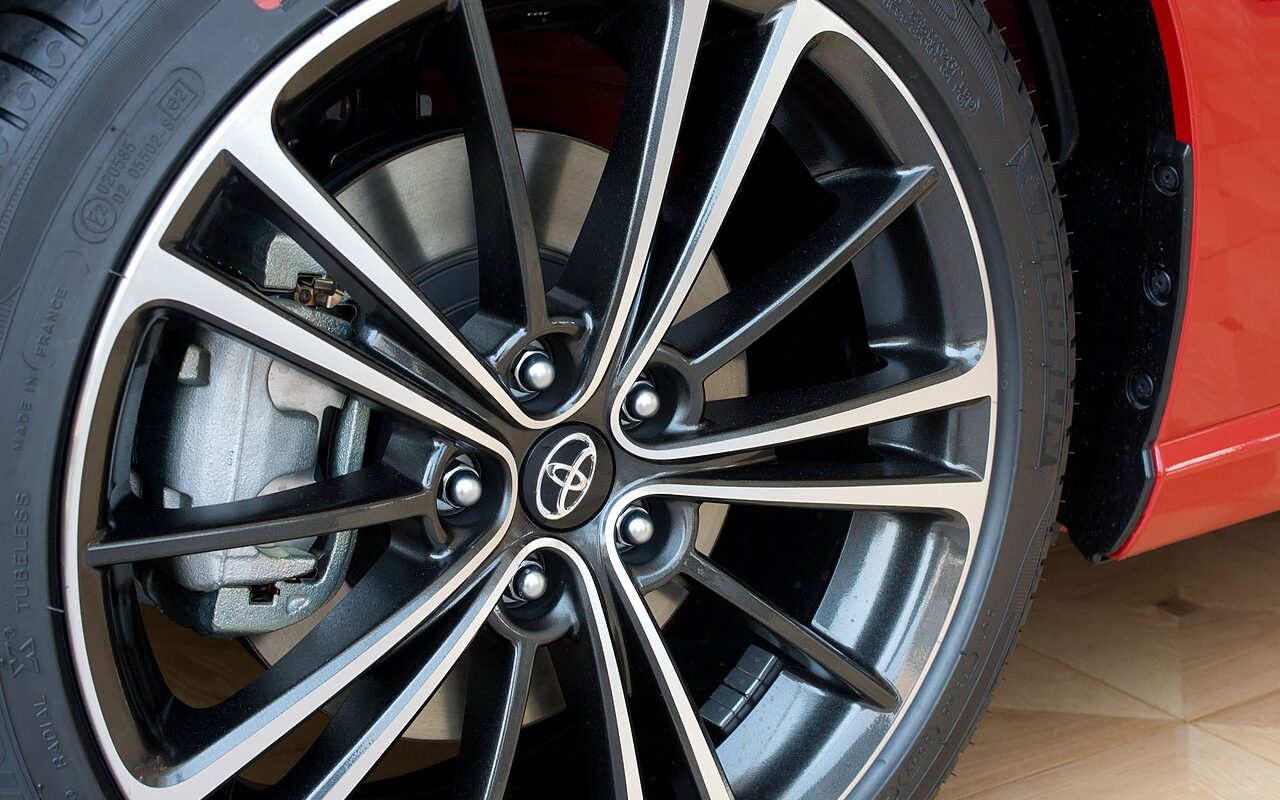
- Tire abrasion: rubber and road-surface material released as the tire contacts the pavement. Tire wear depends on tire design, load, alignment, driving style and road conditions.
- Brake wear: particles released when friction brake pads and discs are used. Electric cars have friction brakes even when they also provide regenerative braking.
Road dust resuspension is another contribution to vehicle-related particulate pollution, but it is not the same as the tire- and brake-wear emission limits discussed here. A vehicle’s full environmental footprint also includes electricity production, vehicle manufacturing and end-of-life processing; the absence of a tailpipe does not make those stages disappear.
Do EVs produce brake dust if they use regenerative braking?
Yes, potentially. Regenerative braking slows the vehicle through the electric drive system and recovers some kinetic energy into the battery. Friction brakes remain necessary for situations such as harder braking, some low-speed maneuvers, reduced battery energy acceptance or system limits. The balance between regenerative and friction braking depends on the vehicle and the conditions.
That means regenerative braking can reduce friction-brake use and wear, but a blanket claim of zero brake dust is inaccurate. Drivers must still inspect and maintain the friction brakes according to the vehicle maker’s instructions. For a practical explanation, read why EVs still need brake pads and brake servicing.
What does Euro 7 require for EV brake particle emissions?
Regulation (EU) 2024/1257, Euro 7, adds limits for particulate matter produced by braking. In its Annex I, Table 4, the standard-cycle PM10 brake-particle mass limit through 31 December 2029 is:
| Powertrain | PM10 brake limit | Test context |
|---|---|---|
| Pure electric (PEV) | 3 mg/km per vehicle | Specified Euro 7 standard driving cycle |
| Plug-in hybrid, non-plug-in hybrid, fuel-cell and combustion (applicable groups) | 7 mg/km per vehicle | Same regulatory framework |
These numbers refer to the defined vehicle categories and test conditions in Table 4 (M1 and the covered N1 classes, excluding N1 Class III). They are regulatory laboratory-cycle limits, not claims about the exact dust emitted by a particular car on a real journey. The regulation provides for later limits to be reviewed or established for periods from 2030 onward; the current 3-versus-7 comparison should not be presented as a permanent universal rule.
The Council of the European Union’s Euro 7 announcement confirms that the rules cover brake particles, tire abrasion and battery durability as well as exhaust standards.
When does Euro 7 start for electric cars?
For new types of passenger cars and light commercial vehicles (M1 and N1), the Euro 7 regulation generally applies from 29 November 2026. For all new vehicles in those categories, the general application date is 29 November 2027. The distinction is between a newly type-approved model and a newly manufactured/registered vehicle of an existing type; it does not mean every car already on the road needs retrofitting on those dates.
These dates come from EUR-Lex’s official Euro 7 summary. Important: tire abrasion thresholds have their own later timetable and should not be lumped together with the first vehicle type-approval date.
When do Euro 7 tire abrasion limits begin?
The European Commission’s 2026 report on tire labeling and abrasion gives the timetable for C1 passenger-car tires:
| C1 tire rule | Date |
|---|---|
| New tire models must meet the abrasion thresholds | 1 July 2028 |
| All tire models must meet the abrasion thresholds | 1 July 2030 |
| End of market availability for specified non-compliant models | 30 June 2032 |
The report describes development of standardized tire-abrasion testing methods. The introduction of abrasion requirements is distinct from the information already presented on the EU tire label, such as energy efficiency, wet grip and external rolling noise. Do not assume the current tire-label efficiency class directly measures abrasion emissions.
Do heavier electric cars always create more tire particles?
No universal conclusion is possible from vehicle mass alone. Load can influence tire wear, but the actual result also depends on tire compound and design, inflation pressure, driving behavior, alignment, road texture and temperature. A comparison must account for those factors and use the same measurement method.
For a buyer, the practical priorities are to select tires with the manufacturer’s approved size, load index and speed rating, maintain pressure and alignment, and replace damaged or excessively worn tires. Read our electric-car tire specification and load-index guide before changing tire types.
How EV drivers can limit avoidable tire and brake wear
- Use smooth acceleration and deceleration rather than repeated aggressive starts and stops.
- Keep tires at the vehicle manufacturer’s recommended cold inflation pressure and check alignment when wear is uneven.
- Choose the correct load and performance specification rather than assuming any “EV-rated” marketing label guarantees lower wear.
- Use regenerative braking as designed, but follow all vehicle-maker instructions for friction-brake inspection and maintenance.
- Avoid overloading the car and address unusual tire or brake noise promptly.
These steps are routine vehicle-care principles, not a guarantee of a particular reduction in particulate emissions.
Does Euro 7 mean electric cars are zero-emission overall?
No. “Zero tailpipe emissions” refers to the absence of direct exhaust pollutants from a battery-electric drivetrain in operation. The vehicle still has non-exhaust particle sources and an upstream life-cycle footprint. Those are different questions, with different metrics and policy tools. For broader context, see our EV-versus-gasoline life-cycle emissions guide.
Bottom line
Electric cars remove tailpipe exhaust while driving, not all forms of pollution. Euro 7 is significant because it begins measuring and regulating vehicle brake particles and tire abrasion. The brake limits and their vehicle dates are not identical to the later tire abrasion timetable; precision matters when comparing EV environmental claims.
Regulatory note: This article summarizes published EU legal text and a 2026 Commission report as of November 2026. Readers assessing a specific approval, tire type or future rule should consult the latest official consolidated regulation and implementing acts.
Sık Sorulan Sorular
Do fully electric cars produce brake dust?
Yes, their friction brakes can still produce wear particles. Regenerative braking reduces how frequently friction braking is needed in many situations, but not to zero.
What is the Euro 7 brake-particle limit for electric cars?
For the covered M1/N1 classes under Annex I Table 4 through 2029, the pure-electric PM10 brake-particle mass limit is 3 mg/km per vehicle in the defined standard driving cycle.
Does Euro 7 apply to all EVs from November 2026?
No. The general November 29, 2026 date applies to new vehicle types in the M1/N1 classes. The general date for all new vehicles in those classes is November 29, 2027, while tire-related requirements have separate later dates.
Are tire particles covered by Euro 7?
Yes. Euro 7 addresses tire abrasion, and the European Commission's 2026 report sets out the timetable for passenger-car C1 tire thresholds beginning with new tire models in July 2028.