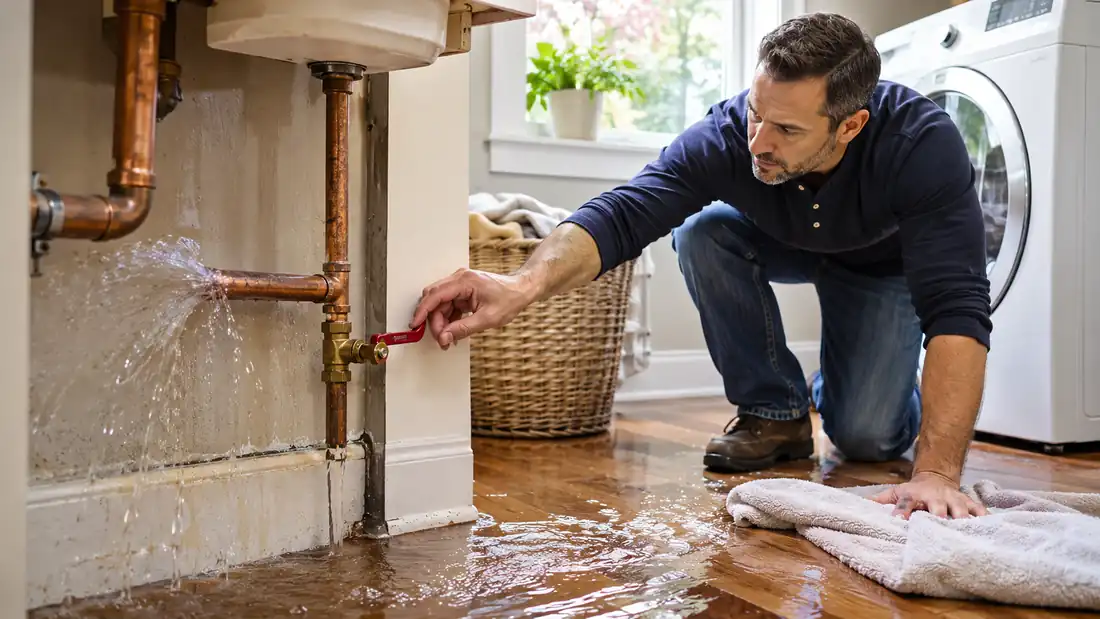
Quick answer: Many U.S. homeowners insurance policies cover sudden and accidental water damage caused by a burst pipe. Damage from a pipe that freezes may also qualify when the homeowner has taken reasonable precautions, but neglect, long-term seepage, exclusions and policy conditions can change the outcome. The cost of repairing the broken pipe itself may be treated differently from damage to walls, floors or belongings. Coverage is determined by your actual contract and state rules, not by the presence of water alone.
Which burst-pipe losses are typically covered?
According to the National Association of Insurance Commissioners (NAIC), homeowners policies generally address sudden, accidental discharges from plumbing. The important words are sudden and accidental: a pipe that unexpectedly ruptures is a different claim scenario from moisture that has been soaking the drywall for months.
| Water damage scenario | Typical issue to review |
|---|---|
| Pipe unexpectedly bursts inside an occupied home | Resulting damage may be covered under dwelling/personal property provisions, subject to terms and deductible. |
| Pipe freezes and bursts in winter | Insurer may investigate heating, winterization and vacant-home requirements. |
| Slow leak behind a wall for months | Gradual seepage, maintenance and deterioration exclusions may apply. |
| Overflow from a backed-up sewer or drain | Often needs separate sewer/drain backup endorsement. |
| Rising river, storm surge or outside floodwater | Generally requires separate flood insurance rather than standard homeowners coverage. |
These are common distinctions, not a coverage ruling. The NAIC homeowners insurance overview explains the importance of named perils, exclusions and coverage choices.
Frozen pipes: when does a claim become complicated?
Freezing-related claims may depend on what the homeowner reasonably did to maintain heat or drain the plumbing. The NAIC explains that insurance companies may deny frozen-pipe losses tied to neglected precautions; for vacant properties, some policies require the heat to be maintained or the water supply to be shut off. This is why a home left unheated for a winter vacation can present a different insurance issue from a sudden rupture in an occupied, properly heated house. Check your policy’s exact wording rather than assuming a universal temperature requirement.
Will insurance pay to fix the pipe itself?
Distinguish between the failed component and the resulting damage. Some policies may pay for access and repairs to damaged finishes after a covered loss but not the replacement cost of the pipe that failed due to wear or corrosion. Other contracts have different terms. Ask the adjuster about pipe repair, water mitigation, drywall, flooring, cabinets, personal belongings, mold limitations, and any resulting additional living expenses separately.
What to do immediately after discovering a burst pipe
- Protect people first. If water is near electrical outlets, appliances or a breaker panel, stay away and seek qualified help. Do not enter standing water that may be electrically energized.
- Stop the flow only if safe. Use a readily accessible main water shutoff valve, or contact a plumber or building manager.
- Document before removing damaged materials. Photograph the source, water level and affected rooms; make a dated inventory of damaged items.
- Contact your insurer promptly. Ask about emergency mitigation, approved vendors, any coverage deadlines and claim documentation.
- Prevent further avoidable damage. Arrange professional drying or water extraction as needed, retain invoices and damaged-item records, and follow insurer instructions.
How deductibles change a claim payment
Suppose an adjuster determines that $8,000 of damage is covered and the relevant deductible is $1,000. The simplified payment would be $7,000 before considering other applicable limits, depreciation, recoverable replacement-cost conditions or separate coverages. This is only an illustration; insurance payment is not necessarily equal to the contractor’s first quote.
Does homeowners insurance cover basement flooding?
The cause matters more than the room. Sudden indoor plumbing damage and rising floodwater from outside a building are different types of events. The NAIC flood insurance guide explains that a standard homeowners policy ordinarily excludes flood damage, which may require the National Flood Insurance Program or private flood coverage. Backed-up drains can raise a separate endorsement question.
Practical claim-document checklist
Have your policy number, date/time of discovery, description of what failed, photos, emergency plumber report, mitigation receipts, a room-by-room damaged property inventory, available purchase records, and contact details for anyone who inspected the damage. If a contractor removes damaged materials for safety, photograph and record them first when possible. Never exaggerate the loss or discard key evidence contrary to insurer instructions.
Preventing another winter pipe loss
Locate the main shutoff before an emergency, protect plumbing in vulnerable unheated areas, have heating equipment maintained and follow your insurer’s requirements during prolonged absences. If you’re adjusting indoor temperatures to save energy, see our space heater electricity cost guide, then confirm any minimum heat or winterization obligations in your insurance contract. Renters who need to understand protection for their belongings can also see our renters personal property coverage guide.
Frequently asked questions
Is a burst pipe covered if I was on vacation?
Possibly, but conditions for vacant or unoccupied homes matter. Check whether the policy required heat to be maintained, pipes drained or water turned off while away.
Does homeowners insurance cover the plumber’s bill?
Coverage for emergency mitigation and access can differ from payment for replacing a worn or defective pipe. Ask the insurer to explain each separately.
Does it cover water damage from a slow drip?
Not necessarily. Gradual leakage or failure to maintain the plumbing is commonly excluded, even when the resulting damage is expensive.
Can I submit a claim before the repair estimate is final?
Notify the insurer promptly and ask for its claims procedure. Additional documentation can often follow; do not delay urgent safety or mitigation steps while waiting for a final contractor quote.
U.S. consumer information, reviewed November 8, 2026. Individual policies, deductibles, endorsements, state laws and insurer determinations govern actual coverage; this article is not legal or coverage advice. Featured image is an illustrative photorealistic scene, not a record of a specific loss.