Key facts
- Charging power and physical connector type are distinct compatibility requirements.
- J1772 is used for compatible AC charging, while CCS1, J3400 and CHAdeMO cover different DC fast-charging arrangements.
- Adapters and station-network authorization should always be verified for the specific vehicle.
Quick answer: U.S. EV charging compatibility has two separate questions: what power level the vehicle supports and which physical connector it can use. AC Level 1 and Level 2 are different from DC fast charging. Common North American plug names include J1772 for AC charging, CCS1 for combined AC/DC charging, SAE J3400 (NACS) for AC and DC, and CHAdeMO on some older vehicles. The connector alone does not guarantee access to every charging network.
The U.S. connector landscape has been evolving, with a mixture of native ports, approved adapters, and network-specific access rules. This practical guide explains what a driver should check before using a charging station—without assuming every 2026 model uses the same hardware.
First understand Level 1, Level 2 and DC fast charging
| Charging type | Typical setting | Power characteristics | What to check |
|---|---|---|---|
| AC Level 1 | Compatible household outlet | 120 V in U.S. residential use; comparatively slow | Outlet, circuit, manufacturer-approved cordset |
| AC Level 2 | Home, workplace, destination parking | Usually 240 V at home or 208 V commercially; faster AC charging | Vehicle’s onboard AC charging limit and connector |
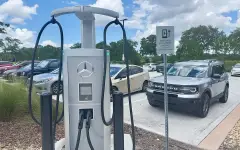
| DC fast charging | Highway or high-traffic public stations | External charger sends DC power; rate varies widely | Vehicle DC capability, connector, network access, temperature |
The Department of Energy’s Alternative Fuels Data Center describes these charging levels and connector families. A station advertised at 350 kW does not mean your car will accept 350 kW; the vehicle’s limits and battery conditions control actual charging power.
J1772: the familiar AC charging connector
SAE J1772 has been widely used for AC Level 1 and Level 2 charging in North America. You may encounter it at home, workplaces and destination chargers. A vehicle with a native J1772 inlet normally uses it for compatible AC charging equipment. Vehicles with a different inlet may require an automaker-approved adapter, where supported.
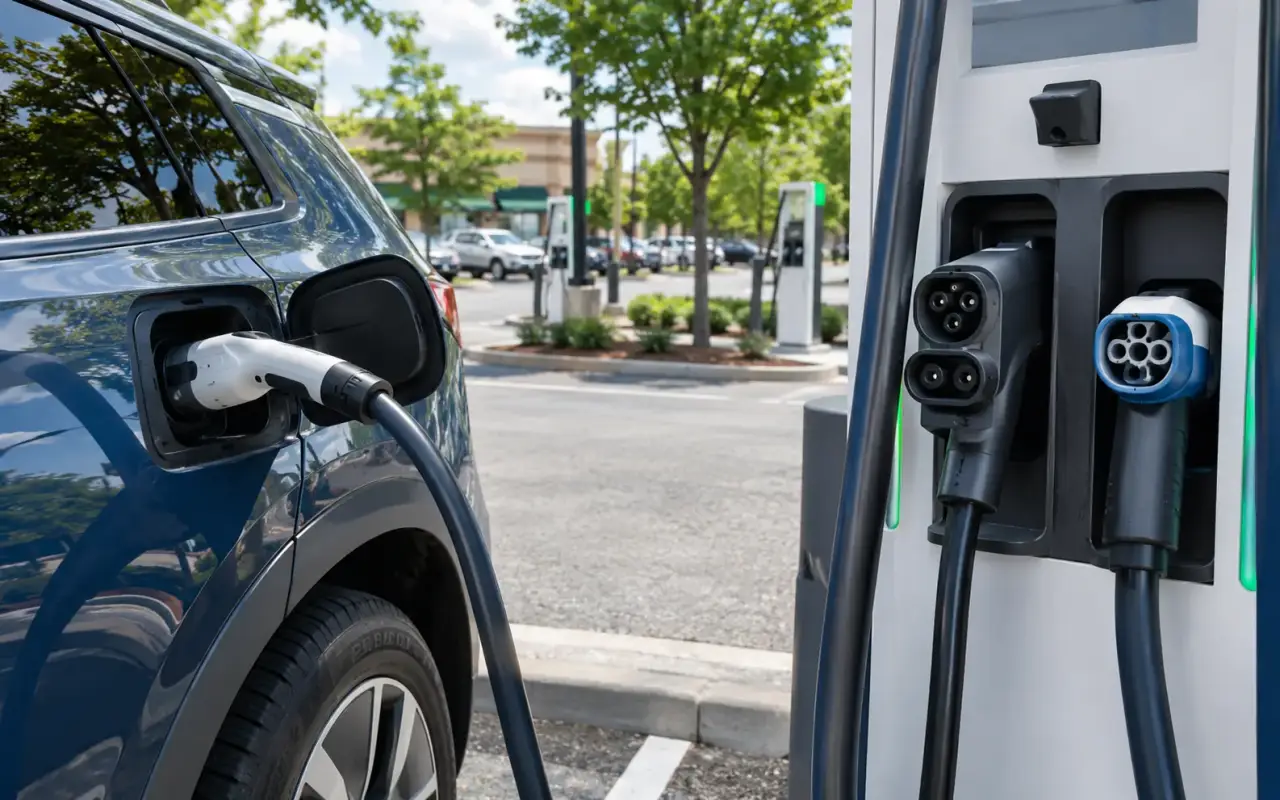
J1772 is not the same as a CCS1 fast-charging connector. It does not by itself indicate whether a vehicle supports DC fast charging. Check the manufacturer’s charging specifications rather than judging only from the shape of a pictured plug.
CCS1: AC compatibility plus DC fast charging
CCS1, or the North American Combined Charging System, incorporates the J1772-style upper portion plus two large DC pins. A compatible vehicle can use the appropriate AC connector for Level 1/2 and a CCS1 connector for DC fast charging. Whether and how adapters can be used with other systems depends on automaker approval and network rules.
For a used EV, check the actual charge port on the specific vehicle and trim, not only its badge. Some plug-in vehicles support AC charging but lack DC fast-charge capability. That distinction matters more on a highway trip than it does for home charging.
NACS / SAE J3400: one inlet design for AC and DC
The North American Charging Standard, standardized as SAE J3400, is associated with Tesla’s connector design and is being adopted more broadly by automakers. Depending on the car and station, it can be used for AC or DC charging. But a J3400-shaped port or adapter does not automatically provide permission to use every Supercharger, regardless of site hardware or vehicle software.
Check the vehicle manufacturer’s compatibility list, charging software requirements, station network app, and supported adapter model. Some vehicles need a specific manufacturer-supplied or approved adapter for certain chargers; do not assume a visually compatible third-party connector is sufficient.
CHAdeMO: relevant when shopping for an older EV
CHAdeMO is a separate DC fast-charging connector found on some older EV models. Availability varies by region and station, so buyers of a used vehicle with CHAdeMO should examine actual charger coverage along their regular routes. An AC charging option alone may not solve a long-distance journey if the available DC fast-charge ports do not match the vehicle.
The connector is only one part of a successful charge
Before starting a session, confirm all five factors:
- Vehicle inlet: Which connector family is supported natively? Does the vehicle support DC charging?
- Approved adapter: Is an adapter permitted for this exact car, station and charging type?
- Power: What AC or DC power can your vehicle accept? Is the unit shared with another parking stall?
- Authorization: Does the charger require an app, roaming agreement, card or membership? Is the location open to your vehicle?
- Real availability: Verify current station status, operating hours, public access and recent reliability information before a long trip.
For current locations, the federal Alternative Fuels Data Center station locator can help identify charging infrastructure; confirm access directly with the network because availability and connector inventory may change.
A simple example: a 250-kW charger and a car rated for 100 kW
If a vehicle is designed to accept at most 100 kW DC under ideal conditions, connecting it to a 250-kW station does not make its battery charge at 250 kW. Charging power may be below 100 kW because of temperature, battery state of charge, charger limits, power sharing, or vehicle protection systems. Charge time therefore cannot be determined from a single advertised station wattage.
Similarly, a home Level 2 charger rated for 11.5 kW might deliver less if the vehicle’s onboard AC charger is limited to a lower rate, or if the circuit and installation require a lower continuous current setting. Always follow the installed equipment’s electrical rating and local code.
Homeowner, apartment dweller or road-trip driver: what changes?
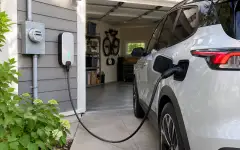
If you charge at home
Prioritize a safely installed circuit and an appropriately rated charger before chasing the highest advertised charging speed. The DOE home charging guidance recommends qualified electrical work and appropriate permits where required. You can also estimate your energy bill with our home EV charging cost guide.
If you park in an apartment building
Ask about dedicated spaces, permitted equipment, billing arrangements, and overnight access. A public fast charger may be a fallback, but compare pricing and actual reliability before deciding which EV fits your situation.
If you take long road trips
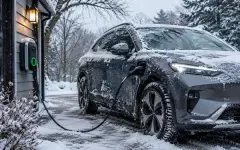
Filter charging sites by connector and vehicle compatibility, and plan a backup stop. For trips in freezing weather, read our cold-weather EV charging guide as battery temperature can influence charging time.
Connector glossary
- EVSE: Electric vehicle supply equipment; the external charging equipment and its controls.
- Onboard charger: Vehicle equipment that converts AC charging power for the battery.
- DC fast charger: Equipment that supplies DC directly to a compatible battery system.
- kW: Charging power at an instant, not total energy delivered.
- kWh: Energy delivered over time, used in session pricing.
- Charging curve: How charging power changes as the battery’s charge level and conditions change.
Frequently asked questions
Does every electric car use the same charging port?
No. Native ports and adapter support differ by model, model year, market and equipment. Verify the exact car rather than assuming a connector from the brand name.
Can I use a CCS-to-NACS adapter at any charger?
Not necessarily. The vehicle manufacturer, adapter rating, charging network and supported charging mode all matter. An incompatible or unauthorized adapter may not work and can create safety risks.
Are Level 2 and DC fast charging interchangeable?
No. AC Level 2 depends on the vehicle’s onboard AC charger; DC fast charging uses external power conversion and requires compatible DC charging hardware.
Is a charger with a higher kW rating always faster?
Only if the vehicle, battery conditions and station can actually sustain the higher power. Charging power normally changes during a session.
Browse more practical articles in Charging & Batteries and EV Guides. Editorial note: Charging networks and automaker adapter programs evolve. Always verify model-specific eligibility with the vehicle manufacturer and station operator before travel.