Key facts
- Cold weather can increase EV energy use through cabin heating and battery temperature management.
- No single winter range-loss percentage applies to every electric vehicle.
- Where supported, preconditioning while plugged in can help prepare the vehicle before a cold-weather trip.
Quick answer: Electric cars often travel fewer miles per charge in cold weather because cabin heating and battery thermal management consume energy, while low temperatures temporarily affect battery performance. Cold batteries can also accept DC fast-charging power more slowly until they reach an appropriate temperature. The practical response is to precondition while plugged in when supported, plan extra range, and choose charging stops using real conditions—not to assume a fixed winter range penalty for every EV.
This U.S.-focused guide separates what federal research supports from hypothetical planning examples. It also explains what to do if your vehicle is parked outdoors and how to avoid confusing winter range loss with permanent battery degradation.
Why cold weather changes EV range
According to the U.S. Department of Energy’s winter EV guidance, preparing the car and using preconditioning can improve the winter driving experience. The federal FuelEconomy.gov energy-flow guide also explains that accessory loads—especially heating and climate control—can materially change efficiency in extreme temperatures.
The main factors are:
- Cabin heating: An EV generally must use stored or externally supplied electricity to heat the cabin, unlike a combustion car that can reuse substantial waste heat.
- Battery temperature: A cold battery’s electrochemical behavior and thermal management can restrict performance and charging power temporarily.
- Driving conditions: Winter tires, wet roads, slush, wind, higher rolling resistance and short trips may all affect energy consumption.
- Defrosting and preconditioning: These require energy, but can improve comfort and readiness; using grid power while plugged in may reduce battery energy used before the drive.
Battery management systems differ by manufacturer, and no honest guide should promise one universal winter range-loss percentage.
A planning example—not a prediction for your car
Consider a hypothetical EV with 70 kWh of usable battery energy. In mild conditions it might average an illustrative 25 kWh/100 miles, yielding 70 ÷ 25 × 100 = 280 miles of calculated range. If its consumption increases to an illustrative 35 kWh/100 miles under adverse winter conditions, calculated range becomes 70 ÷ 35 × 100 = 200 miles, about 29% below that hypothetical mild-weather result.
Important: The 25 and 35 kWh/100 miles values are made-up examples for explaining arithmetic; they are not a measured winter test result, a federal EV average or a promise about a real model. Road speed, heating system, altitude, snow, wind and vehicle software all change the outcome.
A cautious trip planner might reserve an additional 20% of the winter range estimate for unexpected conditions. In this example, using 160 miles between planned charging opportunities instead of the full calculated 200 miles would preserve a buffer. That reserve is a discretionary planning illustration, not a mandatory state-of-charge threshold.
Before departure: precondition, check tires and plan a buffer
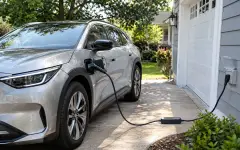
- Schedule the departure: If the vehicle supports battery and cabin preconditioning, use it before leaving. Doing so while plugged in can shift part of that energy demand to the grid.
- Check tire pressure cold: Follow the carmaker’s cold tire-pressure specification. Low tire pressure can hurt efficiency and handling.
- Inspect winter equipment: Use tires suited to local conditions; clear snow and ice from glass, lights, sensors and the vehicle body before driving.
- Check the battery and route: Review predicted range under current weather conditions and identify at least one realistic backup charging stop.
- Allow time: Snow and charging delays can extend trip time even when the car is operating normally.
Why DC fast charging can slow in winter
A cold battery may initially accept less fast-charging power. Some EVs automatically warm the battery when a DC station is selected as a destination in the built-in navigation system. Others require a manual battery-preparation feature, and some have no comparable function. Follow your specific vehicle handbook.
Charging usually slows again at higher states of charge because the battery management system controls power as the pack fills. That means a cold-battery arrival and a charge target close to 100% may take longer than the charging time advertised for ideal conditions.
For road trips, compare your car’s actual charging curve, arrival state of charge, battery preconditioning capability and charger availability. Our guide to charging levels and connectors explains why an advertised high-power station does not guarantee a high charging rate for every vehicle.
Charging safely outside in snow and freezing temperatures
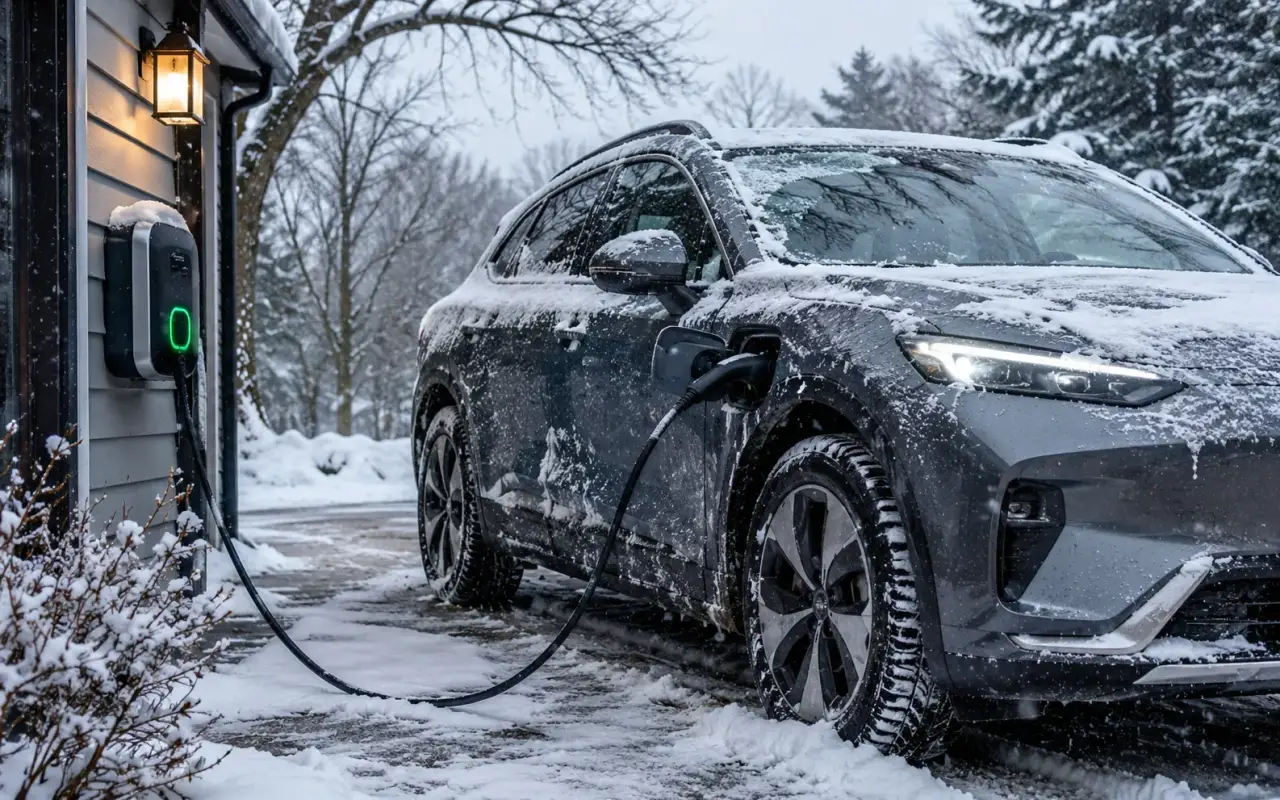
The DOE Alternative Fuels Data Center home charging guidance notes that outdoor installations can be safe when equipment is rated for outdoor use and installed appropriately. In icy conditions, keep the plug and charge port clear of debris, protect cables from damage and follow the equipment maker’s instructions.
Do not force a frozen connector or attempt improvised heating using open flames, boiling water or metal tools. If a port door or connector is frozen, follow the vehicle’s prescribed defrosting or release procedure. Do not use a damaged cord or charger, and contact qualified service personnel when needed.
A certified electrician should evaluate permanent home charging equipment, circuit capacity and local permits. If you are estimating your winter electricity bill, see our home EV charging cost calculation guide and include actual cold-weather energy use rather than a summer average.
Short winter drives versus long highway trips
On a short commute
Cabin heat and defrosting can represent a relatively large share of energy used during a short journey. Preconditioning before departure and using efficient climate settings can make those trips more predictable. Avoid sacrificing visibility or passenger safety simply to save electricity.
On a highway journey
High speed, headwinds, wet pavement and freezing weather can combine to increase energy use. Use the vehicle’s route planner when available, check live charger status, and keep reasonable reserve energy. If a planned charger is unavailable, the backup should be reachable without relying on the last few percentage points of battery capacity.
What not to conclude from a winter range drop
- Not necessarily a defective battery: Lower range during cold weather does not automatically indicate permanent battery capacity loss.
- Not a fixed percentage: No single winter penalty applies to every vehicle and route.
- Not the same as peak charger output: A station’s maximum power rating is not a guaranteed rate when the pack is cold.
- Not an excuse to ignore safety: Winter tires, visibility, clearance and electrical equipment condition remain essential.
Frequently asked questions
Can electric vehicles be charged outside in freezing weather?
Yes, when the charging equipment is suitable for outdoor conditions, correctly installed and used according to manufacturer instructions. Take extra care with ice, snow and connector condition.
Does charging to 100% fix winter range loss?
Not necessarily. A higher starting state of charge may give you more available energy, but it does not remove the increased energy required by cold-weather driving. Follow the manufacturer’s daily charging and trip recommendations.
Should I warm the car while it is still plugged in?
Where supported, preconditioning while plugged in can help prepare the cabin and battery while drawing energy from external power. This can improve readiness and help preserve battery charge for driving.
Will a fast charger always be slower in winter?
Not always. It depends on the pack temperature on arrival, vehicle thermal management, charging state and station capabilities. A properly conditioned battery may perform much better than a very cold one.
Continue with the EV Guides library and Charging & Batteries for charging and ownership information. Editorial method: All numerical range calculations on this page are marked as hypothetical; the explanatory and safety guidance is based on public U.S. government sources.