Quick answer: On October 28, 2026, the Federal Open Market Committee (FOMC) held the target range for the federal funds rate at 3.75%–4.00%. That rate is an overnight interbank policy benchmark—not a promise that U.S. shoppers can finance a new or used car at 3.75%. Car loan annual percentage rates (APRs) depend on the lender, credit profile, length of the loan, vehicle, fees and other terms. The next scheduled FOMC meeting is December 8–9, 2026.
Source-verified on November 8, 2026. Rates and lender offers can change. Example payments below are illustrative calculations, not live quotes or personalized financial advice.
What happened at the Fed’s October 28, 2026 meeting?
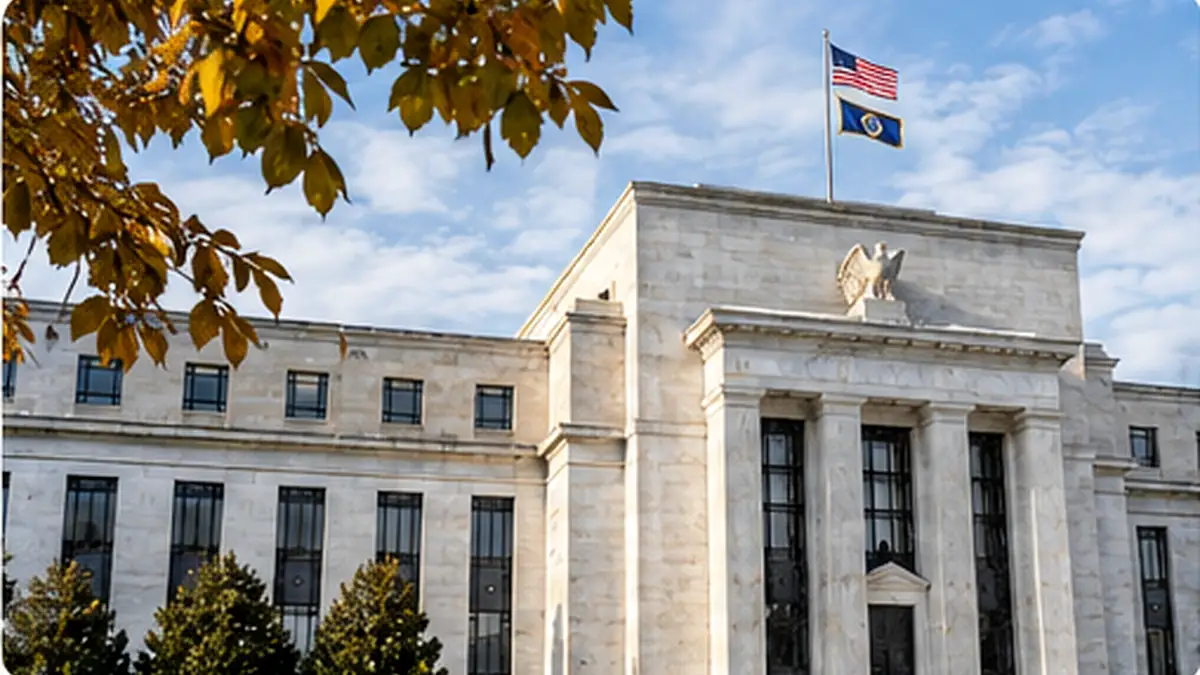
The Federal Reserve’s October 28, 2026 press release says the Committee voted 10–2 to maintain a target rate range of 3¾% to 4%. This followed the September 16 decision to raise the target range by one quarter of a percentage point. The Fed said it would continue evaluating available information to pursue maximum employment and stable prices. The official policy-rate dashboard identifies 3.75%–4.00% as the current range effective October 29.
Is the Fed’s 3.75%–4.00% rate the APR on a car loan?
No. As the Federal Reserve explains, the federal funds rate is the interest rate banks charge one another for overnight lending of reserve balances. Lenders make separate decisions about retail car loan prices. Your auto loan APR can be higher or lower than a specific quoted benchmark depending on the product and underwriting factors. Never substitute the federal funds rate for a real financing offer.
Car loan interest rate versus APR
According to the Consumer Financial Protection Bureau (CFPB), an interest rate is the cost of borrowing principal. An APR includes the interest rate plus certain additional loan charges, expressed as an annualized percentage. Two lenders can quote similar interest rates but different APRs because of financed charges. Compare APR to APR, not APR to an advertised interest rate.
How the Fed decision may affect new and used car loans
Monetary policy influences the financial conditions under which lenders fund loans, but retail rate changes are not necessarily immediate or one-for-one. Car lenders also consider factors such as credit history, income and debts, the down payment, the amount borrowed, the financing term and whether a vehicle is new or used. The CFPB’s auto-loan rate guide lists these underwriting factors explicitly. This means the same Fed decision can coincide with materially different APR offers for different buyers.
Worked example: $30,000 car loan for 60 months at 7% versus 9% APR
To illustrate why the actual lender APR matters more to a shopper than a central-bank headline, consider a hypothetical $30,000 amount financed over 60 equal monthly payments. The calculations assume monthly compounding, fixed APR, no separate financed fees and no early repayments. They do not claim that 7% or 9% is the prevailing market rate.
| Illustrative loan | 7.00% APR | 9.00% APR |
|---|---|---|
| Amount financed | $30,000 | $30,000 |
| Term | 60 months | 60 months |
| Approx. monthly payment | $594.04 | $622.75 |
| Approx. total interest | $5,642.16 | $7,365.04 |
| Interest difference | About $1,722.88 over five years | |
What this demonstrates: A two-percentage-point difference between illustrative APRs changes the total cost significantly. Loan length matters too: lowering the monthly payment by extending the loan can increase total financing cost. Use your lender’s disclosures for exact fees and payment terms.
Five steps to compare auto loans without being misled
- Know your actual amount financed. Start with the agreed out-the-door vehicle price, taxes, registration, add-ons and down payment. A low advertised monthly payment can hide a larger amount financed or longer term.
- Check your credit records. Errors or different credit histories can influence offers. The CFPB explains which financial factors lenders evaluate.
- Request quotes from banks, credit unions and dealerships. The CFPB recommends comparing financing offers before visiting the dealer.
- Compare APR, term and total borrowing cost. A rate alone does not tell you the entire repayment obligation.
- Ask if the loan is fixed or variable. A fixed-rate contract normally keeps its agreed rate unless modified; the terms of any variable-rate product must be read separately.
Do EV and gasoline-car buyers face the same loan rules?
The basics of APR, creditworthiness and loan term are similar, but vehicle price, depreciation, lender policy, rebates, dealer finance promotions and other transaction factors can change the offers available on a particular new, used, electric or gasoline vehicle. For context, read our free used-car VIN check guide before purchase, and compare costs in our 2026 IONIQ 5 vs. EV6 comparison. Rates quoted for one advertised model may not apply to another.
Will my existing car payment change after a Fed announcement?
For a standard fixed-rate auto loan, the scheduled interest rate generally does not reset merely because the Fed makes a new decision. Read your loan contract to confirm whether the rate is fixed, whether refinancing is available and what fees or penalties could apply. For new loans, lender offers can change before you lock an APR. Avoid assuming that waiting for a future Fed meeting guarantees a cheaper quote.
When is the next Federal Reserve interest rate decision?
As of November 8, the official FOMC calendar lists the next two-day meeting for December 8–9, 2026. A meeting date does not imply a cut or increase. The Committee announces its decision after considering economic developments; consult its published statement rather than social media predictions.
Official sources and methodology
October 28 FOMC statement; Fed policy-rate dashboard; CFPB APR versus interest rate; CFPB lender rate factors; FOMC calendar. Monthly installments were calculated with the standard fixed-payment amortization formula and rounded to cents.
Sık Sorulan Sorular
What did the Federal Reserve decide on October 28, 2026?
The FOMC held its target federal funds rate range at 3.75% to 4.00%, according to its official October 28 statement.
Can I get a 3.75% auto loan because the Fed rate is 3.75%?
Not automatically. The federal funds rate is the overnight rate for lending between banks. Auto loan APRs are separate retail offers based on credit, fees, term and other factors.
Will the Fed holding rates automatically change my existing car loan payment?
Typically not if you have a fixed-rate contract with scheduled payments. Check your loan agreement if your rate is variable or has unusual features.
How can I compare two car loan offers?
Compare APR with APR, term length, amount financed, monthly payment, total interest, and fees, using the Truth in Lending disclosures provided by lenders.