Quick answer (US-spec 2026 models): The 2026 Hyundai IONIQ 5 and 2026 Kia EV6 have nearly identical published maximum EPA range in selected long-range rear-wheel-drive configurations: 318 miles for the IONIQ 5 and 319 miles for the EV6. Both can achieve a claimed 10–80% DC charging session in approximately 20 minutes under specified high-power conditions. Hyundai publishes more cargo space behind the rear seats—26.3 cubic feet versus Kia’s 24.4. These are manufacturer-specified comparisons, not original instrumented road-test results.
2026 Hyundai IONIQ 5 vs Kia EV6: side-by-side US specifications
| Specification | 2026 Hyundai IONIQ 5 | 2026 Kia EV6 |
|---|---|---|
| Long-range RWD EPA estimate | 318 miles, SE/SEL/Limited RWD with larger battery | 319 miles, Wind RWD; also specified on other selected long-range RWD trims |
| Selected AWD EPA estimate | 290 miles, SE/SEL AWD | 295 miles, Wind AWD |
| Larger battery nominal capacity | 84 kWh | 84 kWh |
| DC 10–80% published best case | About 20 minutes using suitable high-power DC and CCS adapter | About 20 minutes using a suitable high-power DC charger |
| Cargo behind rear seats | 26.3 cu ft | 24.4 cu ft |
| Cargo with rear seats folded | 58.5 cu ft | 46.7 cu ft |
| Market for these figures | United States | United States |
The range examples intentionally compare named configurations, not the entire model ranges. Kia and Hyundai also sell versions with different wheel sizes, battery capacities and drivetrain layouts. All range numbers are EPA estimates, not guaranteed highway range. See Hyundai US specifications, Kia US specifications and the Kia EV6 2026 luggage specification.
Which electric car has the longest range?
For the highlighted RWD trims, the Kia EV6’s 319-mile EPA estimate is one mile higher than the IONIQ 5’s 318-mile rating. A one-mile difference in laboratory estimates is not a meaningful guarantee of an advantage on an actual trip. Wind, speed, tyres, cabin heating, driving style and temperature can change real-world consumption by much more.
The AWD comparison is similarly configuration-dependent: Kia lists 295 miles for EV6 Wind AWD and Hyundai lists 290 for IONIQ 5 SE/SEL AWD. Other trims differ: Hyundai quotes 269 miles for the 2026 IONIQ 5 Limited AWD and 259 miles for XRT AWD, while Kia lists 270 miles for EV6 GT-Line AWD. A buyer should never compare a brochure’s longest-range RWD variant with a different brand’s sporty AWD trim and treat the difference as a platform-wide result.
For an explanation of test procedures, consult our EPA vs WLTP range guide.
Which has more space: IONIQ 5 or EV6?
Hyundai publishes 26.3 cubic feet of cargo room with the rear seats up and 58.5 cubic feet with the rear seats folded in the regular IONIQ 5. Kia’s 2026 EV6 owner’s-manual table lists 24.4 cubic feet behind the rear seats and 46.7 cubic feet in its maximum luggage configuration. On the published figures, the IONIQ 5 has 1.9 cubic feet more space behind its rear bench.
That said, luggage capacity is not the same as whether a bulky stroller, bicycle or luggage case will fit. Loading-aperture shape, the parcel shelf, cargo-floor height and rear-seat position matter. If practicality is the buying priority, check the physical opening and test your actual luggage at a showroom.
How quickly do the 2026 IONIQ 5 and EV6 charge?
Both manufacturers advertise rapid 10–80% charging in roughly 20 minutes for specified versions under favourable conditions. Hyundai’s example assumes a suitable 350-kW, 800-V DC station and the included CCS adapter where necessary. Kia also specifies a suitable high-power charger, and notes that an adapter may be sold separately for some connector combinations.
The advertised charger rating does not mean either vehicle accepts 350 kW continuously. Actual charging power changes with battery state of charge, temperature, the charging curve, station output and site power sharing. A cold battery or a congested charging site may require a substantially longer stop. For that reason, a claimed 20-minute session is not a guaranteed universal charging time.
Read our battery preconditioning guide and charging losses explainer for real-world considerations.
What about NACS and Tesla Supercharger access?
US charging convenience depends on the vehicle’s native connector, approved adapters, the station’s electrical architecture, the brand’s network agreements and the specific charger. Both current model ranges discuss North American Charging Standard compatibility, but the supplied or optional adapter differs by brand and charging situation.
Hyundai states that the applicable 2026 IONIQ 5 configuration includes a CCS adapter for high-power CCS charging; Kia notes that an appropriate adapter may need to be purchased separately. A buyer should verify the exact car, accessory and charger before assuming a particular Supercharger will work. Our non-Tesla Supercharger guide explains those distinctions.
Which model should a family compare first?
The IONIQ 5’s published cargo numbers make it a natural vehicle to inspect when luggage room is important. The EV6 is a similarly capable long-range choice, with the selected Wind RWD version’s EPA range effectively matching Hyundai’s equivalent long-range configuration. Neither difference establishes a better overall car for every driver.
When shopping, compare like-for-like trims and obtain written quotations with destination charges, incentives, lease terms, any charging accessories, vehicle availability and insurance. A trim with lower EPA range may still be preferable when AWD traction, safety features, seating or affordability better match the household’s needs.
Why are insurance and ownership costs also important?
Two EVs with similar EPA range can have different premiums, repair procedures, wheel-and-tyre replacement costs, depreciation and financing terms. Compare insurer quotations for the actual VIN and location rather than assuming a shared platform means identical costs. For a general US insurance checklist, see our electric-car insurance cost guide.
Is this a road test?
No. This is an independently written, source-linked comparison of official US specifications. We have not measured real-road efficiency, noise, ride quality or actual charging power in a controlled test. Those results can vary by tyre, wheel, weather, driver and vehicle configuration; they should not be invented.
Manufacturer sources and photo information
References: Hyundai USA 2026 IONIQ 5, Hyundai trim specifications, Kia USA 2026 EV6, Kia EV6 comparison specifications, and the Kia owner’s manual luggage-volume table.
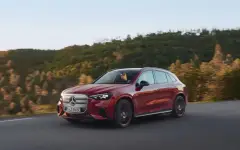
Featured photograph: real 2026 Hyundai IONIQ 5 Limited photographed by HJUdall, Wikimedia Commons, CC0 1.0. It shows the Hyundai model only; the Kia is included in the editorial comparison, not in that photograph.
Sık Sorulan Sorular
Which has more range in 2026: Hyundai IONIQ 5 or Kia EV6?
In selected US long-range RWD trims, Hyundai lists 318 EPA-estimated miles and Kia lists 319; the one-mile difference is not a real-world guarantee.
Does the IONIQ 5 have more cargo space than the Kia EV6?
On their published US specifications, IONIQ 5 has 26.3 cubic feet behind the rear seats versus 24.4 for EV6.
How long does 10–80% charging take in either 2026 EV?
Both manufacturers advertise approximately 20 minutes in certain high-power DC charging conditions, not a guaranteed time at every charger.
Are IONIQ 5 and Kia EV6 US range figures the same as WLTP?
No. US EPA estimates and European WLTP figures are different test procedures and should not be directly equated.