Euro NCAP, IIHS and NHTSA all publish valuable vehicle-safety information, but their stars, awards and crash-test results cannot be converted into one universal score. If you are comparing electric cars in 2026, first check the testing organisation, the model year, the exact vehicle configuration and the testing protocol used. A five-star Euro NCAP result is not an automatic five-star NHTSA result, and an IIHS TOP SAFETY PICK+ award is not a sixth star.
Editorial methodology: This is an independent explanation of published safety-test methods, not a claim that our team has crashed, inspected or road-tested any vehicle. Its primary sources are the three testing organisations.
What are the main differences?
| Programme | Where it is mainly used | How results are presented | Important 2026 distinction |
|---|---|---|---|
| Euro NCAP | European market | Up to five stars, with underlying category scores | A revised four-stage assessment introduced for 2026 |
| IIHS | United States | Individual crash/avoidance ratings and annual TOP SAFETY PICK awards | 2026 awards require good crashworthiness ratings and specified avoidance/headlight performance |
| NHTSA | United States | One-to-five-star crash-test and rollover results | Overall ratings reflect frontal, side and rollover injury-risk measures |
These systems differ in test procedures, impact scenarios, scoring, eligibility and how ratings are carried across variants. Do not rank three vehicles from different organisations by stars alone.
How does Euro NCAP rate electric cars in 2026?
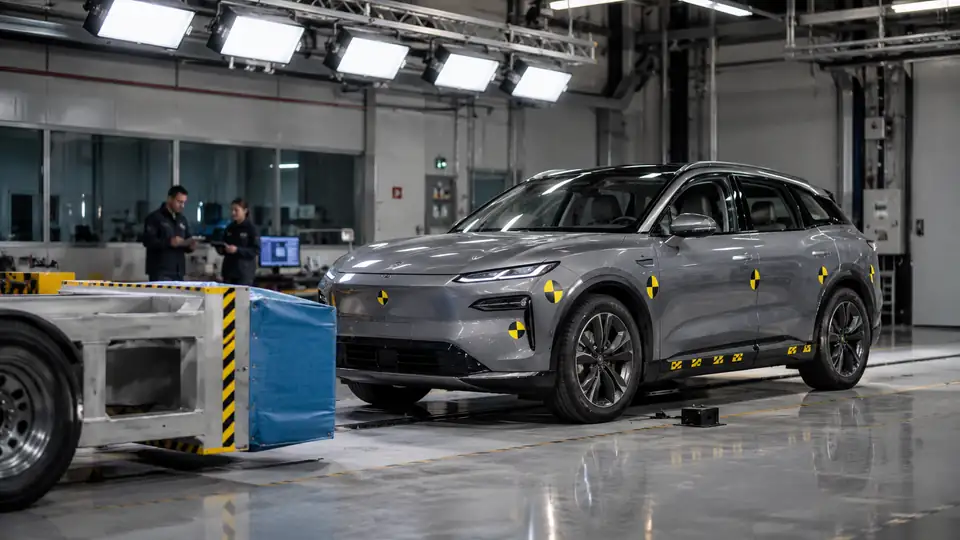
Euro NCAP announced that its 2026–2028 protocol uses four safety stages: Safe Driving, Crash Avoidance, Crash Protection and Post-Crash Safety. Each stage is scored and contributes to an overall star outcome subject to required thresholds. The official announcement from 26 November 2025 identifies new attention to driver-monitoring systems, protection for more occupant body types and rescue after a crash.
For electric vehicles, post-crash provisions address high-voltage isolation, risks linked to traction batteries and electrically powered exterior door handles. These are safety assessment criteria, not a guarantee that any battery will never ignite or that a vehicle will be safe in every collision.
The 2026 protocol also considers whether driver-assistance warnings are effective and usable rather than merely present. An EV can therefore have extensive advertised driver-assistance features while still requiring independent evaluation of those systems. Review the applicable protocol year, not just the manufacturer’s marketing.
Why the year of the Euro NCAP test matters
Euro NCAP revises its protocols periodically. A result earned under an earlier protocol is not necessarily directly comparable to a newer result, even where both show five stars. Look for the date and detailed percentage breakdown on each model’s official result page, as well as any restrictions on tested safety equipment.
What do IIHS TOP SAFETY PICK and TOP SAFETY PICK+ mean?
The Insurance Institute for Highway Safety (IIHS) is an independent U.S. research and testing organisation. It uses component ratings such as Good (G), Acceptable (A), Marginal (M) and Poor (P), and awards qualifying vehicles annually. IIHS’s published 2026 award criteria require good results in small-overlap front, moderate-overlap front and side tests.
For 2026, a TOP SAFETY PICK+ winner must additionally satisfy IIHS’s requirements for headlights, pedestrian front crash prevention and vehicle-to-vehicle front crash prevention 2.0. A standard pedestrian front crash prevention system must earn a Good rating. The non-plus award has somewhat different thresholds. Check the official IIHS listing for the exact model year and any “built after” condition.
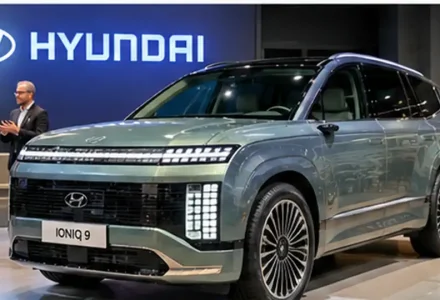
Practical example: IIHS lists the 2026 Hyundai Ioniq 5 among its full-electric award winners. That means it met the applicable IIHS award criteria, not that it passed every conceivable collision scenario. Other markets or model years may have different equipment, so confirm the tested configuration.
How do NHTSA’s five-star ratings work?
The U.S. National Highway Traffic Safety Administration (NHTSA) conducts its federal 5-Star Safety Ratings programme with frontal, side and rollover tests. NHTSA says its Overall Vehicle Score combines predicted injury-risk measures rather than directly averaging a number of stars. The official ratings explainer and vehicle comparison tool provide the underlying information.
NHTSA warns that its frontal test and overall scores should be compared within suitable vehicle class and weight groupings. Side and rollover scores have different comparability rules. A vehicle marked Not Rated is not necessarily unsafe; it may not have been tested under the relevant assessment, or a result may not be available. Similarly, inclusion on an agency’s “selected for testing” list is not proof that a result has been published.
Are electric cars crash-tested differently from petrol cars?
Crash protection still depends on vehicle structure, restraint systems, impact configuration and injury mitigation. Electric cars additionally carry a high-voltage traction battery, so safe electrical isolation and post-crash management are especially important. But the presence of a battery does not establish that an EV will perform better or worse in a crash. Test the individual model and read the actual ratings.
For context on electric drivetrains, see our electric motor types explainer. A motor design or a nominal battery capacity is not itself a crash-test result.
Can you compare Euro NCAP five stars with NHTSA five stars?
No, not as a numerical equivalence. Both use up to five stars, but the assessment methods and tested vehicle configurations are different. A fair comparison should use:
- The same market, model year and specification wherever possible.
- The actual official rating page, not a carmaker’s headline without context.
- The test year and protocol version, including any revised 2026 rules.
- Details on occupant protection and vulnerable road users, not only a headline award.
- Notes on required equipment, build dates, untested categories and limitations.
A five-minute EV safety-rating checklist for buyers
| Question | Why it matters |
|---|---|
| What exact model and year were rated? | Equipment and structure can change between generations. |
| Was the test done in Europe or the U.S.? | Specifications and testing standards can differ. |
| What were the individual crash results? | Overall stars may hide differences between protection areas. |
| Does the award apply only after a production date? | Some ratings exclude older builds or different equipment. |
| Is the model simply untested? | No rating is not the same thing as a failing rating. |
| What is the official recall status? | Crash ratings do not replace a current recall check. |
For U.S. vehicles, check recalls through the NHTSA recall lookup. Read our related EV maintenance checklist for separate owner-safety practices. A maintenance inspection is not a substitute for controlled crash testing.
What safety rating should you choose?
Choose a vehicle with strong, applicable results from the programme covering your market and configuration, then assess how its individual crash-protection and active-safety systems perform. Prefer test evidence over unqualified claims such as “the safest EV in the world.” Do not assume five stars from one organisation equals an award in another.
Source update: programme and published model ratings consulted for this guide on 6 November 2026. Award lists and detailed assessments can change as new tests are released.
Sık Sorulan Sorular
Is five-star Euro NCAP the same as five-star NHTSA?
No. The programmes apply different impact scenarios, rating methods, regulatory contexts and vehicle specifications. Do not convert scores directly.
What does IIHS TOP SAFETY PICK+ mean in 2026?
The tested model meets IIHS's specific 2026 crashworthiness, headlight and crash-avoidance criteria. It is an annual qualification, not an extra star.
Does an unrated EV mean it is unsafe?
Not necessarily. Unrated can mean an applicable test was not completed or a result is unavailable; evaluate available testing, recalls and equipment.
Did Euro NCAP change its tests in 2026?
Yes. Euro NCAP introduced a four-stage framework emphasising safe driving, crash avoidance, crash protection and post-crash safety.
Are battery-electric cars tested differently after a crash?
Relevant protocols consider the high-voltage battery and post-crash electrical safety in addition to occupant and road-user protection. Requirements vary by organisation and test year.