Quick answer: To check blood pressure at home correctly, choose a validated automatic upper-arm cuff that fits your arm. Do not smoke, exercise or drink caffeine during the 30 minutes before your reading. Empty your bladder, sit quietly for at least five minutes with feet flat and uncrossed, rest your bare arm at heart level, and take two readings one minute apart. Record both results and discuss patterns with your clinician instead of diagnosing high blood pressure from one number.
What blood-pressure monitor should you use at home?
The American Heart Association (AHA) recommends a validated automatic device with an upper-arm cuff. Wrist and finger monitors generally provide less reliable readings. Use a cuff sized to your upper-arm circumference: a poorly fitted cuff can distort the results. If buying a device, consult the validation information and ask a healthcare professional or pharmacist for help with size and suitability.
Bring the monitor to a clinical visit so a trained professional can check your technique and compare it with clinic equipment. Home monitoring can help with diagnosis and treatment follow-up, but it does not replace medical visits or justify stopping prescribed medication.
How to prepare 30 minutes before checking your blood pressure
- Avoid smoking, caffeine and exercise for at least 30 minutes. These can temporarily alter your reading.
- Empty your bladder before measuring. A full bladder can affect the result.
- Find a quiet place. Choose a chair and a table that allow your arm to be supported.
- Expose your upper arm. Put the cuff on bare skin, not over a sweater or rolled-up sleeve that squeezes the arm.
- Sit and rest for at least five minutes. Do not talk, scroll on your phone or move around during this rest.
These steps follow CDC instructions on accurate blood-pressure measurement and AHA guidance.
Step-by-step: correct sitting position and cuff placement
- Keep your back supported and both feet flat on the floor; do not cross your legs.
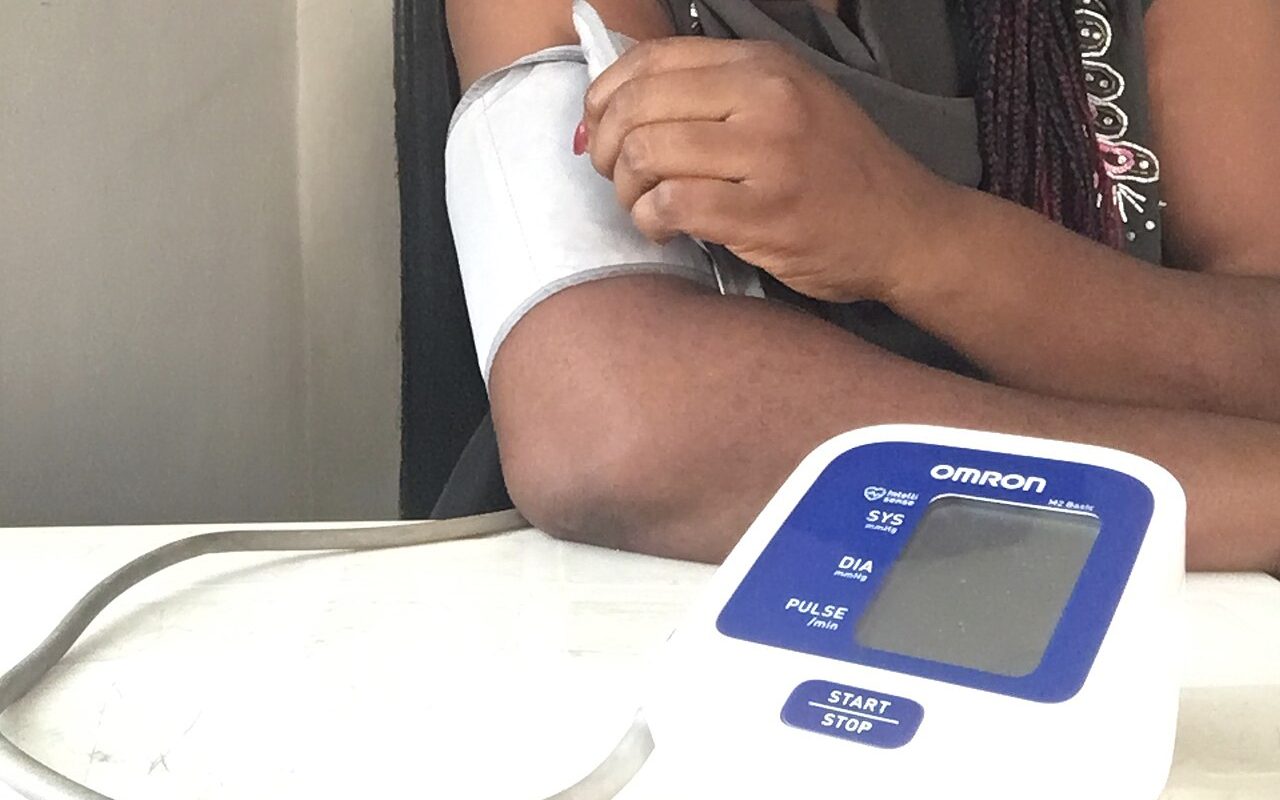
- Rest your forearm on a table so the cuff is at heart level. Do not leave the arm hanging down.
- Apply the upper-arm cuff snugly on bare skin as directed by its manufacturer. Check that the cuff is the correct size.
- Start the monitor and remain quiet and still throughout measurement.
- Record the systolic (top) and diastolic (bottom) numbers in millimeters of mercury, written mm Hg.
- Wait one minute, then take a second reading. Record that result too.
If a device repeatedly gives an error, confirm cuff position, battery condition, correct arm size and instructions before drawing a conclusion about your health.
What do the top and bottom blood-pressure numbers mean?
Systolic is the top number, reflecting arterial pressure when the heart beats. Diastolic is the bottom number, reflecting pressure when the heart relaxes between beats. Current AHA adult categories provide a way to interpret them, but diagnosis must be confirmed by a healthcare professional.
| AHA adult category | Systolic (mm Hg) | Diastolic (mm Hg) |
|---|---|---|
| Normal | Below 120 | and below 80 |
| Elevated | 120–129 | and below 80 |
| Stage 1 hypertension | 130–139 | or 80–89 |
| Stage 2 hypertension | 140 or higher | or 90 or higher |
| Severe hypertension | Higher than 180 | and/or higher than 120 |
When the two numbers fall in different categories, the higher category applies. These ranges are general adult classifications, not personalized targets for children, pregnant people or patients with particular medical conditions. Reference: AHA blood-pressure categories.
When is a high reading an emergency?
If the systolic pressure is higher than 180 or the diastolic is higher than 120, and you are otherwise stable, the AHA advises waiting at least one minute and measuring again. If the repeat is still severely high, contact a healthcare professional immediately for guidance. Call 911 in the United States if a severe reading occurs with chest pain, shortness of breath, back pain, new numbness or weakness, vision changes, difficulty speaking, or other signs of serious acute illness. Do not wait for another reading when you may be experiencing a medical emergency. The AHA explains this distinction in its emergency blood-pressure guidance.
How often should you measure and what should you record?
Follow the schedule your healthcare professional recommends, often using consistent times of day when establishing a trend. Save the date, time, arm used, both readings, medications if your clinician requests them, and any relevant symptoms. An example entry is:
Sample log (fictional): November 9, 7:30 a.m. — reading 1: 126/78 mm Hg; reading 2: 124/76 mm Hg; left upper arm; seated and rested five minutes. This sample is illustrative only, not a patient record or target to achieve.
Bring the log and monitor to appointments. If you see a surprising result, check your setup, repeat as medically appropriate and share the details rather than changing a prescription yourself.
Five common home-monitoring mistakes
Frequently overlooked problems include measuring over clothing, using the wrong cuff size, talking during a reading, crossing your legs, and holding the arm below heart level. A single home reading is a snapshot, so use repeated measurements and professional guidance when interpreting results.
Related guides and verified sources
For other practical U.S. health information, see the Health category. Environmental exposures can also affect general health; our U.S. Air Quality Index guide explains when outdoor air pollution may matter for people with heart or lung conditions.
Primary sources: CDC — Measuring Your Blood Pressure; AHA — Home Blood Pressure Monitoring; AHA — When To Call 911.
Medical information notice: This is general adult educational guidance and does not replace individualized medical advice, including for pregnancy. Sources checked November 9, 2026. Featured image is illustrative; follow the written positioning instructions and your own monitor’s manual.
Sık Sorulan Sorular
Should I measure blood pressure on the left or right arm?
Either arm can be used for an initial comparison. Ask your healthcare professional which arm to use consistently if results differ, and follow any individual instructions.
Can I take blood pressure over my sleeve?
No. The cuff should be fitted on a bare upper arm in the position described by the monitor manufacturer and your healthcare professional.
How many times should I check blood pressure at home?
The American Heart Association recommends taking two readings one minute apart at each measurement session. Ask your clinician how frequently and at what times to repeat sessions.
What if my home blood pressure is over 180/120?
Wait at least a minute and measure again if safe. If it remains above 180 systolic or above 120 diastolic without emergency symptoms, contact a healthcare professional promptly. With chest pain, shortness of breath, weakness, vision changes or other serious symptoms, call 911.