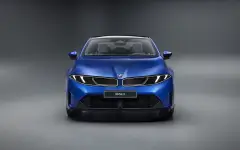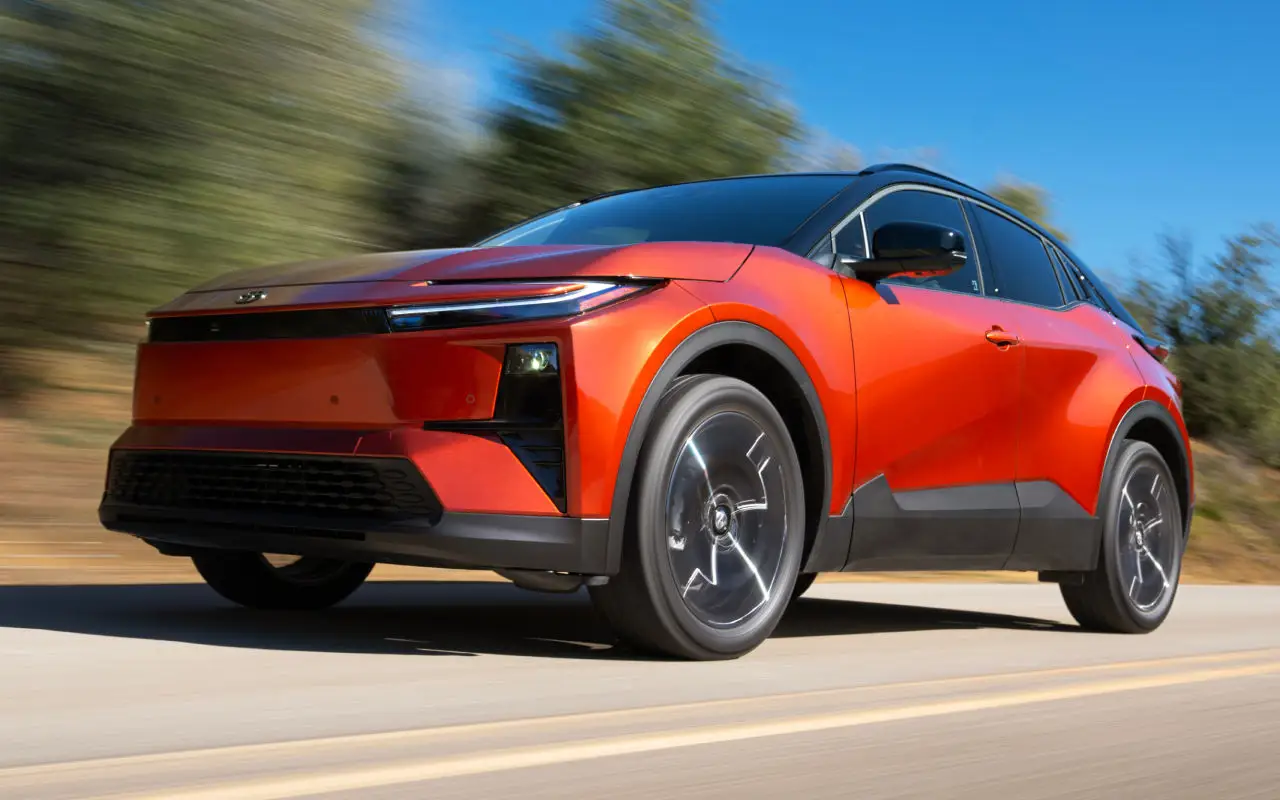
Quick answer: The 2027 Toyota C-HR is an all-electric compact SUV sold in the United States with standard dual-motor all-wheel drive, 338 combined horsepower, a 74.7-kWh battery and EPA-estimated range of 287 miles for SE or 273 miles for XSE. Toyota lists the starting manufacturer’s suggested retail price at $37,080, before processing, handling, taxes and optional equipment.
2027 Toyota C-HR EV: confirmed U.S. specifications
Toyota’s August 6, 2026 announcement describes a battery-electric C-HR rather than the gasoline or hybrid C-HR models sold in other markets. The 2027 U.S. model is offered in SE and XSE grades. Both use electric motors at the front and rear axles; buyers do not need to move to a higher trim to get all-wheel drive. Toyota estimates 0–60 mph acceleration at 4.9 seconds. This is a manufacturer performance estimate, not an independent instrumented test.
| Specification | 2027 C-HR SE | 2027 C-HR XSE |
|---|---|---|
| Drive | Dual-motor AWD | Dual-motor AWD |
| Combined power | 338 hp | 338 hp |
| Battery capacity (total) | 74.7 kWh | 74.7 kWh |
| U.S. EPA-estimated range | 287 mi | 273 mi |
| Wheels | 18 in | 20 in |
| Charging connector | NACS | NACS |
The range difference deserves attention: Toyota’s EPA figures associate the SE’s 18-inch wheels with 287 miles and the XSE’s 20-inch wheels with 273 miles. The 14-mile difference is a rating, not a guarantee for a specific journey. Driving speed, temperature, elevation, heating and tire selection can change the miles a driver obtains.
What does the 2027 Toyota C-HR cost?
Toyota announced a starting U.S. MSRP of $37,080 for the SE, excluding dealer processing and handling fees. That is not a universal out-the-door price: destination, local taxes, registration, dealer pricing and options must be included in a real purchase quote. Toyota said 2027-model dealership arrivals were expected to begin in September 2026; check an individual retailer for current stock. The XSE costs more, but the August announcement should not be treated as a complete transaction-price quote.
Charging: NACS, home charging and road trips
The battery is rated at 74.7 kWh total and the C-HR carries an 11-kW onboard AC charger. Toyota says compatible high-power DC charging can take the battery from 10% to 80% in around 30 minutes under ideal conditions. The actual time depends on battery temperature, charging station capability, starting state of charge and battery management. The claim is not a promise that every station charges at the same rate.
The native North American Charging Standard (NACS) port is useful for U.S. drivers, but connector shape alone does not establish that every Tesla station is accessible to every brand. Before traveling, confirm vehicle support, site eligibility and operational chargers with the network. Read our NACS and Tesla Supercharger compatibility guide and U.S. EV road-trip charging checklist. To understand charging at home, see how much range one hour of Level 1 or Level 2 charging can add.
Cargo space and everyday usability
Toyota lists up to 25.3 cubic feet behind the rear seats and up to 59.5 cubic feet with the 60/40-split second row folded. This makes the C-HR useful beyond commuting, although a sloping rear roof can still affect the shape of tall items that fit. Shoppers should verify the actual usable opening and child-seat fit during a dealership visit instead of assuming that cubic-foot measurements alone tell the whole story.
Inside are a 14-inch central touchscreen, dual-zone climate control with rear vents, two wireless phone-charging pads and front/rear USB-C ports. Toyota lists an available fixed panoramic glass roof with power shade on XSE; shoppers should check exact equipment by trim and package.
SE or XSE: which specification matters most?
The practical comparison is not just the visual difference. SE delivers the higher EPA range rating and smaller wheels, while XSE changes the wheel/tire setup and offers additional available equipment. For a buyer primarily concerned with distance between charges, the published EPA advantage is with the SE. Drivers who value a particular cabin feature or appearance can weigh it against the lower XSE range rating. Neither rating predicts actual charging stops without accounting for route speed and weather.
How to compare charging cost fairly
The 74.7-kWh total pack number is not a measured quantity of electricity that every recharge adds from a wall outlet. Charging losses and the battery’s usable energy window affect the total metered kWh. Compare a home electricity bill’s complete per-kWh cost, not only an advertised energy-supply rate. Our home EV charging cost explainer provides a reproducible method.
What has Toyota confirmed, and what remains variable?
Published manufacturer specifications include AWD, output, battery capacity, MSRP starting point, cargo volume and DC charging claim. The range figures cited here are EPA estimates described in Toyota’s later 2026 U.S. material. On-road consumption, final dealer cost, local inventory and charging-network access are variable rather than confirmed for every owner.
Primary sources: Toyota USA Newsroom, August 6, 2026; Toyota USA Newsroom, EPA-range clarification.
Sık Sorulan Sorular
What is the EPA range of the 2027 Toyota C-HR EV?
Toyota lists 287 miles for SE with 18-inch wheels and 273 miles for XSE with 20-inch wheels. Actual range varies.
Does the 2027 Toyota C-HR EV come with all-wheel drive?
Yes. The U.S. 2027 battery-electric C-HR has standard dual-motor all-wheel drive and 338 combined horsepower.
How quickly can the 2027 C-HR charge?
Toyota says approximately 30 minutes from 10% to 80% with compatible DC fast charging under ideal conditions; real-world performance varies.