To check whether an electric car has an open safety recall in the United States, enter its 17-character Vehicle Identification Number (VIN) into the official National Highway Traffic Safety Administration (NHTSA) recall checker. If the lookup identifies an unrepaired recall, read the exact manufacturer instructions and arrange the specified remedy with an authorized dealer. If the recall involves a high-voltage battery, instructions may include limits on charging or where to park. Never assume that all EV battery recalls have the same precautions.
This guide covers the U.S. VIN process, how to interpret zero-results messages, why recall repairs are normally free and what to check before buying a used electric vehicle. It is not a live recall database and does not declare any particular EV model safe or unsafe.
How to check an EV recall by VIN: six steps
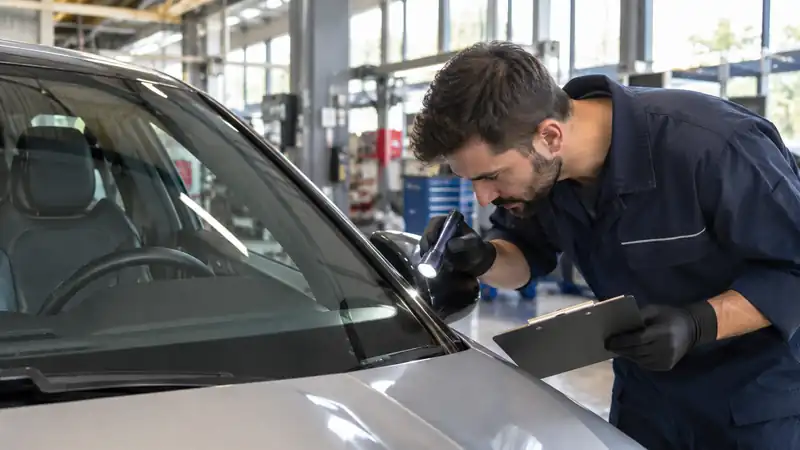
- Locate your VIN. NHTSA says the 17-character identifier is commonly visible at the lower-left windshield on the driver’s side; it also appears on registration and, often, insurance documents. Do not confuse the VIN with the license plate.
- Open NHTSA.gov/recalls. Use the official federal site rather than an advertisement asking for payment to display open safety recalls.
- Enter the VIN carefully. Check all letters and numbers against the vehicle. An incorrect character can produce a misleading result.
- Review any open campaigns. Look for the manufacturer’s recall number, NHTSA recall reference, affected component, potential risk and status of the remedy.
- Follow the safety instructions immediately. Some campaigns tell owners to limit charging, park outside or avoid driving; others do not. The specific notice controls.
- Contact the manufacturer or authorized dealer. Ask them to confirm your VIN, explain whether the repair is available and schedule the corrective action.
According to NHTSA’s recall information, manufacturers must provide an appropriate safety-recall remedy, usually through repair, replacement or another approved measure. NHTSA monitors recalls to help ensure the solution is safe and free to owners under applicable law.
What does “0 unrepaired recalls associated with this VIN” mean?
It means the lookup does not currently list an unrepaired recall for that specific VIN within the tool’s coverage. It is not a lifetime safety certificate. NHTSA says the VIN tool may not display recalls already repaired, newly announced campaigns before all affected VINs are identified, recalls older than 15 years in some cases, certain small-manufacturer recalls, non-safety service campaigns or international-market vehicles.
Consequently, a zero-result search does not prove the car has never had a recall and does not replace a mechanical and battery inspection. If the result differs from a letter or vehicle-app warning, contact the manufacturer for clarification and check again later.
What kinds of EV problems can trigger safety recalls?
A recall may concern the traction battery, battery management software, high-voltage electrical equipment, braking system, seat belts, airbags, wiring, charging controls or another safety-related component. Not every charging issue or dashboard error is a safety recall. Manufacturers also conduct service campaigns and software updates outside the formal safety-recall process.
For example, a high-voltage battery safety campaign can involve instructions to avoid charging pending repair. But another recall might concern a separate restraint or braking issue; it would be incorrect to tell every recalled EV owner to park outside or disconnect the battery.
The NHTSA EV safety page warns that physical battery damage can present shock and delayed-fire hazards. If a vehicle has been flooded, badly damaged or is producing smoke, handle that as a safety situation rather than attempting ordinary recall troubleshooting.
Should you drive or charge an EV with an open recall?
Only after checking the specific recall’s instructions. Some campaigns allow continued use while a repair is scheduled; others advise owners not to charge, park near structures or drive the car. Do not invent a generic rule based solely on the words “battery recall.”
NHTSA’s published example involving certain Jeep plug-in hybrids explicitly told affected owners to park outside and not charge until repaired. That was a model- and campaign-specific direction, not universal instructions for all EVs.
If you encounter smoke, unusual heat, fire, a serious high-voltage warning or a vehicle submerged in floodwater, move to safety and contact emergency services; do not attempt high-voltage repairs yourself. Follow instructions from the manufacturer and qualified emergency responders.
How much does an electric vehicle safety recall repair cost?
In the U.S., safety recall remedies are generally provided without charge to the owner under NHTSA-supervised recall procedures. The exact remedy may be a software update, part replacement, inspection or another remedy approved for the campaign. Do not assume every recall automatically requires replacing the entire traction battery.
When booking, ask the dealer whether parts are available, what the remedy entails, whether the vehicle can be used before repair and whether any additional work is being offered as a separate paid service. A normal maintenance recommendation is not automatically a recall repair.
What if the recall was announced but the repair is not ready?
Manufacturer campaigns sometimes begin before the final parts or software remedy is available. NHTSA’s recall database may indicate a status or interim guidance; the manufacturer may provide later notifications. If you are told the remedy is unavailable, follow any interim safety precautions, ask the manufacturer how to receive updates and arrange service when the approved remedy becomes available. Do not delay taking a specific “do not drive” warning seriously simply because a dealer appointment is not yet available.
Keep your current mailing address and contact information with the manufacturer where appropriate. NHTSA also offers the SaferCar app for alerts and advises periodic recall checks.
VIN search vs model-year search: what is the difference?
| Check | What it tells you | Main limitation |
|---|---|---|
| VIN-based NHTSA recall search | Whether a specific vehicle has an open safety recall in supported data | Does not display all completed, very recent or international campaigns |
| Make/model/year recall search | Campaigns potentially relevant to a vehicle family | Not proof that an individual VIN is affected |
| Manufacturer or authorized dealer confirmation | Campaign status and remedies tied to the actual car | Requires correct vehicle details and sometimes a service appointment |
| Pre-purchase independent inspection | Broader observed condition including tires, damage and battery concerns | Does not replace recall status or a complete technical investigation |
For a used EV, combine a VIN lookup with the seller’s service history, an appropriate pre-purchase inspection and battery-health evidence. Our used EV battery state-of-health guide explains why dashboard range alone is not a full battery assessment.
Can an over-the-air software update fix an EV recall?
Some defects may be addressed by software; others require physical parts or inspections. A software-delivered remedy should be confirmed against the manufacturer’s recall instructions and vehicle record. Installing an ordinary infotainment or map update does not automatically complete an open safety recall. If a recall requires an authorized inspection or parts replacement, follow that process.
What about EVs imported to the US or registered in another country?
NHTSA’s public VIN search is primarily for covered U.S.-market safety recalls, and its own guidance says international vehicles may not be included. A European, UK or Turkish vehicle may require a separate national regulator or the vehicle manufacturer’s country-specific recall check. Do not transfer a U.S. campaign or a U.S. “no open recalls” message to an imported vehicle without checking the exact VIN and market.
For general crash-test ratings, which answer a different question from whether a particular car has an open defect campaign, consult our Euro NCAP vs IIHS vs NHTSA safety comparison. For routine inspections unrelated to recalls, see our EV maintenance checklist.
Checklist before buying a used electric car
- Match the VIN shown on the car to the registration and seller documentation.
- Check NHTSA’s VIN recall lookup where applicable and save the result date.
- Ask the manufacturer or dealer whether any relevant open or completed recalls require documentation.
- Read safety instructions for any unresolved campaign before arranging a test drive.
- Request service records and check battery-health evidence, previous damage and warranty status.
- Recheck shortly before transfer: recall databases are updated over time.
The bottom line
The safest way to check a U.S. EV recall is to use the exact VIN in NHTSA’s official lookup and verify any open campaign with the manufacturer. A VIN result showing zero unrepaired recalls is useful, but not a guarantee that every historical or newly announced campaign is absent. Read campaign-specific battery safety instructions and get the approved remedy rather than guessing.
Reviewed 6 November 2026 using NHTSA’s official recall and EV safety guidance. This article is general safety information, not a VIN-specific recall result or an assessment of an individual vehicle.
Sık Sorulan Sorular
Where can I check if my electric car has an open recall?
For a U.S.-market vehicle, enter your 17-character VIN on the official NHTSA recall website and confirm any listed campaign with the manufacturer.
Does zero unrepaired recalls mean my EV has never been recalled?
No. NHTSA's VIN lookup does not display completed recalls and may omit very recent, older, international or certain specialty-vehicle campaigns.
Are electric car safety recall repairs free?
U.S. safety-recall remedies are generally provided free under NHTSA-supervised manufacturer campaigns. Confirm the exact remedy and any separate paid work with an authorized dealer.
Should I stop charging my EV if it has a battery recall?
Follow the specific recall instructions. Some campaigns require no charging or outside parking; others do not. Never assume the same rule applies to every recall.
Can a software update close an EV safety recall?
Some recalls have an approved software remedy; others require parts, inspection or other action. Verify completion with the manufacturer rather than assuming an ordinary over-the-air update fixed it.