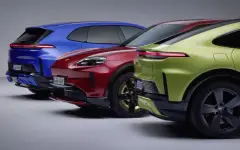
Global electric car sales surpassed 20 million in 2025, according to the International Energy Agency (IEA), making up one in four new cars sold worldwide. China remained the largest market, Europe recorded the fastest growth among the major regions, and emerging markets accounted for an increasing share of demand. These are full-year 2025 results; the numbers sometimes quoted for 2026 are projections rather than confirmed year-end totals.
This guide uses the IEA’s Global EV Outlook 2026 regional data, published in May 2026. All figures are rounded as in the original report; “electric cars” means battery-electric vehicles (BEVs) and plug-in hybrid electric vehicles (PHEVs).
Global electric car sales by region: 2025 results
| Market | Electric cars sold in 2025 | Share of new-car sales locally |
|---|---|---|
| Worldwide | More than 20 million | About 25% |
| China | More than 13 million | Nearly 55% |
| Europe | 4.2 million | 28% |
| United States | About 1.5 million | Just under 10% |
| Rest of the world | About 2 million | Not one comparable regional rate |
Source: IEA, Trends in electric cars. Rounded totals should not be treated as exact accounting values. Europe is a region rather than only the EU; the rest-of-world category excludes China, Europe and the United States.
What happened in the largest EV markets?
China: the world’s biggest electric car market
China sold more than 13 million electric cars in 2025, accounting for roughly six out of every ten electric cars sold globally. Electric models represented nearly 55% of Chinese new-car sales. That is a local sales share; it should not be confused with China’s proportion of worldwide EV sales. The IEA attributes China’s scale to wide model availability, competition and affordability.
Europe: strongest growth among major markets
European electric car sales increased by more than 30% to 4.2 million in 2025, reaching 28% of the region’s new-car market. Within the European Union, almost 3 million electric cars were sold, with a share just under 27%. Those figures are not interchangeable: Europe includes markets outside the EU, such as the United Kingdom, Norway and Türkiye. Norway’s particularly high share does not mean it sells more EVs in absolute numbers than larger countries.
United States: demand was uneven through the year
The United States sold approximately 1.5 million electric cars in 2025, slightly below the previous year. Its full-year share stayed just under 10%, but the IEA reports a sharp fourth-quarter decline following federal policy changes. A single quarterly growth rate cannot be presented as the annual result. For a separate breakdown of US incentive changes, see our US EV tax-credit guide.
Emerging markets: growing beyond the big three
Sales outside China, Europe and the US rose to about 2 million in 2025, compared with 1.3 million in 2024. The IEA highlights Southeast Asia and Latin America as regions showing rapid growth, although their absolute markets remain smaller than China’s. Higher growth rates from a smaller starting point do not automatically indicate greater global sales volume.
BEVs versus PHEVs: what is included in the data?
In the IEA dataset, a BEV runs entirely on electricity while a PHEV can use external electricity and liquid fuel. The distinction matters: BEVs made up approximately 65% of electric-car sales worldwide in 2025, according to the IEA. Comparing a source’s BEV-only numbers to another’s BEV-plus-PHEV headline can create misleading market rankings. Our BEV, PHEV and hybrid explainer shows how to interpret these categories.
IEA 2026 forecast: what was projected?
In its May 2026 executive summary, the IEA projected about 23 million electric car sales worldwide in 2026, or around 28% of new-car sales. It expected Europe to approach one in three new cars, while China’s EV share was projected to reach almost 60%. These figures describe the IEA’s outlook at publication, not final recorded sales for 2026.
Early-2026 information was mixed. The report estimates roughly 3.9 million global sales in the first quarter, around 8% below the same quarter in 2025, with regional results differing sharply. Its final-year outlook could therefore change as later registrations, incentives and market conditions become known. Readers seeking updated underlying figures should consult the IEA’s Global EV Data Explorer rather than treating a forecast as a live counter.
Why electric car market statistics can disagree
- Vehicle definition: BEVs only, or BEVs plus PHEVs?
- Geography: Europe, EU-27 and individual European countries describe different markets.
- Measure: Manufacturer deliveries, wholesales and new registrations need not match.
- Time frame: Calendar-year totals, first-quarter results and annual forecasts must be kept separate.
- Denominator: An EV’s share of all new cars is different from its share of the vehicle fleet.
What this means for buyers and the EV industry
More EV sales can improve model availability and charging economics, but an expanding market does not guarantee lower prices in every country. Subsidies, import rules, power prices, supply chains and local charging networks also influence adoption. For a related perspective on commercial vehicles, see IEA data on electric-truck sales; for battery-market context, read our LFP battery share analysis.
Sources and reporting method
Primary source: International Energy Agency, Global EV Outlook 2026 (published 20 May 2026), especially the Trends in electric cars chapter. This article does not independently audit registration records; it clearly labels IEA historic figures and IEA forecasts. Information checked on 7 November 2026.
Sık Sorulan Sorular
How many electric cars were sold worldwide in 2025?
The International Energy Agency reports more than 20 million new electric-car sales worldwide in 2025, representing approximately 25% of all new-car sales. Its EV definition includes both battery-electric and plug-in hybrid cars.
Which country sold the most electric cars in 2025?
China was the largest market, with more than 13 million electric-car sales in 2025, according to the IEA.
Is the IEA's 23-million figure for 2026 an actual result?
No. The IEA published its expectation of around 23 million global electric-car sales in May 2026. It is a forecast, not final full-year sales data.
Does the IEA count plug-in hybrid cars as EVs?
Yes. The IEA's 'electric car' totals include both battery-electric vehicles (BEVs) and plug-in hybrid electric vehicles (PHEVs), unless a figure is explicitly labelled as BEV-only.