Quick answer: An electric vehicle battery has a thermal management system that monitors and controls temperature so the traction battery can operate, charge and age within the manufacturer’s designed limits. Depending on vehicle design, the system may use liquid coolant, air flow, pumps, heat exchangers, refrigerant, heaters and software control. A hot or cold battery can limit charging or vehicle performance even when the public charger advertises a high kW output. Owners should never open high-voltage battery enclosures or improvise coolant-system repairs.
The U.S. Department of Energy’s Alternative Fuels Data Center identifies the thermal system as a key EV component that maintains appropriate operating temperatures. Its maintenance guidance notes that some EV battery systems use liquid coolant and may have model-specific inspection requirements.
Why EV batteries need heating and cooling
Lithium-ion battery cells generate heat as energy flows in and out during driving, regenerative braking and charging. Battery power capability and charging behavior depend in part on cell temperature. A battery that is very cold may accept less charging power; a battery that becomes too hot may need additional cooling or reduced power to stay within designed limits. Actual temperature thresholds are not universal and should not be guessed from internet charts.
Temperature control is also relevant to the pack’s life. Individual cells ideally experience reasonably consistent conditions; excessive or uneven heating can increase stress over time. The precise engineering strategy depends on pack layout, chemistry, vehicle weight, climate, charging equipment and manufacturer software.
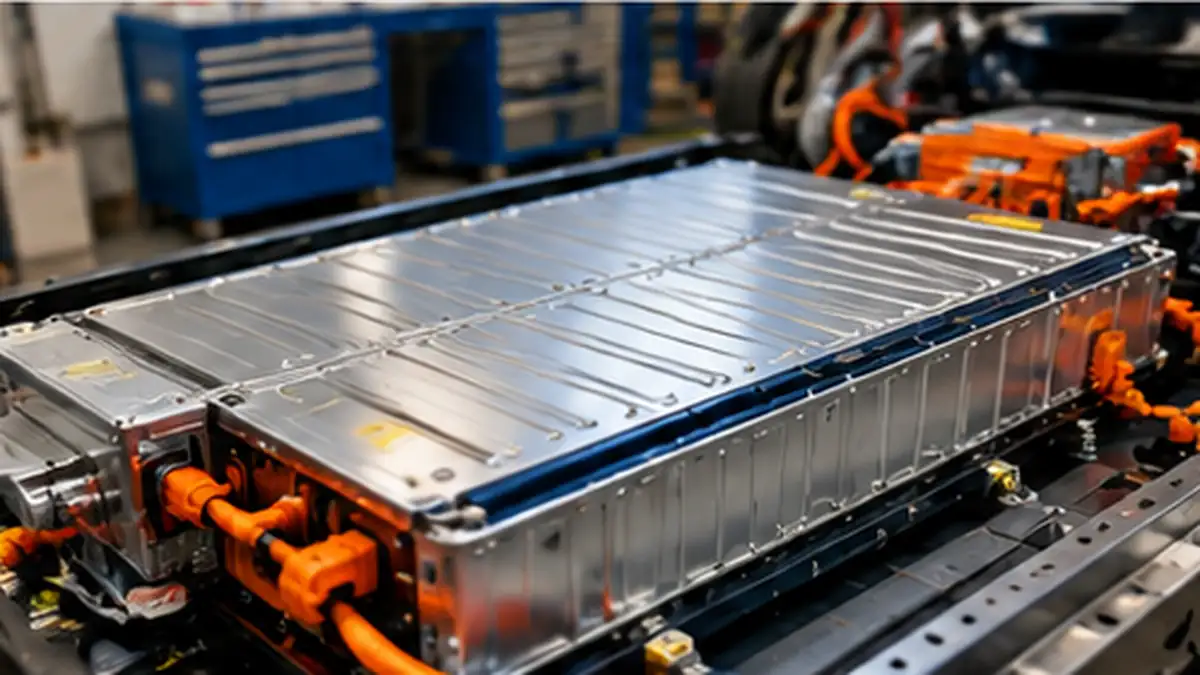
How electric car battery cooling works
| System element | General function | What drivers may notice |
|---|---|---|
| Battery temperature sensors and control software | Track pack conditions and regulate charging/discharging limits | Power or charge-rate changes; occasional alerts |
| Liquid-coolant channels and pump, where fitted | Move heat away from battery modules or through heating components | Pump or cooling sounds during charging or while parked |
| Heat exchangers and refrigerant system, where fitted | Transfer heat between battery coolant and another thermal circuit | Fans or compressor activity, especially during demanding charging |
| Battery heaters or preconditioning, where fitted | Raise battery temperature ahead of certain charging or driving situations | Additional electrical use or delayed charging in cold weather |
| Vehicle battery management system | Coordinates allowable battery operation using multiple monitored conditions | Automatic limits and vehicle-specific warnings |
Not every EV contains the same parts or uses them in the same way. Some thermal systems are air-cooled, others use liquid circuits; integration with cabin air conditioning or heat-pump systems varies. Do not assume that an EV with a cabin heat pump necessarily has the same battery cooling hardware as another model.
Is EV battery cooling the same as a cabin heat pump?
No. The cabin heat pump is part of the vehicle’s heating/cooling strategy and may share components or energy-management logic with other thermal circuits, but battery thermal control has its own targets. Even when the cabin feels comfortable, the battery can be colder or warmer than its ideal charging range. Conversely, fans or compressors may operate to manage the battery when the cabin system appears off.
Tesla’s Model S charging instructions specifically describe compressor and fan activity during high-current charging as normal on that model. That is a useful model-specific illustration, not a diagnosis for all EV noises.
Why does DC fast charging slow down in cold or hot weather?
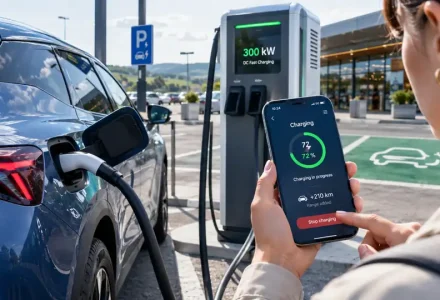
Charging power is negotiated between the vehicle and charger, and the battery management system can reduce the accepted current or power if internal conditions are outside an efficient range. A cold pack may require heating before it will accept high power; a hot pack may need cooling. Charging also naturally follows a charging curve: power often decreases as battery state of charge rises, so not every slow session is a cooling failure.
For temperature preparation before a charging stop, read our EV battery preconditioning guide. For the distinction between kW, kWh and charging time, see our charging-time calculation guide.
Charging power example: same energy, different actual kW
Suppose a vehicle needs 20 kWh added to the battery during a stop. At a hypothetical steady 100 kW delivered to the battery, the ideal calculation is 12 minutes (20 ÷ 100 × 60). If the battery accepts only 50 kW on average, that rises to 24 minutes. These are illustrative averages, not measured charging curves; real DC sessions vary continuously with state of charge, temperature, station output and losses.
| Illustrative average battery input power | Ideal time to add 20 kWh | Interpretation |
|---|---|---|
| 25 kW | 48 minutes | Slow average delivered battery power |
| 50 kW | 24 minutes | Moderate average delivered battery power |
| 100 kW | 12 minutes | Higher average delivered battery power |
The charge station’s 150 kW or 350 kW label is its potential capability, not a promise that every EV will receive that power. Our road-trip charging guide explains why realistic charge speeds and backup stops matter.
Is it normal for an electric car to make fan sounds while charging?
Often, yes. Some EVs automatically run cooling fans, pumps or a refrigerant compressor while charging or after parking. A change in sound alone cannot establish a fault. Manufacturer instructions may also explain ordinary water condensation or temporary vapor under specific conditions.
However, persistent new mechanical noise combined with warnings, overheating messages, strong odors, visible fluid leakage or reduced vehicle performance warrants prompt attention. Do not assume all smoke, steam or liquid around an EV is harmless coolant-system activity.
Battery cooling warning signs: what should you do?
| Observation | Safe response |
|---|---|
| A dashboard alert says battery temperature is too high or the car must stop | Follow the exact warning and stop safely as directed; contact qualified service or emergency support |
| A coolant-related alert appears but the vehicle is otherwise operating normally | Read the model’s instructions; arrange authorized diagnosis within the urgency specified |
| Charging is slower than usual without warnings | Check current SOC, battery conditions and charger status before assuming a failure |
| Visible liquid beneath the vehicle or damage to the underbody | Do not touch exposed high-voltage parts or open battery enclosures; seek a professional inspection |
| Smoke, sparks, strong unusual heating or apparent fire | Get clear of the vehicle and call local emergency services immediately |
For a named vehicle example, Tesla’s Model 3 troubleshooting instructions describe coolant-low and battery-performance alerts with different service urgencies. Those codes and permitted driving responses are not universal across other EV brands. Always follow the actual message displayed in your car.
Can an EV owner check or refill battery coolant?
Only where the manufacturer’s maintenance instructions expressly allow an owner to perform a particular operation. High-voltage battery systems are hazardous, and opening a battery pack, touching orange high-voltage cables or disconnecting cooling lines should not be attempted as a DIY procedure. Tesla’s official Model 3 high-voltage component instructions warn that the high-voltage system has no user-serviceable parts. Other manufacturers have their own professional inspection and coolant-service schedules.
EVs do not require engine-oil service in the usual combustion-engine sense, but they are not maintenance-free. See our EV maintenance checklist for a broader overview of service needs.
How to support battery thermal health day to day
- Use the vehicle’s recommended charging settings rather than generic temperature or percentage rules.
- Enable approved battery preconditioning when the manufacturer’s navigation/charging system recommends it.
- Keep prescribed maintenance and address coolant or battery alerts promptly.
- Do not obstruct cooling inlets or outlets if identified in the owner’s manual.
- Plan extra charging time in extreme temperatures rather than forcing unsupported current or bypassing software limits.
- After collision, flood or severe underbody damage, seek qualified safety assessment before driving or charging.
Bottom line
EV battery cooling is an integrated control system that protects the traction pack’s usable power, charging performance and operating conditions. Fans and changing DC charge rates can be completely normal, but specific alerts and visible damage require the vehicle maker’s guidance. Never attempt battery-pack cooling-system repairs based on a generic online guide.
Editorial method: EV component definitions and maintenance principles follow the U.S. DOE; charging-noise and warning examples are clearly identified as Tesla-specific documentation. All charging-time examples are simple hypothetical calculations, not claimed test measurements.
Sık Sorulan Sorular
Do electric car batteries use liquid cooling?
Some do, but not all EVs use the same design. Battery thermal management may use liquid or air-based systems with model-specific controls and service requirements.
Why does my EV cooling fan run while it is parked?
On some models, pumps or fans run automatically to maintain battery temperature during or after charging. Consult the vehicle manual if the sound changes or accompanies warnings.
Can a hot EV battery charge more slowly?
Yes. The car may limit charging power to remain within safe operating conditions. Cold battery temperature, high state of charge and charging station limits may also reduce power.
Can I refill the EV battery coolant myself?
Only where the exact manufacturer instructions expressly permit a specific owner operation. Do not open high-voltage enclosures or disconnect cooling lines; seek qualified service when uncertain.
What should I do if the battery overheating warning appears?
Follow the precise vehicle warning immediately. If it directs you to stop, pull over safely and contact authorized service or emergency assistance as appropriate; do not continue driving against a critical warning.