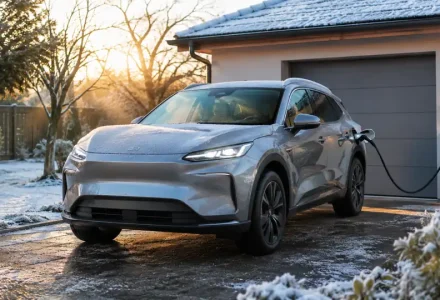
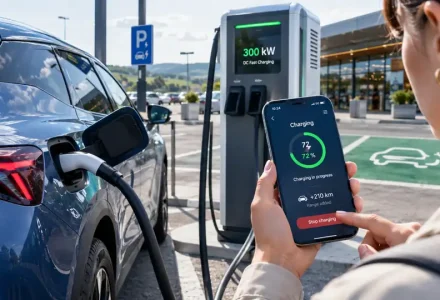
Quick answer: Yes, you can normally charge an electric car in ordinary rain when the vehicle, connector and charging equipment are undamaged, properly installed and rated for their environment. The U.S. National Highway Traffic Safety Administration (NHTSA) says EV chargers are weather-resistant, and the U.S. Department of Energy (DOE) says appropriately rated outdoor installations can be used safely in rain. However, flooding, standing water around damaged equipment, exposed conductors and electrical storms are different situations. Never assume that equipment safe in rain is safe after submersion or storm damage.
This guide explains normal wet-weather charging, what an outdoor charging installation needs, when to stop, and what to do if a vehicle or charging point has been exposed to floodwater. It is general consumer information; the specific vehicle and charging-unit manuals, local electrical regulations and operator instructions take precedence.
Is it safe to plug in an electric car when it is raining?
Ordinary rain is an expected outdoor use condition for compatible electric-vehicle charging equipment. NHTSA explicitly answers yes to whether an EV can be charged in rain, while directing users to the vehicle manual. DOE states that outdoor charging installations are safe in rain if the charging hardware is rated for outdoor use. These statements presume equipment installed and operated as intended—not damaged sockets, improvised wiring or submerged components.
Why EV charging equipment can work outdoors
An EV charging session uses vehicle and charger controls to coordinate energy transfer. Charging hardware is engineered and evaluated for its specified use, which may include weather exposure. But the degree of protection differs by product: an indoor-only unit should not be treated as outdoor-ready, and a weather rating does not authorize use in floodwater or after physical damage.
The U.S. Environmental Protection Agency’s home charging guidance recommends choosing equipment rated to withstand outdoor weather, selecting a suitable cable length and using a qualified electrician for installation. In public charging, the network operator maintains its equipment; report damaged or unusable equipment rather than improvising repairs.
Five checks before plugging into a charger in wet weather
- Inspect the connector and cable visually. Do not charge using cracked housings, exposed wires, damaged insulation, burn marks or obvious deformation.
- Check the charging-port area. Remove only ordinary loose debris as permitted by the vehicle manual. Do not insert tools or liquids into charging contacts, and do not disassemble the charge port.
- Assess the ground and surroundings. Do not stand in floodwater or use a charging station damaged by a storm, impact, inundation or exposed wiring.
- Use only approved equipment. Do not add an improvised extension cable, unapproved adapter, splitter or household lead to reach the car, especially across wet pedestrian surfaces.
- Follow the prompts. Connect and disconnect exactly as specified in the vehicle and station instructions. If either system shows a fault, stop and seek the operator’s or manufacturer’s advice.
These are preventive checks, not a method for verifying electrical safety after a malfunction. If you suspect an electrical hazard, avoid contact and contact the charging operator, a qualified electrician or emergency services as appropriate.
Rain versus thunderstorms versus flooding: important differences
| Conditions | General guidance | Why |
|---|---|---|
| Ordinary rain, undamaged outdoor-rated equipment | Charging is normally permitted, following the manufacturer’s directions | Suitable EVSE is designed for outdoor weather exposure |
| Thunderstorms and nearby lightning | Consider delaying a non-essential charging session; follow operator/site guidance | Avoid unnecessary outdoor exposure and storm-related electrical risks |
| Standing floodwater or submerged equipment | Do not use; keep clear and seek professional assessment | Submersion and storm damage are outside ordinary rain use |
| Damaged connector, cable, vehicle or charger | Do not connect or continue charging | Potential electrical fault or loss of protection |
Charging-network operator ChargePoint’s weather FAQ confirms normal wet-weather charging but advises considering a pause during lightning. It is not a universal rule covering every possible storm; evaluate local weather warnings and the site’s instructions.
Can rainwater get into an EV charging port?
Charging ports and equipment have designs intended for the manufacturer’s specified conditions, including routine outdoor exposure where approved. However, the presence of some water near the exterior of the port does not mean the owner should wash, pressure-spray or deliberately soak electrical contacts. Avoid inserting objects into the socket. If the vehicle reports moisture, charging errors or locking issues, follow the model-specific troubleshooting procedure instead of attempting to bypass protection systems.
Do not use a pressure washer on a charging connector or an open port. Cleaning instructions and product ratings vary. The safest universal practice is to keep contacts free of damage and contamination and follow the manufacturer’s cleaning guidance.
What if an EV or charger has been in a flood?
Flooded equipment is not the same as rain-wet equipment. NHTSA warns that high-voltage components of flooded electric and hybrid vehicles can pose shock and fire hazards. If your car has been submerged or its battery may be damaged, do not attempt to start or charge it. Keep people away from potentially energized or damaged parts, notify emergency services if there is an immediate hazard, and contact the vehicle manufacturer or qualified recovery service.
The agency’s flood-damaged vehicle guidance also advises against parking a damaged lithium-ion-battery vehicle inside a garage or within 50 feet of a house, other structure, vehicle or combustible materials. Such distance advice concerns damaged vehicles; it is not a rule that properly functioning EVs must be parked that far from homes. Professionals should determine safe handling and inspection after flood exposure.
Are portable home EV chargers safe in rain?
That depends on the exact portable equipment’s outdoor rating, its user manual and the supply outlet. Do not confuse a weather-resistant vehicle connector with permission to leave an indoor-only mains plug, household socket or controller box in rain. The supply arrangement, protective devices and connector must all be suited to the installation. EPA guidance emphasizes safety-certified equipment, appropriate electrical installations, qualified electricians and weatherproof outdoor charging hardware.
Regularly used outdoor charging is best served by a properly installed unit and cable routing designed for that location. For apartment garages or shared parking, see our apartment EV charging guide; for general household setup, see our home charger safety guide (Turkish).
What should you do if a public charger stops working during rain?
- If there is an immediate hazard (sparks, smoke, exposed wiring or standing floodwater), move away without touching the equipment and contact the emergency number used locally.
- For a normal fault without obvious hazard, follow the station’s stop and disconnect instructions only if it is safe to do so.
- Record the charger identifier and error message from a safe location and contact the operator using its posted support details.
- Use an alternative, undamaged charger; do not try to reset sealed electrical cabinets, bypass a fault or force a locked connector.
- If the vehicle reports an electrical or battery fault, consult its manual and a qualified service provider.
Charging time also depends on the EV, the power source and temperature—not whether a charger is simply outdoors. For a clear distinction between power and energy, read our EV charging-time calculation guide.
Common misconceptions
“Any water contact will electrocute the driver.” False as a blanket claim: correctly rated and undamaged equipment is intended for normal wet-weather use. “Any waterproof charger can operate in floodwater.” False: product ratings and normal environmental exposure do not authorize submersion or flood-damaged use. “A cheap extension lead makes an outdoor charger safe.” False: an unapproved cable and outlet arrangement can introduce electrical and trip hazards. “All charging must stop the moment rain starts.” No: ordinary rain is distinct from thunderstorms and floods.
Sources and methodology
Guidance checked against NHTSA EV charging and safety FAQs, DOE charging at home, EPA home EV charging safety, NHTSA flood advice and ChargePoint’s public weather FAQ. No universal charger certification, regional electrical code or vehicle procedure is asserted for all markets. More consumer topics appear in our Guides archive.
Frequently Asked Questions
Is it safe to plug in an EV charger in the rain?
Normally yes, provided the vehicle and charger are undamaged, properly installed and rated for outdoor conditions. NHTSA and DOE both acknowledge normal rainy-weather EV charging.
Can an electric car be charged during a thunderstorm?
A non-essential outdoor charging session can be postponed when lightning is nearby; follow weather warnings and charging-operator instructions. Ordinary rain and electrical storms are different hazards.
Can you charge an EV after it was flooded?
Do not attempt to operate or charge a submerged or flood-damaged EV until qualified professionals evaluate it. NHTSA warns of potential shock and fire risks.
Do you need to dry an EV charging plug before use?
Follow the vehicle and charging-equipment manuals. Do not use a damaged, contaminated or malfunctioning connector; never insert tools into electrical contacts or attempt unauthorized repairs.