Quick answer: The Moon has eight commonly named phases: new Moon, waxing crescent, first quarter, waxing gibbous, full Moon, waning gibbous, third (last) quarter, and waning crescent. A complete cycle takes approximately 29.5 days. The phases happen because we see different fractions of the Moon’s sunlit half as it orbits Earth—not because Earth’s shadow normally covers it.
Learning objectives
This science lesson helps U.S. middle-school students identify each lunar phase, explain waxing versus waning, distinguish the lunar phase cycle from eclipses, and make an observation journal. The Moon’s appearance varies with observer location and viewing orientation.
Why does the Moon change shape?
The Moon does not produce its own visible light; it reflects sunlight. The Sun illuminates approximately one-half of the Moon at any moment. As the Moon travels around Earth, an observer sees changing portions of this illuminated hemisphere. This changing view produces the familiar lunar phases. During most new Moons, the Moon passes above or below the direct Sun–Earth line from our viewpoint. A solar eclipse requires an additional alignment.
The eight phases of the Moon in order
- New Moon: The Moon is near the Sun’s direction in Earth’s sky; its sunlit near side is not readily visible.
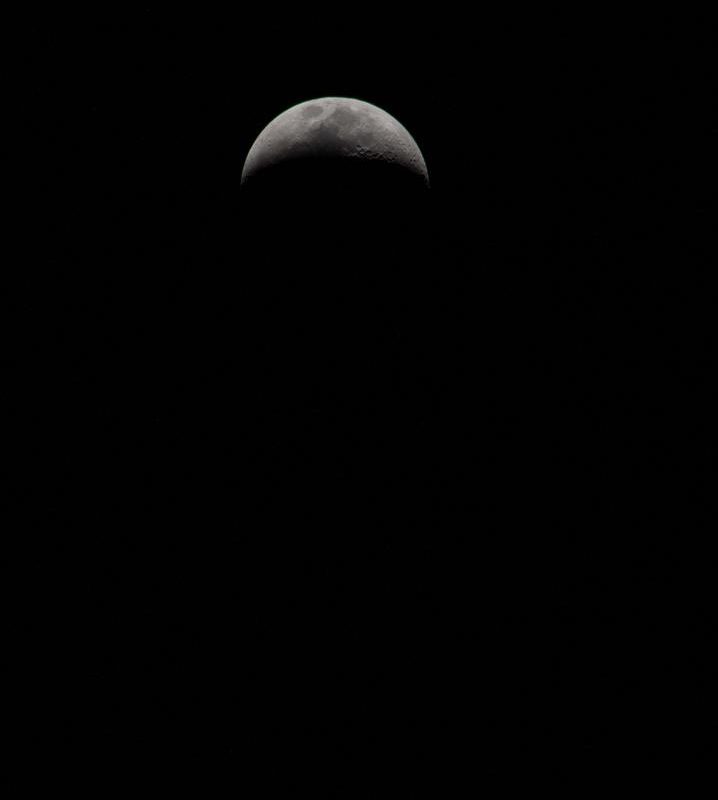
- Waxing crescent: A thin bright crescent appears and grows from one day to the next.
- First quarter: Approximately half the visible lunar disk is lit; the Moon has completed roughly one-quarter of its phase cycle.
- Waxing gibbous: More than half the apparent disk is illuminated and still growing toward full.
- Full Moon: The near side faces the Sun closely enough to appear almost entirely illuminated.
- Waning gibbous: The illuminated part visible from Earth decreases, but remains greater than half.
- Third quarter (last quarter): About half of the apparent disk is lit again, on the decreasing side of the cycle.
- Waning crescent: A thin illuminated sliver remains before the next new Moon.
Waxing vs. waning: an easy way to remember
Waxing means increasing apparent illumination; waning means decreasing apparent illumination. For observers in much of the Northern Hemisphere, the waxing Moon is commonly bright on the right side, while the waning Moon is bright on the left. Do not use right-versus-left as a universal rule: the orientation changes across hemispheres and with viewing angle. Ask whether the visible bright fraction is increasing or decreasing over successive days.
Why are first and third quarter called quarter Moons?
The terms refer to positions in the lunar phase cycle, not the fraction of the lunar disk that looks bright. A first- or third-quarter Moon looks roughly half illuminated from Earth. The Moon itself is still approximately half illuminated by sunlight in every ordinary phase.
Moon phases are not the same as eclipses
Phases result from the geometry of sunlight and our changing view of the orbiting Moon. A lunar eclipse occurs when Earth blocks sunlight from reaching the Moon, and can happen only near a full Moon. A solar eclipse occurs when the Moon blocks the Sun from an observer’s position on Earth, and can happen only near a new Moon. The tilt of the Moon’s orbit means eclipses do not occur every month.
Hands-on activity: keep a two-week Moon journal
- Choose a safe observation location with a clear view of the sky. Never stare at the Sun or use unfiltered optics toward it.
- On each clear day or night, record the date, local time, apparent shape and approximate direction of the Moon.
- Draw the illuminated portion in a notebook and record whether it appears to be growing or shrinking.
- Compare the observations with NASA’s official Moon phase guide. A single two-week stretch covers only part of the approximately 29.5-day cycle.
Five practice questions and answers
- What follows the waxing crescent? First quarter.
- What phase comes immediately after full Moon? Waning gibbous.
- Does Earth’s shadow cause ordinary Moon phases? No.
- What does waning mean? The illuminated fraction visible from Earth decreases.
- How long is the cycle from one new Moon to the next? About 29.5 days on average.
Related science reading
Explore Space & Astronomy for more space-science coverage and English-language science and technology articles for related topics.
Official NASA sources and image context
- NASA Science: Moon Phases
- NASA: Crescent Moon from the International Space Station
- NASA: Waxing Crescent Moon photograph (October 1, 2022)
The accompanying NASA photograph shows one waxing crescent, not all eight phases.
Sık Sorulan Sorular
What are the 8 phases of the Moon in order?
New Moon, waxing crescent, first quarter, waxing gibbous, full Moon, waning gibbous, third quarter, waning crescent.
Why does the Moon change phase?
Its orbit around Earth changes how much of its sunlit hemisphere we can see.