Quick answer: The best way to charge an electric car at a hotel is to confirm the exact charging arrangements with the property before booking. A listing marked “EV charging” does not guarantee a compatible connector, available space, free electricity or overnight access. Ask whether charging is for hotel guests only, how many usable ports exist, whether the parking space can be reserved, the actual power available, and what the hotel or charging operator charges. Plan an alternative nearby station.
The U.S. Department of Transportation explains that hotels can offer charging only to customers in private lots. Tesla’s Destination Charging network specifically includes hotels and other destinations where vehicles can remain parked for hours. Those facts make hotel charging a practical road-trip option—but neither establishes that an individual charger will be working or available when you arrive.
How to find hotels with electric-car charging
Use a hotel booking site or the hotel chain’s official EV charging amenity filter to identify candidates. For example, Hilton maintains an official EV-charging hotel directory. Tesla drivers and drivers with compatible charging arrangements can also check Tesla Destination Charging locations. In the United States, the Department of Energy’s Alternative Fuels Data Center offers station-location resources and filters.
A filter is a starting point, not a booking confirmation. Charging may be managed by a separate parking operator, located in a public garage rather than the hotel property, shared with visitors, restricted to paying guests, or unavailable for maintenance. Confirm the exact location and conditions with staff rather than relying solely on a map pin.
What to ask the hotel before you book
| Question | Why it matters |
|---|---|
| How many EV charging ports are there, and are they operational? | A listed amenity may refer to one port and cannot guarantee a free space. |
| Can an EV charging bay be reserved for my arrival? | A room reservation may not include a charging reservation. |
| Is charging limited to hotel guests or certain room/parking packages? | Access may depend on entry codes, valet parking or separate registration. |
| Which connector type and AC power rating do the stations offer? | The car needs compatible hardware and realistic time to charge. |
| What is the current electricity price, parking fee and any idle fee? | “EV charging available” does not mean “free charging.” |
| Can I charge throughout the night, and must I move when full? | Some locations impose time limits, charging completion rules or idle charges. |
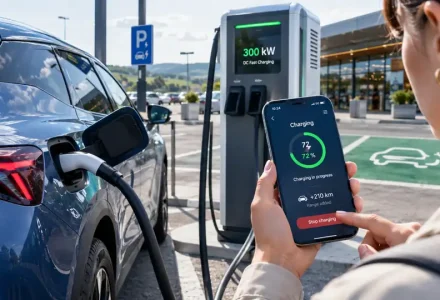
| Which app, RFID card or payment method is required? | A charger can be physically accessible but unusable without authorization. |
| Where is the backup charger if the hotel unit is occupied? | One failed station should not disrupt a necessary morning departure. |
Also ask whether the station is in an underground garage, behind a gate or reachable only through valet staff. Opening hours shown for the hotel do not necessarily indicate when the charging area is accessible.
Is EV charging at hotels free?
Sometimes, but never assume so. Depending on the hotel and operator, the electricity might be included in a stay, billed per kWh, charged per time or session, or subject to parking, valet, network or idle fees. Policies and local taxes vary. Tesla’s official Destination Charging support describes locations with per-kWh billing, potential idle fees and prices visible in the app; those rules are not a universal tariff for all hotels or regions.
Ask for the total expected expense, including any separate parking rate. A parking space marked “EV charging” may not include complimentary parking. Do not compare the cost of two hotels based solely on an advertised electricity price if one charges for parking and the other does not.
Level 2 versus DC fast charging: what hotels usually offer
Hotels often suit destination charging because a car remains parked for several hours while the driver sleeps. The U.S. DOT’s charging-speed guide describes AC Level 2 charging as common at homes, workplaces and public destinations; it gives broad U.S. illustrative times of roughly 4–10 hours for a BEV to reach 80% from empty. The actual hotel station might use a different voltage, rating or connector depending on country. A DC fast charger may be located near a hotel but should not be assumed to be part of the hotel’s amenities.
In Europe and many other markets, hotels may offer Type 2 AC charging; in North America, J1772 or vehicles’ supported NACS/J3400 configurations may be relevant. This is market-dependent, not a guarantee. The specific plug, adapter approval, voltage, onsite access and car’s onboard charger determine compatibility.
How long will hotel EV charging take overnight?
Use battery energy rather than a charger label to create a reasonable estimate. Consider a hypothetical EV with 60 kWh of usable battery capacity arriving at 30% and aiming for 80%:
Energy to add = 60 kWh × (0.80 − 0.30) = 30 kWh
If the battery were continuously receiving 7 kW, the ideal time would be 30 ÷ 7 ≈ 4.3 hours. This is mathematical illustration, not a predicted real charging session. Conversion losses, power sharing, site restrictions, battery conditions and the vehicle’s onboard AC limit may make charging take longer. A charger advertising 22 kW will not necessarily supply that to a car equipped for a lower AC input.
For comparison, our EV charging-time calculation guide shows how to distinguish kW from kWh and how to build estimates for home and public charging.
How to plan a hotel charging stop on an EV road trip
- Before booking: search by EV-charging amenity, check property and station details, and get charging availability and terms confirmed in writing if possible.
- Before departure: verify the vehicle’s supported AC connector, whether a permitted cable or adapter is needed, and which payment app works at the site.
- On your route: identify at least one compatible backup station within the range you expect to have upon arrival.
- Before arriving: check whether access is restricted by a barrier or valet rules, and do not plan to reach the hotel at effectively zero usable battery.
- At check-in: ask the desk to direct you to the actual charging bays, not merely the property’s street address.
- After connecting: make sure the charger and car confirm that the session started, and check your expected finish time.
- During the stay: follow the operator’s idle-fee or bay-movement policies and avoid occupying a needed charging space unnecessarily.
- Before checkout: verify the session ended correctly, disconnect safely, review the invoice and check you have enough driving range to the next planned stop.
What if a hotel has only one charger?
There is no reliable assumption that a single shared charging bay will be free on arrival. A room guarantee and a charging-space guarantee are different things. Some hotels allow booking a space; others operate first-come, first-served. Ask staff whether they manage access or if an independent network owns the station. Build a contingency plan with a nearby public charger. DOE station data can help identify candidates in the United States, but real-time availability requires checking the appropriate operator where supported.
Should you charge to 100% before leaving the hotel?
The answer depends on your vehicle’s battery guidance, departure distance and charging setup. Some manufacturers recommend a lower routine charging target for certain batteries and other recommendations for other chemistries or journeys. Do not apply a universal 80% rule to every EV. Follow the manual and set a target that comfortably covers the next route section with an appropriate weather and traffic buffer. If the site’s billing starts idle fees after charging finishes, the time of completion also matters.
For drivers who have no home charger, see our apartment charging guide. Our long-distance EV travel planner (Turkish) covers broader route preparation.
How hotel owners and guests can avoid common charging problems
For guests, the biggest avoidable problems are assuming that every listed charge point is free, arriving with an incompatible plug, or failing to confirm that charging actually started. For hotel operators, clear public information should distinguish the number of usable bays, connector types, power, pricing, operating hours, customer eligibility and maintenance support. The DOT’s site-host guide explains how private-site access can differ from open public charging. That distinction is crucial for destination charging.
Frequently Asked Questions
Do all hotels with EV charging offer it free?
No. Prices and access rules are set by individual hotels or their charging operators. Confirm the electricity price, parking cost and any session or idle fees before booking.
Can you reserve a hotel EV charging space?
Only if that specific hotel offers a reservation arrangement. Booking a room does not necessarily reserve a charging bay; ask the property directly.
Can non-Tesla cars use Tesla Destination Charging?
Compatibility and access depend on the individual site’s hardware, market and vehicle. Tesla’s support directs drivers of other EVs to available Destination Charging site information in the Tesla app. Check plug compatibility and applicable rules.
Will an overnight 7 kW charger fully charge any electric car?
No. The energy needed depends on usable battery size and starting state of charge; actual power depends on vehicle and station limits and losses. For example, adding 30 kWh at a hypothetical constant 7 kW takes about 4.3 ideal hours, but this is not a universal promise.
What if the hotel’s EV charger is occupied or out of order?
Ask the property or charging operator about alternatives and use a compatible backup public charger. Do not rely on an unconfirmed station as the only feasible charging stop.
Official references and editorial scope
This guide offers international planning principles; hotel availability and prices require direct confirmation and were not independently reserved or tested. References: U.S. DOT site hosts, DOT charging types and speeds, Hilton’s EV-charging hotel directory, Tesla Destination Charging support, and U.S. DOE charging stations. Browse our EV Guides category for additional consumer advice.